




Hilary Duff is saying cheers to self love.
Speaking to Billboard‘s Tetris Kelly backstage at her recent Las Vegas concert, the singer — who announced Wednesday (May 27) that Aperol Spritz will sponsor her upcoming Lucky Me Tour — opened up about her current philosophy as she gears up to embark on one of the biggest treks of her career.
Related


“If I were to toast to one thing, it would be toasting to becoming like more of yourself instead of becoming more impressive,” she says poignantly. “We’re in our body, we’re fine with who we are, doing great, we’re proud of ourselves. We’re always reaching for more but not reaching too far where we’re like overextending and exhausted. We’re just happy!”
The Lizzie McGuire alum has a lot to be happy about these days. In addition to kicking off her arena tour in June, the star dropped her first album in a decade, Luck … or Something, in February and reached No. 3 on the Billboard 200.
As part of her team-up with Aperol, the beverage company will curate Aperol Spritz Day Club pre-show experiences at some of the venues Duff will play on tour, as well as local bars and restaurants nearby. The former child star says that her personal ideal setting for sipping on a spritz would be “in New York with a small group of friends, and we’re at a sidewalk cafe and people are just starting to flood the streets because everyone’s getting warm in their bones again … they’ve planted the flowers, everything’s blooming, you can feel the energy in the air.”
She also notes that the Luck … or Something track that most embodies “golden hour Aperol” is “Adult Size Medium,” on which she sings: “Was it a sip of wine or Aperol?/ I remember everything and nothing at all.”
“I think I’m most looking forward to seeing everyone show up for me,” Duff adds to Billboard of the Lucky Me Tour, which follows her run of mini-residency shows in Vegas. “When I think about this era, for me it took a lot of guts. I showed up for sure, but the only reason it’s working is because everyone’s showing up, and I don’t even exactly know why, but I’m really excited to see it and feel it and feel something that I’ve gotten a little taste of now. Obviously it’s in my body from before, but I’m such a different version of myself than I was back then, so it’s really magical to do this again.”

Maluma welcomed Billboard to his estate in Medellín, Colombia, where, amidst horseback rides, coffee breaks and stunning tropical vegetation, he spoke candidly not only about his new music, but also about his mental health, the second baby he’s expecting with his partner Susana Gómez and the upcoming presidential elections in his home country.
“My country hurts me,” Maluma said in an exclusive interview with Billboard’s Leila Cobo, reflecting on the violence that shook Colombia in the ’90s and looking ahead to the May 31 elections. “We have to vote! I’m not telling you who to vote for, but I even feel like renting a truck and driving people [to the voting centers] on election day.”
Related


“It’s an important topic and something that really matters to me,” he explained. “I want [my daughter] Paris to not experience what perhaps your generation or several generations went through — those who left and didn’t want to return because of the country’s problems.”
Maluma, who released his new album Loco X Volver on May 15, also fondly remembered the late Colombian popular music singer Yeison Jiménez, with whom he got to record the track “Con el Corazón” for this album. Jiménez died tragically in a plane crash this past January at the age of 34.
“We spent months where we were very close. Talking about him is really tough. The song is beautiful and everything, but yeah, that guy is sorely missed,” said Maluma, unable to hold back tears. “Life goes by in a flash, you know? You think about that guy, and it feels unreal, it feels unreal.”
He also spoke about how his relationship with fame has changed — “Today I prefer to be at peace in my home,” he said — and about prioritizing his mental health after feeling overwhelmed at the end of his last tour. He admitted that if he hadn’t taken a break, “something bad” might have happened.
“Life isn’t just music,” he expressed. “Life isn’t just fans, autographs […] life isn’t TikTok or Instagram. And I lived 24/7, 365 in that mindset, and of course, when I stopped, my brain was like, ‘Oh man, they took away my dopamine, they took away everything.’”
“I disconnected for months,” he continued, adding that precisely “that detox from social media was also one of the main keys that showed me I needed to stop.”
Watch the full interview (in Spanish) above.
YG has spent plenty of time at gentlemen’s clubs around the globe, and he’s launching his own, in a way. The Compton native announced on Wednesday (May 27) that his seventh studio album will be titled The Gentlemen’s Club.
The “Who Do You Love?” rapper revealed that The Gentlemen’s Club is slated to arrive on June 19. He also posted the LP’s cover art, which finds YG delivering a menacing stare while rocking a suit coat jacket and a black glove, while pointing to his head with his fingers in the shape of a gun.
Related


Fans seemed to be hyped that the 4-Hunnit CEO is returning to heat up the summertime. “Summer finna be lit,” one person wrote in his IG comments. Another added: “Oh yeah big summer happening!”
After spending a majority of his career at Def Jam, YG also signed a new deal, which will find him partnering with 10K Projects for The Gentlemen’s Club. The move marks his first major label deal in nearly five years, according to a press release.
YG has released pair of singles in 2026 already, including “TEACH YUH HOW TO LOVE ME” featuring frequent collaborator Ty Dolla $ign and “State of Emergency.”
The 36-year-old’s last project arrived in 2024 with his JUST RE’D UP 3 mixtape. The double-disc project featured Lil Yachty, G Herbo, Mozzy, Babyface Ray, Tee Grizzley, Ty Dolla $ign, Saweetie and Mustard.
As for his most recent studio album, YG released I Got Issues in 2022, which debuted at No. 18 on the Billboard 200.
Find YG’s cover art for The Gentlemen’s Club below.
Every month, Billboard Latin and Billboard Español editors spotlight a group of rising artists whose music we love. Think “diamantes en bruto,” or “diamonds in the rough.” These are newcomers who have yet to impact the mainstream — but whose music excites us, and who we believe our readers should make a point to discover.
Our latest edition of On the Radar Latin includes a wave of emerging artists, who we discovered by scrolling on social media, networking, or coming across their music at a showcase, for example. See our May 2026 recommendations below.
Name: DIA
Country: Puerto Rico
Why They Should Be on Your Radar: DIA has quickly become a strong force in the música urbana space since his debut single in 2020, “ONEMVNARMY.” The artist born Alexis Díaz kicked off his six-year career as a songwriter and producer for artists such as J Balvin, Rauw Alejandro, and Yandel. Now, at the forefront with a progressive solo career, DIA’s signature trapsoul and reggaetón sound is backed by his sultry, smooth vocals as heard in “¿te ACUERDAS de mi?,” “SUSTANCiAS CONTROLADAS,” “Pidiendo Saoco,” and “LLamando de Nuevo,” to name a few.
The rising Puerto Rican artist — who’s a Latin Grammy nominee and a skilled piano player — became popular name in 2023 with his participation on “Merry Remix” with Jay Wheeler and Randy Nota Loca. In 2025 he dropped his debut studio album ¿QUE DICEN EiAS? (Casablanca Records/GLAD Empire), and he’s currently making the rounds with the ultra-perreo “Super Estrellá” in collaboration with Yomo, Alejo and Subelo NEO. — JESSICA ROIZ
Song for Your Playlist: “Llamando De Nuevo”
Name: El de la Tinta
Country: Mexico
Why They Should Be on Your Radar: El de la Tinta (real name: Ulises) is quickly becoming a sensation, thanks to the viral hit “Holanda” with Angel Cervantes and Sahir Montoya, and its catchy “ra-ta-ta” chorus. This song has ignited a creative wildfire, especially on Tiktok, where it boasts over 500,000 video creations — including Tito Double P and Manuel Medrano jumping on the trend. During the pandemic, Ulises picked up the guitar, but driven by his shyness, he first released his music anonymously online. As his confidence grew, his corridos tumbados struck a chord with a new generation. His songs weave together acoustic guitars, the rich resonance of the toloche, and soulful trumpets, creating a lush soundscape for his vocals — a gentle rasp that radiates warmth and sincerity. This unique mix of instruments and heartfelt vocals brings to life songs about heartbreak, like “Ojitos Marrones” and “Insomnio,” and celebrates love in tracks such as “Besitos” and “La Niña De Casa.” — INGRID FAJARDO
Song for your Playlist: “Holanda” feat. Angel Cervantes, Sahir Montoya
Name: Emjay
Country: Mexico
Why They Should Be on Your Radar: This singer-songwriter has emerged as one of the most intriguing new voices in Mexico’s latest generation of pop, thanks to her natural, raw, and uninhibited style—inspired by alternative rock aesthetics, or what she herself has dubbed “Heavy Pop.” Her introspective lyrics and explosive stage presence position her as one of the finest performers on the country’s current music scene; her appearance at the Tecate Emblema Festival earlier this month was a testament to this, as she stood out as one of the top acts.
Emjay (a name derived from her initials, María José) began her career in the trap and hyperpop genres, with projects such as LAS MORRAS TAMBIÉN HACEN TR444P. However, her latest EP, Confesiones De Las Que Me Voy A Arrepentir — released last March via Warner Music Mexico — marks a turning point in her career, featuring ’90s-style guitars and a rawer, more emotive energy. She recently served as the opening act for Doja Cat at the Palacio de los Deportes in Mexico City. Her “Pop Pesado 2026” tour across Mexico has already been announced, with several dates scheduled for the coming months. — NATALIA CANO
Song for your Playlist: “Bellaka”
Name: Los Dos De Tamaulipas
Country: Mexico
Why They Should be on Your Radar: So far in 2026, the Mexican duo has made a surprising and successful breakthrough in the Regional Mexican music scene. Their single “El Chavalón” reached No. 1 on the Regional Mexican Airplay chart and No. 2 on Latin Airplay; the same success followed with the tracks “Supercargada” and “Ayúdame,” both included on their album Expansión, released in April. This album paved the way for their first U.S. tour with more than 40 sold-out dates.
With their traditional norteño music and a distinctive performance style, brothers Rolando and Orlando Zapata have joined the ranks of Regional Mexican music — no longer merely as rising prospects, but as established fixtures. Artists such as El Fantasma and Luis R Conríquez have collaborated with and championed these singer-songwriters, who hail from Tamaulipas in northern Mexico. The duo was recently honored by ASCAP for the success of their compositions featured on the album Arriba La Compañía, released last year. — TERE AGUILERA
Song for your Playlist: “El Chavalon”
Name: Omar Camacho
Country: United States
Why They Should be on Your Radar: Born in San Diego, California, Omar Camacho is part of the urban music movement of Mexican-American singers who fuse their style with leading figures of the new Regional Mexican genre. His growing fanbase — totaling over 13 million monthly listeners on Spotify — positions him as one of the most promising rising artists under 21. His debut album, Nunca Voy A Morir (Warner Music México) — dropping this May 28th — serves as proof of his talent for navigating diverse sounds, featuring collaborations with Víctor Mendívil, Santa Fe Klan and Código FN, among others. Camacho is currently participating in the successful “Rico o Muerto” tour headlined by Óscar Maydon — a former Billboard Latin Artist on the Rise. — T.A.
Song for your Playlist: “Dos + Dos” (feat. Victor Mendivil)
Name: Quelle Rox
Country: United States
Why They Should Be on Your Radar: Puerto Rican-Cuban artist Quelle Rox is carving out a dreamy Spanglish lane that feels intimate, sensual and quietly magical. Based in New York, originally from Florida, she blends indie-soul, dream-pop and Latin warmth into songs that shimmer with soft-focus heartbreak. Her latest single “Mint Cherry Red (pa’ olvidarte amor)” is a strong example of that world: supple bass, hazy textures and breathy vocals that glide between English and Spanish with an ease that feels lived-in. There’s an early Kali Uchis quality to her aesthetic — ethereal, delicate and seductive — but Quelle’s perspective feels distinctly her own, rooted in bilingual confession and the kind of post-heartbreak glow-up that turns pain into style.
In the video for “Mint Cherry Red,” she leans all the way into that mood, cruising in a convertible, hitting the carnival and Coney Island in red tights, animal print and a beret, serving soft-girl glamour with a knowing edge. With songs like “Más Bonita” and “Apareces de la Nada” continuing to build traction, and a full Spanglish project on the way, Quelle Rox feels like an artist stepping into a more defined era — and one worth catching now. — ISABELA RAYGOZA
Song for your Playlist: “Mint Cherry Red (pa’ olvidarte amor)
If you wondered about Drake‘s ability post-2024 to still make the kind of history on the Billboard charts that he seemed to make routinely in the 15 years prior to that … well, wonder no longer.
Related


On this week’s Billboard 200 (dated May 30), Drake debuts in the top three spots with his three simultaneously released new LPs — Iceman, Habibti and Maid of Honour, respectively — becoming the first artist to ever occupy Nos. 1-3 on the chart at the same time. Meanwhile, Iceman‘s “Janice STFU” opens at No. 1 on the Billboard Hot 100 — the highest of his 42 entries, and 40 debuts, also Hot 100 records — breaking Drake out of a tie with Michael Jackson for most career No. 1s on the chart by a solo male with his 14.
Which of these records do we deem to be the most historically significant? And does this mean that Drake is officially as big again as he was before the drama of two years ago? Billboard staffers discuss these questions and more below.
1. Drake sets all kinds of history on the Billboard charts this week — including most entries by any act in one week (42) and most No. 1 hits total (14) for a male solo artist on the Hot 100, and most simultaneous top spots (three) held on the Billboard 200. Which of the records he sets this week do you think is the most historically significant?
Kyle Denis: I’d probably go with breaking the “most entries in one week” record; it’s a real testament to how intense his popularity is in the streaming era. Breaking Michael Jackson’s record for most Hot 100 No. 1 hits by a male soloist certainly sounds cool, but when you compare Drizzy’s No. 1s to the King of Pop’s, the difference in quality is so stark it’s laughable.
Angel Diaz: The Billboard 200 record is the most impressive to me. It’s not every day that one of music’s top artists decides to drop three separate albums at once. That one is going to be hard to beat, unless someone like Taylor Swift or Beyoncé feels competitive enough to release four albums at the same time.
Lyndsey Havens: Well, I’d argue that occupying the top three spots on the Billboard 200 holds the most weight, largely because it’s the kind of moment we’ll be able to point to as “when things changed.” Now that Drake has done it — regardless of why … — it becomes a conversation of who does it next? Who can do this? Who would and why? It created not only a new marker of success but a new conversation, too.
Michael Saponara: I’d have to go with having the most No. 1 hits of any male soloists. It’s the toughest to accomplish, in my opinion, and saw him pass a legend in the King of Pop, albeit very different eras of music. I may also be impacted by seeing Michael over the holiday weekend. But it also points to an enduring legacy and more than a decade at the hitmaking summit, which we haven’t seen from a rapper before. The avalanche of entries for a week feels a tad hollow, since when A-listers put numbers on the boards, most seem to fall off within a couple of weeks. Still, what a comeback for Drake.
Andrew Unterberger: Something about securing the top three on the Billboard 200 feels momentous — maybe because, when compared to having 42 Hot 100 entries simultaneously, having the top three feels like something that could have actually been achieved in earlier chart decades, even though there were plenty of logical contextual reasons why it hasn’t been. It just shows you how few artists on Drake’s level would’ve even considered a comeback approach like this, and makes it all the more impressive that he actually pulled it off.
2. Iceman is by far the best-performing of Drake’s three new sets, launching with 463,000 equivalent album units in the U.S., according to Luminate (to 114,000 and 104,000 for Habibti and Maid of Honour, respectively), while also accounting for Drake’s 16 best-performing songs on the Hot 100 this week, including 12 of the overall top 13. Are you surprised that Iceman lands this far ahead of its sibling sets, or is it about what you expected?
Kyle Denis: This is exactly what I expected. Not only was Iceman the only album title the public was aware of leading up to the triple album drop, but it was also the kind of album people have been asking Drake to make. I’m not surprised the album where he’s actually rapping — and addressing the past two years — blew Maid of Honour and Habibti out of the water. We just got 20 R&B songs from Drake last year.
Angel Diaz: I’m not surprised because that was the album everyone was waiting on. I am surprised that the other two are as close as they are, though, because the online consensus is that Maid of Honour is the second best of the three; at least on my timeline anyway.
Lyndsey Havens: It’s exactly what I expected, and shows the continued power of marketing and rollout — in 2026. Iceman got the full treatment, including social media-primed gimmicks like melting ice bricks to reveal release date and even a projection that made Toronto’s CN Tower appear to be covered in ice. It’s the album fans were expecting and awaiting — and given the rollout, could be argued as the most “intentional” set of the three. Plus, Iceman largely seems to be the album that fans listened to first — and as for whether or not that made them tune in for two more rounds? The numbers speak best to that.
Michael Saponara: Not at all. This has been the album people have been expecting and the one he’s done the legwork teasing for over a year. It’s also the mission statement, which finds him addressing more personal topics and responding to those in the industry who have crossed him since the Kendrick Lamar battle. I really enjoyed the album and believe it has the most quality depth of any project from him in a decade, and it’s Drake barring up with a rap-heavy project, which his core fans should embrace.
Andrew Unterberger: I’m not surprised that it lands ahead, but the extent of it is pretty eye-opening to me. It shows you how successful Drake was with his Iceman-specific promo in the months (years?) leading up to the album that despite being released at the same time as two totally separate albums — at least one of which, Maid of Honour, was arguably much more accessible — it was so clearly the set that his fans immediately zeroed in on.
3. “Janice STFU” is the best-performing song across the three sets in its first week. Do you see it growing and enduring as the breakout hit from this Drake mega-era, or do you think other songs on the albums will ultimately pass it?
Kyle Denis: I think “Janice STFU” will endure as the true breakout hit, but I wouldn’t be too shocked to see “Shabang” and “Ran to Atlanta” follow suit. If anything sticks around from the other two albums, I’m betting on “Hoe Phase” (from Maid of Honour) and either “Classic” or “Fortworth” (from Habibti).
Angel Diaz: I think it being a spin on a Lykke Li track helps open it up to a different audience, and it’s also very catchy. I’ve often found myself singing “beep, beep, baby” randomly and folks are using it in their Instagram Reels and TikToks. I’m curious to see how long it lasts on top of the Hot 100.
Lyndsey Havens: I think other songs certainly could pass it. And this is a bit of a copout answer, but I think the challenge of releasing three albums at once (around 2.5 hours of listening) is that the breakout hit could still be hiding somewhere. While it’s a quicker process, sometimes, for an artist and their team to intentionally nudge just one song to the front, in this case there’s still a bit of a race going on. Drake dropped 18 new music videos last week, four of which surpassed 10 million views (“Janice STFU” leads with 13 million as of now — but “Whisper My Name” isn’t far behind). All of this is to say, I wouldn’t count any song out just yet.
Michael Saponara: I’ve been trying to find the one song that would jump out and “Janice STFU” seems to be what fans have gravitated towards. I’m not surprised as I’ve found myself singing along to the addicting chorus, which interpolates Lykke Li’s “I Follow Rivers.” I think it’s going to stick around for a while. We’ll see what catches on at radio as I’ve heard “Shabang” and “Ran to Atlanta” while driving around this past week.
Andrew Unterberger: Yeah, “Janice” feels like the song. It’s fun, it’s meme-y, it’s not as catchy as “Nokia” but it’s much less of a drag than “Slime You Out” or “Way 2 Sexy.” It’s one of those songs that isn’t necessarily an undeniable smash, but once it burrows its way into the culture, it stays there.
4. A week and a half in, which of the three sets do you remain most interested in?
Kyle Denis: Iceman, without a question. But I’m also learning I’m much fonder of Maid of Honour than the average listener.
Angel Diaz: Rap Twitter won’t stop talking about Iceman, but for me I think I’m leaning towards Maid of Honour, especially as the weather gets warmer. That’s when we’ll really see if any of these three projects have any legs. In the meantime, I’ve made a playlist combing the best from Maid and the best from Habibti to make a nice-sounding album.
Lyndsey Havens: I’ve been loving the social media chatter over how to describe each album. I’m more into pop girlie Drake, and I think Maid of Honour delivers that side of him most, certainly through the more uptempo and bouncy production at least.
Michael Saponara: Iceman, for sure, for a lot of the reasons I listed in my answer to question No. 2. It’s his most rap-heavy project since IYRTITL and there’s plenty of depth to the album, which is a problem I’ve had with Drake albums in the past being too top-heavy and reliant on a few hits. If I may make the comparison, Iceman has been the main course at dinner, while I’ve mixed in Habibti and Maid of Honour as a side of mashed potatoes and a palette cleanser for dessert.
Andrew Unterberger: Honestly, Habibti might be the one I end up returning to the most. The album-closing run on that, where Drake actually seems to shed his bravado and sound legitimately lost and insecure and actually kinda frightened — that’s the only Drake across these three albums that I don’t think I’ve ever heard before. Not surprising that that’s not where the hits are coming from, but I’m intrigued by it.
5. After a couple rough years for the rapper, does the historic chart performance of these sets in their opening frame establish to you that Drake is 100% back to his pre-2024 hitmaking status, or do you still need to see more from him before granting him that?
Kyle Denis: Even at the height of the 2024 battle, I never once doubted Drake’s ability to maintain (or regain) his commercial footing. He operates at a level maybe two other pop stars do; that was never going to be undone by five or six songs. With that being said, I can’t judge much from the first week. It’s not exactly a shocker that three pseudo-surprise Drake albums flooded the charts. What’s more interesting to me is whether these songs stick around near the top of the Hot 100; Drake hasn’t had a song spend more than a single week at No. 1 since 2018. Can “Janice” end that streak? With all of this music and a relatively quiet hip-hop scene, can Drake replicate Scorpion’s three multi-week No. 1 singles? That’s what I’m keeping an eye out for.
Angel Diaz: I’m not ready to definitively answer that yet. He got some things off his chest on Iceman and provided some hits on those three projects, but there still isn’t a monster record on any of them. At least by Drake standards. Hopefully, he lets these projects breathe, though, and comes back undistracted. I think that’s when he’ll truly get back on track.
Lyndsey Havens: ……. I think it establishes that pre-2024 Drake was a special period in time.
This historic chart performance proves fans will always be ready and waiting for more Drake (apparently, three full albums worth), and in no world was he going to flop during debut week. But I’m curious to see what the next few months look like for Drake and where these albums fall within his longterm legacy.
Michael Saponara: To me, this marks more of the start of another peak in a new era for Drake. I’d compare it more to LeBron James in his Los Angeles Lakers era in a later stage of his career as the 6 God approaches 40. It’s not quite the same commercial heights and dominance as the mid-2010s (think Miami Heat or Cleveland Cavaliers LeBron), but it’s still Hall of Fame worthy.
Andrew Unterberger: Not 100%, but close enough. We’ll have to see what kind of numbers he puts up when the rubbernecking curiosity of what he still might have to say about 2024 isn’t around anymore. But then again, will that ever go away? Will we ever not be super-curious what Drake has to say about the s–t going on in his life — and then what everyone else is gonna say about what he says? Maybe not.
Martina McBride, Flo Rida and more artists are coming together this summer to help the United States of America celebrate its 250th birthday.
Related


As announced by Freedom 250 on Wednesday (May 27), the nonpartisan organization’s upcoming 16-day Great American State Fair will feature a slate of performers that includes Young MC, C+C Music Factory, Vanilla Ice, Milli Vanilli, The Commodores, Morris Day & The Time and Bret Michaels in addition to McBride and Flo. Taking place on the National Mall in Washington, D.C., the patriotic event will kick off June 25 and last through July 10.
“The celebration will unite and showcase all 56 U.S. states and territories in a single World’s Fair-scale event,” reads a description on the Freedom 250 website. “This is an opportunity for visitors from across America to experience an unforgettable celebration of the people and traditions that define our nation.”
Also featuring carnival rides and stations showcasing the cultures of all 56 American states and territories, the festival will mark the finale of President Donald Trump’s year-long Great American State Fair, which also involves activations in state fairs across the country. The twice-impeached president first previewed plans for the celebrations in July last year, with the White House promising at the time that the administration would “throw the greatest birthday party in American history.”
The government’s 250th-anniversary plans also include the Patriot Games, an athletic competition in which high school students from all 50 states will take part.
Registration for the Great American State Fair in D.C. is free online.
See the lineup announcement for the festival below.
Zac Brown Band lead singer Zac Brown and jewelry designer Kendra Scott have tied the knot.
According to TMZ and later confirmed by People, the couple wed on May 25, exchanging vows in an intimate ceremony with family and friends held at Canaves Epitome Resort in Santorini, Greece.
The couple made their red carpet debut in 2025 at the American Music Awards and became engaged on July 24, 2025.
“We are so happy and grateful that we found each other,” Brown and Scott told People after the engagement.
In December, Zac Brown Band launched their Love & Fear limited engagement at The Sphere in Las Vegas, becoming the first country group to headline a show at the venue.
Speaking to Billboard in July 2025, Brown called the run of Sphere shows, as well as their 2025 album Love & Fear, “2.0 for our band. There’s some bands, they keep going for a while and then they kind of get tired, they stop. But my passion and my creativity is as good now as it’s ever been, and I just want to keep pushing the envelope of what our band is capable of and bringing our fans along for the ride… This is our chance to show that we’re not slowing down. We’ve actually got our foot on the gas.”
In July, Zac Brown Band is set to embark on their Love & Fear Tour, which will visit cities including Boston, Pittsburgh and St. Louis.
The three-time Grammy-winning band has earned 14 No. 1 Billboard Country Airplay hits including “Chicken Fried” and “Highway 20 Ride.” They have also seen five albums reach the pinnacle of the Top Country Albums chart. Love & Fear featured collaborations with Dolly Parton, Snoop Dogg and Marcus King.
Zac Brown Band is also set to perform during the upcoming UFC Freedom 250 Fan Fest, to be held June 13, 2026 at the White House in Washington, D.C.
At press time a spokesperson for Zac Brown Band had not returned Billboard‘s request for comment.

Sofi Tukker, el dúo neoyorquino formado por Sophie Asher y Tucker Halpern, regresa a Buenos Aires con su propuesta única que mezcla house, bossa nova y pop alternativo. La dupla se presentará el viernes 28 de agosto en Deseo (Av. Chorroarín 1040, CABA) y las entradas pueden conseguirse a través de Enigma, con un 20% […]
Ver más noticias en Indie Hoy.
Un hombre descarga sus pertenencias en un cesto pequeño. Es cineasta, y está a punto de atravesar el control de seguridad del Aeropuerto Internacional Marco Polo, en Venecia, antes de abordar un vuelo que lo llevará a París. Pero la alarma se dispara y la mujer a cargo de monitorear el escáner lo detiene: quiere saber qué oculta en el paquete sellado que dejó sobre la cinta. Él, reacio a sonar petulante, dilata la admisión de la verdad: que la caja contiene un premio, y que el premio no es otro que el León de Oro de la Biennale, el máximo galardón de uno de los tres festivales de cine más reconocidos del mundo. El staff del aeropuerto se concentra alrededor suyo y, con la efusividad propia de los italianos, empieza a aplaudir.
La escena podría pertenecer a alguna de sus películas, quizás con Roberto Benigni en algún papel, pero le ocurrió a Jim Jarmusch cuando regresaba de Italia tras ser laureado por Padre madre hermana hermano, su primer largometraje en más de cinco años. “Fue totalmente inesperado”, le cuenta el director de 73 años a Rolling Stone, desde una viñeta de Zoom identificada como “Jim’s ipad (2)”. “No creo en la competencia cuando se trata de arte, pero me sentí honrado de haber sido tan valorado en Venecia y, luego, por el personal del aeropuerto. No eran cinéfilos, y me felicitaban con una sinceridad total”.
No hay forma de saber si la decisión de festejar a Jarmusch en Venecia fue tan feliz y unánime. La vehemencia con la que algunos miembros del jurado recomendaron otras películas en competencia, una vez concluido el festival, parecería sugerir lo contrario. Pero las motivaciones en las que se fundamentó el premio no deberían desviar el foco de lo realmente importante: el cine no es el mismo desde la aparición de Jim. Emergido del under neoyorquino de comienzos de los ochenta, en simultáneo al agotamiento del Nuevo Hollywood y la aparición avasallante y definitiva del blockbuster, Jarmusch fue uno de los artífices de un nuevo indie norteamericano. Uno que coagularía en la Palma de Oro para Sexo, mentiras y video de Steven Soderbergh (un film sobre fornicación sin escenas de fornicación), y que alcanzaría alturas desconocidas con la irrupción de Pulp Fiction y Miramax.
No obstante, aunque la poética de lo pequeño que ha desarrollado Jarmusch a lo largo de su obra ha sido de una influencia incuestionable, se puede entender que el León de Oro haya sido recibido con cierto escepticismo. Padre madre hermana hermano no solo contrasta con la espectacularidad técnica de un Park Chan-wook o con la solemnidad bienintencionada de una Kaouther Ben Hania, sino que retoma y redobla un proceso de síntesis y depuración que ya se prefiguraba en Paterson, de 2016. Estrenada en abril en salas argentinas, previo a su desembarco definitivo en la plataforma MUBI, se trata de un tríptico taciturno sobre la complejidad de los vínculos filiales y fraternales.
“Me cuesta recordar películas mías en las que la familia haya sido un tema importante”, dice Jarmusch. “Tal vez Extraños en el paraíso, pero no sé. No sé de dónde vienen mis ideas. David Lynch tenía una metáfora hermosa: las ideas son como los peces, y uno tiene que esperar para atrapar alguno, sin saber exactamente cuál va a ser o a dónde te va a llevar. Entonces sigo mis instintos. Soy muy intuitivo, no me considero analítico para nada. Conozco a Neil Young desde hace muchísimos años, y él dice que a veces el mejor plan es no tener ningún plan. Yo también suscribo a esa idea. No planifico nada, ni en el trabajo ni en la vida. Lo que generalmente hago es acumular ideas durante mucho tiempo, y después el guión se escribe velozmente. Esta vez, por algún motivo, ambas instancias se precipitaron con muchísima rapidez”.
“Siempre empiezo pensando en actores para los que me gustaría imaginar un personaje. No parto tanto de una historia sino que trabajo al revés. Y en este caso, lo primero que pensé fue: ‘¿Y si imagino a Tom Waits como el padre de Adam Driver?’. Empecé a darle vueltas a eso. Después pensé que la hermana podía ser Mayim Bialik. No la tenía como actriz de televisión, pero soy bastante fan de Jeopardy [el histórico programa de televisión de juegos] y ella era mi conductora favorita. Comencé a imaginar sus interconexiones familiares, y después se me ocurrió otro capítulo, y uno más”.
Aunque la premisa de ver a parientes que se reencuentran en la punta de un iceberg de reproches podría prometer algo más explosivo y desgarrador (algo más cercano, por ejemplo, a Sonata otoñal de Bergman), la sagacidad de Jarmusch ofrece un revés mucho más susurrado y gentil, más propio de alguien que ha filmado no una sino dos películas inspiradas en un poeta de nombre William (Carlos Williams en la susodicha Paterson; y Blake en el caso de Dead Man, su western espectacular de 1995).
Tenés una habilidad muy única para construir historias a partir de silencios y subtextos. ¿Qué te atrae de ese tipo de narrativa?
Me interesa observar detalles que no se encuentran necesariamente en las cosas más dramáticas. Encuentro belleza en lo pequeño, en lo que no está pensado para ser espectacular. Y además soy una persona muy musical, entonces mis películas tienen una especie de musicalidad, y en la música es indispensable entender que las notas que no se tocan resuenan y acentúan a las que sí. Esas pausas, esos momentos que existen por fuera de lo que uno entendería como “dramático”, me resultan atractivos. Siempre fue así. Mi película Una noche en la tierra (1991) trata sobre personas que viajan en taxi. Normalmente, ese es el momento que uno eliminaría de un relato. Alguien sube, llega a destino, y listo. Yo hice una película entera sobre ese intervalo que normalmente se omite. Lo mismo con Café y cigarrillos (2004). Son escenas pequeñas de gente tomándose una pausa de lo que comúnmente sería el momento “dramático” en su vida, su trabajo o lo que sea. Me interesa ese instante fuera de lo esperado. No sé exactamente por qué. Me atraen los silencios.
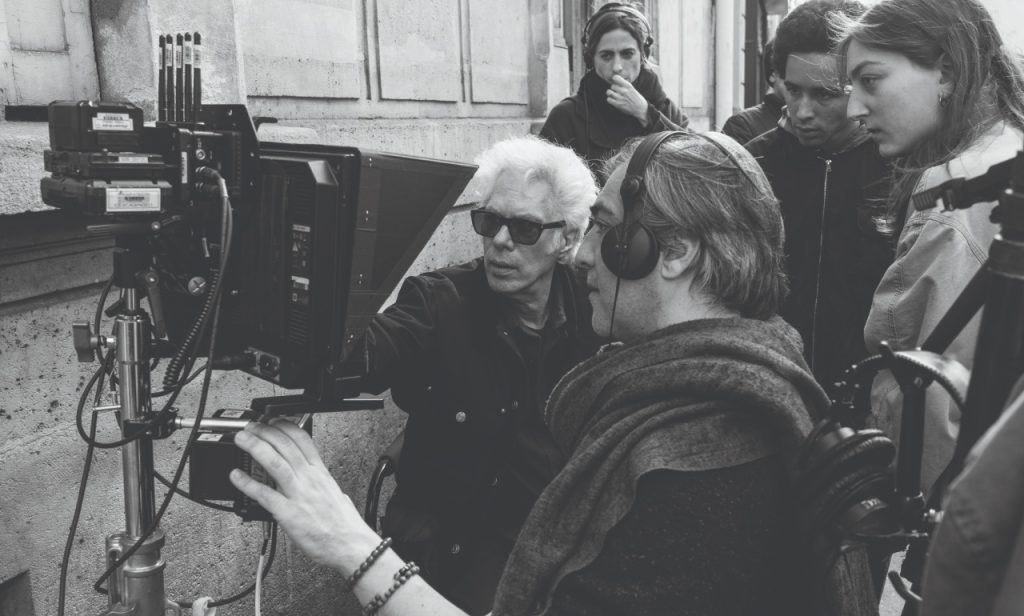
Los ejemplos que cita Jarmusch no son azarosos. Esas películas, al igual que Padre madre hermana hermano, también son antologías cosmopolitas. Una noche en la tierra hace paradas en L.A., Nueva York, París y Roma antes de llegar a destino en Helsinki (en cambio, la no citada pero también genial Mystery Train, de 1989, afinca todos sus relatos en un mismo hotel de Memphis). En cualquier caso, lo que comparten todos estos poemarios cinematográficos es la sagacidad de alguien que no solo tiene en cuenta el fuera de campo sino que lo hace para ejercer operaciones lúdicas sobre aquello que sí es enunciado. Así le dijo el director a The Guardian, en una entrevista de 1999: “Gran parte de la innovación en el lenguaje viene de la poesía. Dante era básicamente cultura hip-hop, porque escribía en italiano vernáculo y en ese momento eso era inaudito; la gente escribía en latín y Petrarca escribía en italiano elevado, pero él hablaba en lenguaje de la calle”.
En efecto, aunque se construya sobre una serie mínima de elementos, Padre madre hermana hermano está repleta de rimas formales que reaparecen a lo largo de sus tres relatos. El recurso de la reiteración podría sugerir una cierta universalidad en la experiencia familiar, pero sirve principalmente para resaltar una serie de fluctuaciones, siendo la posicionalidad étnica y de clase la más notoria de todas. Es así como el tercer segmento funciona como un contrapunto claro de los dos precedentes.
Hay muchas rimas en la película, no solo formales sino también narrativas: los autos, el Rolex, los skaters… ¿Cómo hiciste para combinar estos tres segmentos en un solo movimiento?
Gracias por hacerme esa pregunta. Mi enfoque para esta película fue pensarla como una pieza musical con tres movimientos, pero que no están separados sino que se corresponden entre sí por medio de pequeños motifs que reaparecen o se transforman. Hay cosas pequeñas, incluso tontas, que introduje, como los Rolex, el tema del agua (que no es para nada tonto), o la frase: “Bob’s your uncle”. En el primer capítulo, el dinero está presente cuando el padre se aprovecha de su hijo y su necesidad de afecto. Eso me resultaba interesante como disfuncionalidad a explorar. No necesariamente algo negativo. Después, en la segunda historia, el personaje de Vicky Krieps engaña a su madre para conseguir un viaje en Uber, entonces los términos se invierten. Los skaters, para mí, eran muy importantes como una especie de alivio, como cuando mirás por la ventana y ves pasar pájaros por un momento. Trabajé mucho para que todos esos elementos se fueran acumulando como temas musicales. La construcción fue emocional, y el clímax llega en el tercer capítulo, cuando el hermano y la hermana se abrazan en la habitación vacía de sus padres. La tercera historia es la que siento más cercana a mi corazón, porque sus personajes son más bien outsiders, más cercanos a mi propia tribu. Me siento cercano a esa condición de outsider que a veces se te es dada simplemente por quién sos. Para mí, el abrazo que comparten es el pico emocional de toda la pieza y no solo del movimiento. Así que fue algo muy cuidadosamente construido. Y estoy orgulloso de eso. Ya lo dije antes: hace falta mucho esfuerzo para que algo parezca orgánico. Esta película fue muy minuciosa en ese sentido.
Sin embargo, recién hablabas de no planificar. Quería preguntarte si trabajás con un plan de rodaje y, en general, cómo encarás la puesta en escena. Ese paneo de 360° en el último segmento es muy movilizante.
Soy extremadamente detallista. Muy obsesivo con los detalles. Entonces tengo que hablar de todo: cómo es la taza de té, qué tipo de medias usan, qué hay en las paredes, cuáles son los colores de los interiores. Necesito saberlo para tener una noción de cómo va a sentirse todo eso en su conjunto. Trabajo muy de cerca con el diseño de producción y, por supuesto, con el director de fotografía. Aprendí una técnica bastante inusual de Robby Müller, el gran DF, hace muchísimos años. Definimos un plan de rodaje muy preciso para saber cómo vamos a filmar cada escena, y el día de rodaje lo tiramos a la basura. Es decir: ya lo pensamos mucho, pero ahora no estamos atados a nada. Ahora lo estamos haciendo de verdad. Entonces hay que asegurarse de estar pensando sobre la marcha y de que todo se sienta vivo. No sigo la fórmula de un plan de rodaje. Prepararlo es muy útil, te da ideas sobre angulaciones y cosas así, pero lo descartamos cuando vamos a filmar y lo digo en el sentido más literal. Se siente como decir: “Bueno, ahora sí podemos hacer la película de verdad”.
¿Hubo algún momento, en esta película o en tu carrera en general, donde la falta de planificación te haya acercado a algo vivo y superador que aún te sorprenda y atesores?
Bueno, te cuento algo de esta película. Mencionaste ese paneo de 360°, y no estaba planeado. Mientras estábamos robando planos pequeños de cada habitación del departamento, nuestra asistente de cámara, Charlotte Neri (una joven francesa del equipo), dijo: “Si nos paramos acá y giramos, podemos ver literalmente todas las habitaciones”. Entonces Yorick Le Saux, el director de fotografía, y yo nos paramos ahí y dijimos: “Bueno, pongamos la cámara acá, en una altura bien baja”. Fue muy emocionante. Después le agregué música al paneo. Pero eso fue algo que ella vio mientras nosotros estábamos ocupados mirando otras cosas. Y ahí vuelve esta idea de estar abiertos, de no estar atados a un plan. Le regaló algo hermoso a la película.
Nacido en Akron, Ohio, Jim Jarmusch se crio en la cinefilia bajo el manto de una madre que se desempeñaba como crítica en el Akron Beacon Journal. Fue gracias a ella que vio a Robert Mitchum cagándose a tiros en Thunder Road; y fue durante sus descansos que se metía en el cine State Road a ver títulos de clase B (tuvieron que pasar algunos años para que descubriese Chelsea Girls). A los 17 años se mudó a Nueva York para estudiar literatura inglesa en la Universidad de Columbia. Luego, viajó a París para continuar su formación en Letras, pero descubrió la Cinémathèque y, junto a ella, el cine de autores como Yasujirō Ozu. “Ozu vive siempre en mi corazón. Hicimos algunos planos en el segundo relato que funcionan como un pequeño homenaje a él, cuando Charlotte Rampling recorre las habitaciones. Los cineastas puros como Ozu, Dreyer y Bresson han estado en mi alma desde que tomé conciencia de la diversidad del cine en el mundo”.
Tras su paso por Francia, Jarmusch regresó a Nueva York y, sin tener su rumbo del todo claro, decidió anotarse a estudiar cine en la NYU, en donde conoció a Nicholas Ray, el director mítico de Rebelde sin causa y otras cuantas películas sobre inadaptados que padecen la violencia de la sociedad que los rodea. Ray advirtió el potencial y, en sus últimos años de vida, reclutó a Jarmusch como asistente.
¿Cuál fue el mayor aprendizaje que derivó de la experiencia?
Ray me dijo: ‘Nunca dirijas a todos los actores juntos en una escena’. Imaginate que tenés tres personajes. No hay que concebirlos como un conjunto, porque cada uno tiene su propia motivación y su propia percepción de dónde está. Hay que hablar siempre por separado con los actores, y procurar además que sean entidades individuales al interior de la escena, y no una extensión de esta, que ‘actúa algo’ para llegar a un destino. Aprendí eso de Nick, y trabajé siempre así.
Jarmusch no se graduó de la NYU. Ganó la beca Louis B Mayer, destinada a cubrir la matrícula universitaria, pero recibió el dinero en su cuenta bancaria por accidente y lo aprovechó para rodar su tesina de grado, Permanent Vacation (1980), que costó 12.000 dólares. Su película siguiente, Extraños en el paraíso (1984), se rodó con fílmico donado por Wim Wenders, y se atuvo al concepto de resolver la puesta de cada escena en un solo plano. “Un Beckett de tira cómica”, en palabras de Pauline Kael. Se trató de un hit para el cine independiente de la época, y terminaría de asentar algunos de los rasgos característicos de la obra de Jim: el humor seco, por un lado, y la centralidad prodigada a los marginales que deambulan sin rumbo ni prisa, por el otro.
La nueva normalidad de Jarmusch pasó a incluir situaciones como ser invitado a fiestas en la casa de Jean-Michel Basquiat. Fue en una de ellas donde conoció a Tom Waits, protagonista de Bajo el peso de la ley (1986) y ahora, cuatro décadas después, de Padre madre hermana hermano.
“Con Tom tenemos una amistad muy larga y nos entendemos bien. Todos los actores tienen enfoques distintos, y Tom también lo tiene. Te cuento algo gracioso que pasó al final del primer día de rodaje. Tom me apartó del resto del equipo y me dijo: ‘Jim, estos dos son asesinos profesionales, no entiendo que estoy haciendo acá ’. Y yo le dije: ‘Tom, vos tenés tu estilo y ellos tienen el suyo. Tu fortaleza es esa libertad que necesitás. Confiá en mí’. Y él me dijo: ‘Confío en vos’. Su enfoque es muy distinto al de Adam Driver, que es extremadamente preciso. Pero Tom es un gran actor porque deja que las cosas emerjan sin forzarlas. Cuando su personaje enumera todas las drogas que dice no consumir, Tom agregaba algunas que yo ni había escrito. Para mí, el momento más conmovedor del primer capítulo es un primer plano de él sentado en su silla. Le preguntan algo sobre el funeral de su esposa, y él simplemente dice: ‘Bueno’. Eso fue profundamente emotivo. Es lo único que dice, pero lo que transmite… Lo que me resulta tan hermoso de su actuación es que es muy gracioso sin ser cómico, y muy conmovedor sin manipular con sentimentalismo”.
Por la incisión radical que supuso, en su época, el modelo de producción que abrazó, podría sugerirse una genealogía directa entre Jim Jarmusch y John Cassavetes. Pero los nexos no se agotan en la preservación de la independencia como posicionamiento ético. Resuenan, sobre todo, en la horizontalidad de sus protagonistas y también en la veta marcadamente jazzera de las películas. Cassavetes filmó Shadows por 15.000 dólares, y narró la vida de dos hermanos músicos y negros en la Nueva York de los años cincuenta. Jarmusch hizo lo propio para su generación: Permanent Vacation siguió la errancia de un fan de Charlie Parker. A partir de ahí, la música cobró una centralidad creciente, delante y detrás de cámaras. Además de Waits, desfilaron por sus planos Iggy Pop, Screamin’ Jay Hawkins, Joe Strummer, los White Stripes, RZA y (a mucha honra) Selena Gomez. Greil Marcus, el crítico histórico de rock, llegó a afirmar que Dead Man, con música de Neil Young, era la “mejor película del final del siglo XX”. Por su parte, Solo los amantes sobreviven (un film de vampiros sin mención de la palabra “vampiros”) fue sonorizada por la banda del mismo Jim, SQÜRL. Puede que se trate de su obra maestra. Cuanto menos, es su trabajo más romántico: dos audiófilos que coleccionan guitarras sienten un amor mutuo tan fuerte que existe por fuera del tiempo.
“Cuando estaba intentando componer una mínima banda de sonido para esta película, llegué a pensar que quizás ni necesitaba música. Cuando hice el soundtrack de Paterson con Carter Logan, fue más fácil porque teníamos a un único personaje central. La película estaba filtrada por su mirada del mundo, y todas las decisiones estéticas se definían en función de eso. En cambio, en esta película no hay una figura central. Entonces, ¿qué música corresponde? ¿Cuál es el punto de vista? Intenté encontrar una música que fuera como el aire alrededor de los personajes, una suerte de atmósfera o pequeño reporte del clima. Pero no podía vincularla a una perspectiva o percepción específica. Y no me di cuenta de la falta de un centro hasta que me senté a componer. Aprendí mucho de no tener un personaje central”.
Quería preguntarte por Frederick Elmes, uno de los directores de fotografía de tu película. También trabajó con Cassavetes y con Lynch, a quien mencionaste antes. ¿Sentís algún tipo de parentesco con ellos a través de él?
Fred empezó muy temprano con Lynch, filmó Eraserhead y Terciopelo azul. Pero es mucho más surrealista y experimental que yo. Para Cassavetes hizo The Killing of a Chinese Bookie cuando tenía 19 años, y diría que su estilo también es distinto al mío. Es bastante más dramático. Diría que estoy en un punto intermedio: me siento conectado con Cassavetes por su humanismo y su empatía, y con Lynch por su uso extraordinariamente bello e intencionado del cine como lenguaje. Estoy, de algún modo, entre Cassavetes y Lynch. Y Fred nos conecta de una manera muy literal, porque efectivamente trabajó con todos nosotros. Así que sí; podría decir que soy una especie de Cassavetes lynchiano.
The post Jim Jarmusch: “No planifico nada, ni en el trabajo ni en la vida” appeared first on Rolling Stone en Español.
Aunque la franquicia Avatar sigue siendo una de las más rentables en la historia del cine, James Cameron ya está pensando en cómo hacer sostenibles las próximas entregas de la saga.
Durante una entrevista reciente en el podcast The Empire Film Podcast, el director explicó que las últimas dos entregas de Avatar todavía están en desarrollo, aunque su realización dependerá de encontrar formas más eficientes de producción.
“Vamos a buscar nuevas tecnologías para intentar hacerlas de manera más eficiente, porque son increíblemente caras y toman muchísimo tiempo”, explicó el cineasta. “Quiero hacerlas en la mitad del tiempo y por dos tercios del costo. Esa es la métrica”.
Desde el estreno de Avatar en 2009, Cameron convirtió a Pandora en uno de los universos cinematográficos más exitosos jamás creados. La película original —centrada en la resistencia del pueblo Na’vi frente a la explotación humana de sus recursos— continúa siendo la cinta más taquillera de todos los tiempos, con más de 2.9 mil millones de dólares recaudados globalmente y su secuela de 2022, Avatar: El camino del agua, ocupa actualmente el tercer lugar histórico con 2.3 mil millones.
Sin embargo, el desempeño comercial de Avatar: Fuego y cenizas, estrenada el año pasado, mostró una ligera caída frente a sus predecesoras. Aunque la película recaudó aproximadamente 1.49 mil millones de dólares en taquilla mundial —una cifra que para cualquier otra franquicia sería gigantesca—, el descenso abrió dudas sobre la viabilidad de las dos películas restantes planeadas por Cameron.
La conversación alrededor de la franquicia también llega en un momento donde parte de la crítica ha comenzado a cuestionar si la serie necesita reinventarse. En diciembre pasado, el director incluso comentó que, si las últimas películas no llegan a realizarse, ofrecería una conferencia de prensa para revelar los argumentos que tenía planeados para cerrar la saga. “No sé si la historia continuará más allá de este punto. Espero que sí”, dijo entonces.
Aún así, Cameron insiste en que el proyecto sigue vivo. Según explicó, dedicará estos años a explorar nuevas herramientas tecnológicas que permitan acelerar la producción y reducir costos, mientras continúa escribiendo y desarrollando otros proyectos paralelos.Por ahora, Cameron también enfrenta una nueva controversia legal. A principios de este mes, una actriz indígena presentó una demanda contra el director, alegando que su imagen fue utilizada sin consentimiento como inspiración para el personaje de Neytiri.
The post James Cameron quiere hacer <i>Avatar 4 y 5</i> “en la mitad del tiempo y por dos tercios del costo” appeared first on Rolling Stone en Español.