


Ari Weiss

Síguenos en Redes




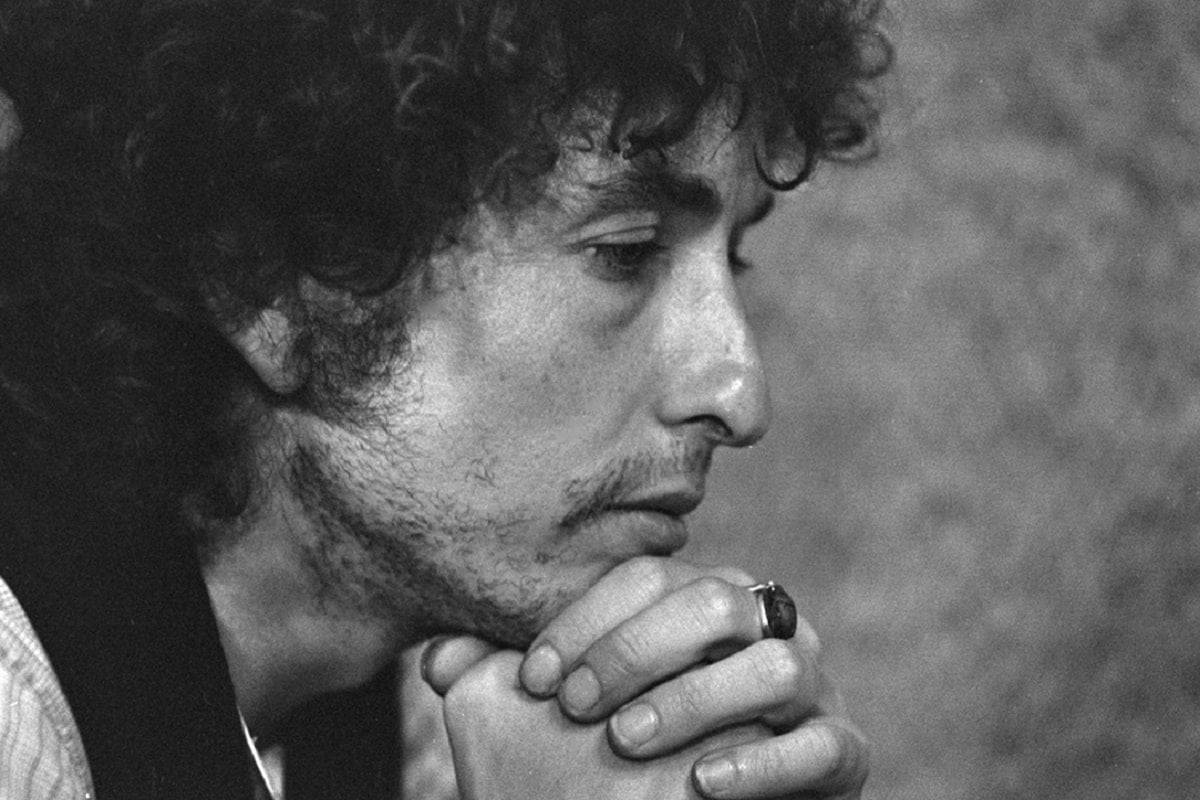
Bob Dylan es reconocido por su profunda lírica —lo cual le valió el Premio Nobel—, también por su figura influyente para el folk y el rock y, además, por ser un compositor prolífico. A lo largo de su carrera, Dylan compuso decenas de éxitos y también canciones que lograron una gran popularidad gracias a versiones […]
Ver más noticias en Indie Hoy.
The third week of Live Nation’s antitrust trial featured testimony from the new CEO of Oak View Group (OVG) about the company’s controversial client-steering arrangement with Ticketmaster, while Live Nation’s first defense witness said there are “lots of promoter options” for top touring acts.
You’re reading Billboard’s weekly Live Nation trial recap, a weekly one-sheet of everything that happened in the monopoly case against the concert giant. Stay tuned here each Friday for all the testimony and big events you might have missed.
Related
WHAT HAPPENED: State attorneys general largely concluded their case-in-chief against Live Nation — though technically they have not rested and plan to call a few more witnesses later on due to scheduling issues — while Live Nation began putting on its own witnesses. The defense case is expected to run for another week and include testimony from Drake’s manager, Adel Nur, aka Future the Prince.
Recall that the monopoly case is now being led by states because the Department of Justice (DOJ) struck a settlement with Live Nation a week into trial. The Wall Street Journal reported last week that President Donald Trump personally pushed for the deal on the recommendation of Endeavor CEO and former Live Nation board member Ari Emanuel.
Though the DOJ settlement calls on Live Nation to curb some allegedly anticompetitive practices, it would not require the divestment of Ticketmaster. Meanwhile, states including New York and California are pushing forward with the continued goal of breaking up the two live events giants.
WHO TESTIFIED: Chris Granger, who took over as CEO of OVG following the indictment of founder Tim Leiweke on federal bid-rigging charges last year, was called as a government witness on Wednesday (March 25) to talk about the venue management company’s $20 million client-steering arrangement with Ticketmaster. As was required by the terms of a non-prosecution agreement in the Leiweke case, Granger confirmed that OVG was paid to encourage venues to choose Ticketmaster as their exclusive primary ticketing vendor — and that it did not disclose this incentive arrangement to clients.
Related
While not illegal, the states allege that the secret fees between OVG and Ticketmaster bolstered Live Nation’s anticompetitive edge. Law360 reports that Granger, being grilled about why this arrangement wasn’t disclosed to clients, testified, “I don’t know why, we should have.”
Granger did testify, however, that he would recommend Ticketmaster to venues regardless of any incentive because it’s a superior platform to AXS or SeatGeek. “It still has the biggest database [and] it has the best name recognition, so when you’re trying to sell tickets, it has a bit of a marketing halo,” explained Granger.
Live Nation began its defense case on Thursday (March 26) with a key witness who countered that the company is not a monopolist: Omar Al-joulani, Live Nation’s president of touring. According to Courthouse News Service, Al-joulani testified that he works with top touring acts like Coldplay, Kendrick Lamar, Drake and Imagine Dragons — but that Live Nation doesn’t have long-term contracts with these stars and has to constantly prove it’s the best choice among promoters.
“There are lots of promoter options,” said Al-joulani, noting that the company has lost out on business with top artists like Morgan Wallen and Bruce Springsteen. “I can’t stress [enough] how competitive the business is.”
Related
The jury also heard this week from Nicholas Hill and Rosa M. Abrantes-Metz, two PhD economists who are serving as the states’ expert witnesses, as well as Ticketmaster’s global president Mark Yovich and former AEG Presents president Rick Mueller.
WHY IT MATTERS: Granger’s testimony was a big deal because OVG has been a big part of the Live Nation antitrust case since the beginning. In its initial 2024 complaint, the DOJ alleged that OVG operated as a “pimp” and “hammer” to protect Ticketmaster exclusivity arrangements, which are central to the monopoly claims.
OVG stipulated to some of these facts as part of its non-prosecution deal in the Leiweke case — a separate criminal antitrust proceeding related to the construction of the Moody Center in Austin. That prosecution is now dead, however, because Trump pardoned Leiweke in December. The DOJ had been hoping to get Leiweke to testify at the Live Nation trial, too, but his pardon seems to have scuttled that effort.
As for the defense case so far, Al-joulani’s testimony bolsters Live Nation’s consistent argument that there is robust competition in all areas of the live entertainment business, including touring, venue ownership and ticketing. The company says any attempts to prove otherwise are based on misleading metrics.

Chuck Redd, the musician who canceled a Christmas Eve performance at the Kennedy Center in protest of President Donald Trump’s influence over the venue, is asking a judge to dismiss a lawsuit the performing arts institution brought against him.
In a motion filed in D.C. Superior Court on Friday, lawyers for Redd said the breach of contract suit should be dismissed because he wasn’t contractually obligated to perform. The motion included the contract provided by the Kennedy Center, which the artist never signed.
Related
But his lawyers argued there was more at stake than contract law, portraying the Kennedy Center’s suit as an effort to intimidate artists.
“The Trump Kennedy Center filed this lawsuit to send a message to anyone who dares to publicly disagree with the decisions of those in power,” lawyers Debra S. Katz and Lisa J. Banks said in a statement.Sue
Representatives for the Kennedy Center didn’t immediately respond to a request for comment on the motion.
Redd, a drummer and vibraphone player who has toured with everyone from Dizzy Gillespie to Ray Brown, has presided over holiday “Jazz Jams” at the Kennedy Center since 2006. He called off last year’s performance shortly after Trump’s handpicked board at the Kennedy Center voted to add the president’s name to the facility.
“When I saw the name change on the Kennedy Center website and then hours later on the building, I chose to cancel our concert,” Redd told The Associated Press in an email at the time.
Within days of his decision, Richard Grenell, the Kennedy Center’s president at the time, sent him a letter calling the cancellation “classic intolerance and very costly to a nonprofit Arts institution.” Grenell threatened to seek $1 million in damages and the Kennedy Center filed suit on March 6.
Grenell left his post earlier this month and was replaced by Matt Floca, who previously managed the Kennedy Center’s facilities operations. Trump is closing the Kennedy Center later this summer for renovations that are expected to last roughly two years.
This story was originally published by The Associated Press.
Universal Music Group (UMG) is firing back at Drake’s appeal seeking to revive his lawsuit over Kendrick Lamar’s “Not Like Us,” arguing the superstar is trying to “critically undermine” the art of hip-hop because he’s upset he lost a rap beef.
Drake’s case accused UMG of defaming him by releasing Lamar’s Grammy-winning diss track, which blasted the rival rapper as a “certified pedophile.” But a judge dismissed it in October by ruling fans wouldn’t think insults in a rap battle were statements of fact.
Related
Last month, the superstar appealed that ruling in an effort to overturn it. But in its brief on Friday, UMG said that appeal was a non-starter because it aimed to “strip words from their context.”
“That is not the law, and Drake’s view would critically undermine a highly creative art form built on exaggeration, insult, and wordplay,” UMG’s attorneys write.
Lamar released “Not Like Us” in May 2024 as the knock-out punch in a series of bruising diss tracks between the two stars. The song was not only seen as a final rhetorical victory, but also went on to become a chart-topping hit in its own right, cleaning up at the Grammy Awards and forming the centerpiece of Lamar’s Super Bowl halftime show.
Drake sued UMG in January 2025, stunning the music industry. Few expected a rapper to respond to a diss track with a lawsuit — a move that drew ridicule in the hip-hop world. Fewer still expected him to file it against UMG, his longtime label and the biggest music company in the world.
Making matters worse for Drake, Judge Jeannette Vargas dismissed the case in October. She said Kendrick’s insulting lyrics were the kind of “hyperbolic” opinions that cannot be considered defamatory because reasonable listeners would not think they were “sober” statements of fact that could be proven true or false.
In his appeal in January, Drake’s lawyers argued that “millions of people” took the lyric literally, causing “countless individuals around the globe to believe that Drake was a pedophile.” They said the ruling “brushes aside the risk of concrete reputational harms” simply because allegedly defamatory statements came in a rap track.
But in their response on Friday (May 27), UMG said that such context was all-important. The “pedophile” statement came after Drake himself had accused Kendrick of “beating his fiancée and not fathering one of his children,” in a genre that is built on such bombastic insults.
“’Not Like Us’ falls within a genre typified by inflammatory putdowns, epithets, fiery rhetoric, vulgarity, and hyperbole,” UMG’s lawyers write. “Drake’s attempt to rip the words he now dislikes from their immediate and broader context has no support in governing law.”
The case will be argued before the appeals court in the months ahead, with a ruling expected at some point in the next year. An attorney for Drake did not immediately return a request for comment.
All products and services featured are independently chosen by editors. However, Billboard may receive a commission on orders placed through its retail links, and the retailer may receive certain auditable data for accounting purposes.
Ahead of the release of his latest album Bully, Ye (formerly Kanye West) announced a pair of upcoming shows in Los Angeles, making it his first U.S. stadium concert since 2021’s Free Larry Hoover benefit show with Drake. The Chicago rapper will be setting up shop at popular Inglewood, Calif. venue SoFi Stadium on April 1 and 3.
When the news broke about the show, Yeezy fans flooded Ticketmaster during the pre and general tickets release window on March 11. While tickets are mostly sold out now, the best chance for concert goers to secure a seat at SoFI is turning to various resell sites like StubHub and Seat Geek.
Dubbed “Ye Live in Los Angeles” by SoFi Stadium’s website, the two-night show coincides with the launch of Kanye’s long-awaited Bully album, which is expected to release today, March 27. He revealed the tracklist earlier this week alongside hosting listening events across major cities, including New York City, Los Angeles and London. He also livestreamed the LA listening party on his YouTube channel. However, the album has still not made its way to streaming platforms like Spotify and Apple Music as of writing this.
Ye’s last SoFi Stadium appearance came during Rolling Loud 2024 with Ty Dolla $ign, which was more of a “listening event” than a typical concert. As we patiently wait for Bully to drop on streaming, shop affordable Ye tickets below.
With resell sites like StubHub, SeatGeek and Gametime, Ye fans can shop available concert tickets to SoFi stadium online and securely. Below, ShopBillboard put together a list of affordable ticket options, including exclusive discount codes that can save you up to $500.
You can find Kanye West tickets on StubHub from $310 and take advantage of the site’s filters to find the best tickets available. Choose from the number of tickets needed, price and even have estimated fees included in the cost, so there are no hidden surprises. Plus, each purchase is protected by StubHub’s FanProtect, which you can learn more about here.
Vivid Seats has Ye tickets from $115 and help you determine the best offers available by labeling what dates have deals. You can even save $20 off orders of $200+ when you use the code BB2024 at checkout. When sifting through tickets, you can sort by the price as well as if the offer is from a site SuperSeller (sellers who are highly-rated and experienced) as well as the seat(s) are in the front of your desired section.
Your purchase will also be covered by the Vivid Seats Buyer Guarantee, which can you read more about here.
Seat Geek is another affordable option to find cheap Kanye West tickets with options as low as $123. The resale ticketing site uses a ranking system with a scale of 1-10 to show which options are the best deal. Tickets marked a one are considered the worst deal whereas options rated a 10 are considered the best deals. Bonus offer: First purchases are eligible to receive $10 off orders of $250+ when you use the code BILLBOARD10 at checkout.
Gametime promises to be the go-to destination for the cheapest last-minute tickets to the Ye concert and more live events. Right now, you can find options for as low as $123, and score an extra $20 off purchases of $150+ when you enter the code SAVE20 at checkout. Found cheaper options on another site? The Gametime Price Guarantee will give you 110% of the difference back when you show proof to the resale site.
You can find cheap Kanye West tickets on Ticketnetwork starting at $129. You can also get $150 off purchases of $500+ when you use the code BILLBOARD150 at checkout or $300 off orders of $1,000+ when you use the promo code BILLBOARD300. To help find the best options, the site provides an interactive map that lets you see how many tickets are left in each section in addition to being able to pick exactly where you want to sit and sort options based on price per ticket.
Rebecca Black helped –196 Vodka Seltzer transform a New York City gallery space into an immersive experience inspired by Tokyo culture.
At an event dubbed Konbini Backroom on Thursday night, March 26, the rising star performed a DJ set and helped the brand lean into the idea of discovering something exciting in a familiar place. After attendees walked into a konbini, the Japanese term for a convenience store, they were met with iconic Japanese snacks and refrigerators stocked with flavors of –196 Vodka Seltzer, including Lemon, Strawberry, Peach and Grapefruit. However, that was only the beginning of the experience. A speakeasy-style transition then led guests into a dance party, with tunes provided by the star.
Amid her hour-long set, Black spun her hit “Sugar Water Cyanide”, as well as throwbacks from the likes of Jennifer Lopez and Fergie. Scroll on below to see all the hot shots from the invite-only event!
Ari Weiss
Ari Weiss
Artist
Ari Weiss
Michael Simon
–196 Vodka Seltzer transformed a New York City venue into a Tokyo-style convenience store pop-up with help from Rebecca Black, marking yet a buzzy moment for the rising star ahead of new music.
Billboard attended the event, dubbed Konbini Backroom, on Thursday night, March 27, where we spoke with the pop star-turned-DJ about her partnership with the fruit-flavored vodka seltzer brand. “I am so excited to be a part of this event because it’s bringing the nightlife of Tokyo and kobini culture to New York,” she said prior to her set. “It’s really a once in a lifetime moment right here in New York.”
Ari Weiss
Black’s DJ set at the Lower East Side gallery space played into the idea of discovering something exciting in a familiar place. Fans walked into what appeared as a Japanese-style kobini, only to make their way through a speakeasy-style walkway to a secret dance party. The self-made star explained that she also plays into the element of surprise when it comes to her sets. “I always want a track in there that people won’t be expecting to hear that night, she said. “But one that’ll bring so much joy and surprise that they did, whether it’s some deranged ‘Crazy Frog’ reggaeton mix or a ‘Friday’ mashup or anything else I come across.”
Next up for Black is the follow-up to her 2025 album, SALVATION, a new chapter of music she has been teasing to her 1.1 million followers on Instagram. She also has upcoming performances slated for Diplo’s HonkyTonk at Stagecoach and Beyond Wonderland in the coming months. The music was created while she was on and off the road during her SALVATION TOUR.
“It’s been so fulfilling to intertwine my world of dance into what I do more and more, and see the songs that were already going down that path be the ones to connect with my audience the most,” the star said of her sonic trajectory. “’Sugar Water Cyanide’ was by far the heaviest track off my last project, and seeing it become the one everyone knows was so validating to begin creating from again. This new music is heavier, harder, faster and louder than anything I’ve made before.”
Black’s appearance comes on the heels of the 15-year anniversary of her surprise viral breakout, “Friday.” While her early social media virality will always be a part of her story, she’s come a long way since surviving the internet in 2011 with the single. After all, you don’t go from a song like “Friday” to the Boiler Room stage and a spot on Forbes’ 2026 30 Under 30 Music list for nothing.
Ari Weiss
Ari Weiss
Ari Weiss
Tiny Harris has finally broken her silence on the explosive beef between 50 Cent and her husband, rapper T.I.
Related
“I really didn’t give a damn. I already told my assistant, ‘He’s gonna bring me into this.’ I already knew it was coming. I was expecting it, but nobody else, I don’t think, was expecting it,” she reflected on the Thursday episode of The Breakfast Club (March 26).
“He should have kept the beef with the man he was dealing with,” she continued. “You’re a man dealing with a man, you ain’t got nothing to do with me. I don’t got nothing to do with this. Who goes after the woman? That’s crazy. You should be dealing with the man. That’s y’all beef, right?”
Fiddy and Tip have had static since the late 2000s, and their discord was reignited after the Queens rapper posted a picture of Tiny to his social media pages and mocked the appearance of the couple’s eldest son, King Harris. Both King and his older brother Domani — a rising rap star and T.I.’s son from a relationship with LaShon Thompson — responded with incendiary diss tracks and social media takedowns, while their father stepped into the ring with the scathing “The Right One.”
“It was a proud moment that they wanted to speak up for their mom, and I feel like the songs were really good, especially Domani [with] ‘Ms. Jackson,’” Tiny said, later explaining that King “took it very personal” and ignored her requests to delete some of his responses from social media. For his part, earlier this month (March 3), T.I. told The Ebro Laura Rosenberg Show that he didn’t “enjoy” his sons hopping into the battle. “I raise my children to be men of respect,” he said. “Logical, reasonable and not to be emotional.”
Two weeks ago (March 10), Fiddy tapped Grammy-winning R&B star Leon Thomas for “No One Told Us,” the theme song for his upcoming Power: Origins series that also doubles as his response to T.I. and his sons. “I’m back on my dope boy grammar/ Your daddy made your mama eat every box in Atlanta,” he rapped.
The Fiddy-Tip beef has subsided for the time being, with the Atlanta MC turning his attention to his forthcoming Kill the King album, which has already launched a Billboard Hot 100 top 40 hit with the Pharrell Williams-produced “Let ‘Em Know” (No. 36).
Listen to Tiny address T.I. and 50 Cent’s beef below.
Talking to Billboard over Zoom from Los Angeles a week before the release of her third studio album, Slayyyter looks fresh faced and pretty while laying in bed talking about music. It’s thus counterintuitive when she reveals that she wanted the aesthetic for this LP, Wor$st Girl in America, to be, as she says “Really gross. I wanted this album to look ugly.”
But in the context of her trajectory this creative instinct makes sense. Landing in the music industry after growing up in a “very, very, very, very dysfunctional household” in St. Louis, in her earlier years Slayyyter often presented herself (intentionally or not) as a party animal in blonde extensions, the messy girl crying in the bathroom at the end of the night. The heaviness and swagger of her music paralleled these tendencies, with the work developing a significant cult following even as she judged herself for not abiding by the metaphorical “charm school lessons” other pop stars seemed to have had.
Coming after a period where she seriously considered quitting music, Wor$t Girl In America is a rejection of trying to be something she’s not, with the music and corresponding visuals trading polish for rawer, rougher, darker and more emotionally vulnerable themes. The music also slaps, synthesizing industrial, electro-pop and iPod party music into a work that feels honest and the right kind of raunchy.
Ahead of a 30-date (and largely sold out) North American and European tour behind the project — and her Coachella debut next month — Slayyyter talks about the new music with Billboard below.
This part of your bio stood out to me: “Leading up to her third album, Slayyyter was sick of the music industry and of herself, or at least people’s ideas of her. A crisis of faith was purged in Miami during a stint split between the studio and nightclubs.” Want to unpack that a bit?
I went to Miami for a month with a friend, and was thinking about where I stood in music and everything I’ve done, and how my last album didn’t really do what I guess people thought it was going to do. I had a come-to-Jesus moment of, like, “You know what? I am just going to make a really crazy last project, and I’m going to make it cool to myself, and not try to make it sound appealing to anyone but me.” I wanted to reference things that inspired me when I was a teenager.
Then what happened?
When I came back from Miami, we started work on this project, and I just kept saying, “I’m going to go back to school after this. I’m done. This is going to be my last project. I’m going to do one last rollout and give it my all, and then I’m going to tell my team that I’m over doing this and shift gears, because it’s not working out.” Then I rediscovered my love for making music while working on everything, and ended up signing to Columbia for this project, and everything has been so great. I really felt hopeless, so I think all of this music came from a place of wanting to make a project that fulfilled me, and then to move on with my life.
Did having that idea that you were going to move on with your life when the album was done affect what you were making?
The biggest mantra I had going into the studio was, “If I die tomorrow, would this be a song I’d be proud of or think was cool, or would it be a song that if people put it on at a party, I’d be embarrassed about?”
I have a lot of songs that are of the time. I’m not trying to hate on my older music — because everything serves its purpose at different times in life — but I wanted to make something about more than just being a Twitter meme artist. I went in referencing things I didn’t think were going be very popular with my audience. I wasn’t working with songwriters or making music from a place of, “This is going be huge,” or, “We need to make this sound like a hit.” I was going in and making things that felt right and cool to me.
Wor$t Girl In America is out on Columbia Records, after you had initially considered releasing it independently. What were those early conversations with the label like?
I kept saying things that ended up not even being so true. I was like, “I want this to be really gross. I want this album to look ugly. I want to be ugly. I want to be myself. I don’t want to do the whole beautiful fashion thing, and I don’t want the images to feel super curated and stylized. I want to style myself. I want to wear wrinkled jean shorts off my bedroom floor, and that’s the spirit of this album. And I want to wear grills and lean on a natural swagger rather then curating something glossy and pop star.”
They were so down for and intrigued by that. And I was surprised, because I feel like when someone says “I want to look ugly and crazy,” that’s not a great selling point. But I feel like they understood my vision from the beginning, and didn’t want to dilute or override my creative decisions, because they respected the cult following I’ve built for myself. They’ve been so incredible in helping uplift my vision and giving me advice, tools and strategy to roll this music out properly, and give this album what it needs.
How much of wanting to be ugly and gross was a reaction to the very high gloss pop star image you presented with your last album Starf–ker?
I think it had a lot to do with it. All the imagery for Starf–ker was very glamorous and Hollywood starlet, a lot of makeup and fashion and everything. It was fun to play with that, but it also doesn’t feel true to me. It definitely married the music very well — and, like, I love that album. I’m not trying to talk s–t on a previous project just because this is the new thing I’m doing. But I was sick of not only my own over-stylized imagery… I feel like everything we see these days is just so over-stylized. Big makeup, big hair moments. Nothing feels loose or effortless. And even when people are doing effortless visuals, there’s still a lot of stylization and curation that goes into everything — and I just felt so disconnected from where I was when I started making music, which was a very DIY approach to everything. Sometimes I would look crazy, but there was a charm to it.
I laughed at the line in your bio that described you as “Midwest core tweaker core.” Tell me about who that is, and how much of it is drawing from your childhood and young life in Missouri.
Oh that is 100% me, honestly. Whenever I tell people about my musical beginnings, I always says how I was, like, plucked out of St. Louis and dropped into this world without charm school lessons on how to walk and talk, and like, “Hey, maybe don’t have 10 drinks at a party and go berserk.” I feel like I came onto the scene with crazy looking platinum blonde hair extensions, and I was a hair salon receptionist, and always felt like I was too much.
I just felt so nervous and out of place that I would overcompensate with being drunk or crazy. I’ve honed it back over the years, and I’ve matured a lot, but it’s funny to look back on, because I was just taken from this townie bar culture and dropped into this very other place — not by mistake, but I wasn’t like, prepped for it.
Have you changed?
I’ve grown out of it a lot. People are always shocked when I say this, because I know this album feels like a fever dream party trip — but I do not really like to drink that much anymore. I try staying out of trouble as much as possible. I stay home and do little hobbies and watch my movies and whatever. The tweaker energy is a funny thing looking back. I really used to feel like the party clown.
There’s some sensitive stuff on this album, particularly in the second half. To what extent if any is this music a reckoning with that party clown past self?
I have had a reckoning with my past, and have become a little more self-forgiving about issues I might have or why I am the way I am. A movie that inspired me a great deal for this project was Uptown Girls, which is my favorite movie of all time. since I was a little little girl. Re-watching it as an adult, there’s a lot of themes about maturation and how your childhood conditions you to be the way you are.
I used to be so hard on myself. Like “God, why do you have to drink so much? Why are you so crazy? Why can’t you just be normal and not have freak outs in the bathroom?” As I’ve gotten older, I’ve been more self forgiving, because I had a difficult time as a kid.
Do you want to say more about that?
I grew up in a very, very, very, very dysfunctional household. I don’t really have a relationship with my father, and he affected me a lot from a young age. That all kind of conditioned me to be the way that I am now. It’s not an excuse for acting crazy or being whatever, but I think I have matured and grown a lot, and I look back on my past self, and don’t cringe as hard. Me being drunk on the mic at someone’s DJ set who doesn’t want me onstage, that’s okay. It doesn’t really matter. Like, nothing matters. We’re all gonna die. I think if people understood more about where I come from or what my childhood was like, it wouldn’t all seem so embarrassing or crazy or out of place.
Is this project then a sign of maturation?
Definitely. I tapped back into my high school influences, and some of the songs have an immature, teenage angst. But it feels like I’ve grown into my skin and into myself as like an artist. This project feels like my final form and who I am at the core as an artist.
Now that’s you’re on the other end of making it, are you still ready to go back to school and leave this part of your life behind?
I honestly don’t know if I would go back to school. I would love to. I have pretty severe ADHD and get really fixated on hobbies and things like sewing and costume construction. I feel like I’m too old to go back to school for that, but maybe I’m not. I’d love to take classes and lean more into that, because I am obsessed with clothes. I love constructing my own costumes, which I’ve done a ton during this album cycle.
But really, the biggest lesson I’ve learned throughout music and through past projects is to not put expectations on anything. I feel very grateful that people are paying attention and resonating with this music, and I don’t really need some big breakthrough to sleep at night.
All products and services featured are independently chosen by editors. However, Billboard may receive a commission on orders placed through its retail links, and the retailer may receive certain auditable data for accounting purposes.
Major League Baseball is back and already in full swing. The New York Yankees and San Francisco Giants kicked things off on Wednesday, March 25, with Aaron Judge and the Yanks showing their dominance with a 7-0 shutout victory. With opening weekend upon us, the baseball action only continues with eight games slated for Friday. Today, March 27, fans will get Game 2 of the Yankees vs. Giants series and the Diamondbacks facing the defending champs, the Los Angeles Dodgers.
For the 2026 regular season, MLB games will be spread across five TV networks (NBC, FOX, ESPN, TBS and MLB Network) and six streaming services (Peacock, Hulu + Live TV, ESPN Unlimited, DirecTV, Apple TV and Fubo), so if you don’t have cable, there are a number of ways to stream baseball game online and for free.
To make sure you are baseball-ready to watch a full day of America’s pastime, we’ve compiled a list of all the best ways to stream the upcoming 2026 MLB season from the comfort of your home. Keep reading for more ways to stream games from anywhere.
When it comes to nationally televised MLB games, there are plenty of ways to watch and stream without cable or satellite. Throughout the season, games will be available to stream on FuboTV, DirecTV, Sling TV, Hulu + Live TV, Peacock and ESPN Unlimited.
A subscription to DirecTV — which comes with NBC, USA Network, CNBC, MS Now, Bravo, NBC Sports and other NBCUniversal Networks — gets you access to live TV, local and cable channels, starting at $84.99 for the first month of service ($89.99 per month afterward) for signature packages. The service even offers a five-day free trial to watch for free, if you sign up now.
You can watch local networks such as ABC, CBS, FOX and PBS, while you can watch many cable networks, including FS1, Lifetime, FX, AMC, A&E, Bravo, BET, MTV, Paramount Network, Cartoon Network, VH1, Fuse, CNN, Food Network, CNBC and many others.
The simplest way to get instant access to NBCUniversal networks is through the channel’s official streaming platform, Peacock. While there is no free trial for new users, the platform offers cheap plans starting at just $10.99 per month, or you can get an annual plan for $109.99 per year (which gets you 12 months of streaming for the price of 10).
You can look forward to streaming live sports, such as MLB on NBC, Premiere League, NBA on NBC, 2026 World Cup and other sporting events.
Sling TV offers the Blue package, which goes for $54.99 per month and comes with NBC, USA Network, CNBC, MS NOW, Bravo and others. Blue is one of the most affordable options and comes with more than 40 channels and can be streamed on up to three device at a time. Please note: Pricing and channel availability varies from market-to-market.
For the most content offerings, you can sign up for Hulu + Live TV and get access to the Hulu library with more than 95 live TV channels (including NBC, USA Network, CNBC and others). The streaming platform starts at $89.99 per month.
And, for even more programming, Hulu + Live TV now comes bundled with Disney+ and ESPN Unlimited, which gives you everything within the Hulu library, as well as exclusive content on ESPN for even more sports coverage.
Fubo is another great option you can take advantage of to watch ESPN and CBS online. The streamer offers a seven-day free trial that’ll give you access to ESPN free and more than 240 live TV channels. The service offers a promo that’ll get you up to $30 off the first month, which can get you access to ESPN and more for as low as $54.99 (reg. $84.99 per month).
ESPN Unlimited is the official streaming platform for ESPN, and a subscription includes instant access to games and more exclusive content for $29.99 per month. You can save almost 17% off by purchasing an annual subscription for $299.99 per year. There is no free ESPN Unlimited trial, but it does include exclusive on-demand videos and access to content from what was formerly known as ESPN Insider.
To expand your savings and content offerings, currently, you can bundle ESPN Unlimited with Hulu and Disney+ for a single monthly price of just $29.99 per month for all three services for 12 months of streaming.
Don’t miss any of the opening weekend games by checking out the full slate of MLB matchups below.


