


Eric André conducting for the recording of Film Scores For Films That Don’t Exist (Photo credit: James Scott).

Síguenos en Redes




UPDATE (June 4): Reps for Clive Davis tell Billboard that the music executive has been released from the hospital on Thursday. “Clive was discharged from the hospital earlier today,” the statement reads. “He is in good spirits and happy to be recuperating at home.”
PREVIOUSLY: Clive Davis has been hospitalized following an upper respiratory issue.
The legendary music executive, 94, was admitted to a New York City hospital on Friday (May 29), Billboard has confirmed. A representative for Davis told TMZ that he is being treated for an upper respiratory infection and was admitted to the hospital out of an abundance of caution.
He is expected to be released within the next 24 hours.
Related
The hospitalization comes just days after Davis attended the Gordon Parks Foundation Awards Dinner and Auction in New York City, Page Six reports.
The iconic label boss, who helped shape the careers of artists including Whitney Houston, Bruce Springsteen, Aretha Franklin, Janis Joplin, Carlos Santana and Alicia Keys, has faced health challenges in the past. In February 2021, Davis postponed his annual pre-Grammy gala after being diagnosed with Bell’s palsy, a temporary condition that causes weakness or paralysis in facial muscles.
“He’s being treated with antibiotics and steroids and will make a full recovery within six to eight weeks, at which point he plans to host the second installment of the virtual pre-Grammy gala,” Davis’ rep said at the time.
Davis’ star-studded pre-Grammy gala has been held on the eve of the Grammy Awards each year since 1976.
A four-time Grammy winner and Rock & Roll Hall of Fame inductee, Davis is widely regarded as one of the most influential executives in modern music history. After entering the music business in the 1960s, he became president of Columbia Records in 1967 at age 35. Over a career spanning more than six decades, he held executive roles at CBS Records, founded Arista Records and J Records, later led RCA Music Group, and most recently held the title of chief creative officer at Sony Music Entertainment.

In recent years, the National Independent Venue Association’s advocacy efforts have been focused on the Department of Justice’s monopoly case against Live Nation, which resulted in a jury finding that the company illegally monopolized the market for ticketing services and the use of amphitheaters. In April, it also found that Live Nation illegally tied the use of its venues to its concert promotion services.
Now, as the association heads into its fifth annual conference, NIVA executive director Stephen Parker says the association is turning its attention to ticketing resale caps and building a more stable future for independent venues and promoters.
“This conference is more about our vision for what live entertainment looks like in a post-monopoly world. My hope is that our NIVA members are able to articulate what that vision should be,” Parker tells Billboard of the NIVA ‘26 gathering that will take place June 7-10 at various independent venues in Minneapolis. “We have been working towards a future that’s better, not just working to make sure that one company is help accountable.”
The four-day conference will kick off with a Sunday night opening party in celebration of Prince, who was a frequent performer and visitor of renowned indie venue First Avenue, where the opening party will take place. From there, NIVA will address the attendees on the current “state of live,” followed by panels on everything from marketing, ticketing platforms, food and beverage strategies, dealing with the growing number of performing rights organizations and the resale cap legislation that is being introduced across the country.
As of June 2026, 20 states across the U.S. have introduced legislation that would cap the price of concert tickets on secondary ticketing platforms like StubHub, SeatGeek and more. The wave of bills comes as fans are feeling gauged by sky-high ticket prices, while the price of a night out also continues rising.
“There’s not a single state that introduced a resale price cap this year that we went to and said, ‘Please introduce this legislation.’ In some cases, we just saw it drop,” says Parker. “The fact is, this has been such an organic movement, a bipartisan organic movement, to see a problem and see a solution and work towards that solution.”
Maine and Vermont are the only two states that have signed resale cap legislation into law, while states including New York and California have similar laws up for consideration. “We’re going to talk about all the dollars that have been spent to defeat this legislation and how we have spent very little getting a couple of these passed in the last year,” Parker says. “We’re gonna talk about how this is basically artists, fans and everybody who actually is in the live entertainment industry against scalpers.”
The conference will take place across what Parker calls an “incredible indie venue scene” in Minneapolis including First Ave and 7th Street Entry, storied Jazz club The Dakota, new space Green Room and the musician hangout Ice House. Despite the turmoil Minneapolis faced earlier this year with the Immigration and Customs Enforcement operations and the killing of civilians Renée Good and Alex Pretti, Parker says Minneapolis NIVA members wanted the conference to take place in the city.
“We heard from the community early on, the one thing that the venues and the community leaders wanted more than anything was for people not to abandon them,” Parker says. Minneapolis mayor Jacob Frey will welcome attendees to the conference on June 8 at the Pantages Theater.
Other notable speakers at NIVA ‘26 include CAA agent Carly James, The Daily Show comedian Jordan Klepper, as well as musicians Jimmy Jam, Cornbread Harris, Cory Wong of Vulfpeck and The Black Keys’ Patrick Carney.
The main focus, Parker says, will be detailing plans for a more sustainable independent live sector. The conference will discuss what the association and its members are doing to support the cultural infrastructure across the country by lobbying for tax credit programs or live performance funds that can help independent venues and creating more music offices at the city and state levels.
“What can we do to make sure that live performance isn’t just something that politicians and policy makers go to, but something that politicians and policy makers create a seat at the table for at the state and local level, and at the federal level across the country,” Parker says. “Let’s get past the monopoly. Let’s get past the predatory resale and let’s focus on the things that matter which is building the infrastructure that we need for independent venues and festivals and artists and fans to actually be able to connect without all these other things getting in the way.”
Jalen Brunson and the New York Knicks sit three wins away from the immortality of clinching the franchise’s first championship in 53 years after a Game 1 victory in the NBA Finals over the San Antonio Spurs on Wednesday night.
With Knicks fever at an all-time high in NYC, prices for the cheapest seats at Madison Square Garden are going for a staggering $7,500 each on resale markets for Game 3, when the NBA Finals returns to the Big Apple for the first time this century next week.
Related
Brunson was asked during his media availability on Thursday (June 4) if there was any artist he’d pay that astronomical amount of cash to see perform in concert. For JB, there’s one artist: none other than the King of Pop. “That’s a good question. A live Michael Jackson performance,” Brunson told The Associated Press.
Obviously, that wouldn’t be possible for Brunson, as Michael Jackson died in June 2009. MJ has been back in the news in a major way in recent months, as the King of Pop’s Michael biopic has been a smash hit at the box office since being released on April 24.
According to The Numbers via ScreenRant, the blockbuster has grossed a staggering $856.5 million globally as of June 2. Jackson is played by his nephew, Jaafar Jackson, who stars in the role as the legendary musician.
Brunson led the Knicks with 30 points to steal Game 1 105-95 against the Spurs on the road. Plenty of NYC celebrities made the trip to support the blue and orange, including Fat Joe, Spike Lee, Tracy Morgan, Ben Stiller and Timothée Chalamet.
Game 2 is slated for Friday night at 8:30 p.m. ET on ABC. Watch the clip of Brunson below.
As the boundary-smashing, beyond over-the-top talent behind Adult Swim’s long-running The Eric Andre Show, comedian and actor Eric André has presided over some of the more bizarre, surreal pranks, stunts and hilariously cringe moments to ever be aired on television.
But André’s latest project might just manage to stun his audience even further. Under the not-so-serious name of BLARF, André has just released a surprisingly serious album of classical music, Film Scores for Films That Don’t Exist (out now on Stones Throw Records). A collaboration with composer Prateek Rajagopal, the album features eight pieces for full orchestra, ranging from the silly (“1869 Overture,” essentially a very out-of-tune take on Tchaikovsky’s “1812 Overture”) to the quite beautiful (“Stars Without Light”), which riff on both film score archetypes and the composers who write them.
Related

Eric Andre Says He Was ‘Way Too Intimidated’ To Flirt With Madonna When She Slid Into His DMs: ‘She Needs to Be Romanced’

Lil Nas X Has Absolutely No Idea What Is Going On During Bizarre Preview of ‘Eric Andre Show’ Season 6
André is, in fact, no goofy novice: Before he pivoted to comedy, he was a serious upright bass player who attended the prestigious Berklee College of Music (where he also studied conducting — a skill he recently put to use in front of an orchestra at the only concert of this music thus far, at Los Angeles’ Zipper Hall in late April).
“This is like a big wish fulfillment thing for me,” André says of making Film Scores. “I’m just happy that it came together, and I have so much gratitude towards Prateek for pushing it along all the way.” He spoke to Billboard about his conservatory past, conducting an orchestra in Hungary, and what’s next for BLARF.
You told Pitchfork of your first BLARF album, 2019’s Cease and Desist, “I dare you to get through six minutes of it, it’s f—in’ unlistenable.” I wouldn’t say the same of this one!
I think I always wanted to make a completely different album each time. I’ve only made two [BLARF] albums, so you won’t notice that that agenda until, like, I have three, four or five albums. Comedy is a full-time job, so this is just passion project stuff and I don’t have time to crank out that much, but I always wanted to. I started doing comedy when I was 20 years old, like halfway through college, and then I just pivoted to it, but I always wanted to continue to make music, not for any kind of commercial success attempt, more just for my own creative gratification.
How do you know when it’s time to do a new BLARF project?
I’m constantly doing it in the background between gigs — they just take a while to complete, and then I release them upon completion. I’m still making new music now; I’m trying to make new hip-hop loops on Ableton, I’m trying to get into Detroit house and ghetto tech and some more jazz stuff. Prateek, who I made the album with, just scored a Bollywood movie, and I was like, “Whoa!” I was frustrated we didn’t put any Bollywood stuff or Indian instrumentation on the album, and we didn’t put any really jazz stuff on the album. So I’ve already been thinking about jazz composition, and then going back more to electronic stuff, because it’s just way easier to produce than dealing with orchestras. [Laughs]
How did you and Prateek first link up?
So, originally Ludwig Göransson was gonna do the score for [André’s 2021 Netflix film] Bad Trip. Ludwig got very busy because he’s like, on his third Oscar, and his [creative] partner at the time, Joseph Shirley, kind of took over on Bad Trip; then Joseph worked on the Trolls movie, and I worked on the Trolls movie, and he’s a very lovely, very talented guy. And I love film scores; I love Ennio Morricone, film music is very emotional, it’s like a neglected part of the record section. [I told him how] I always get these ideas for compositions, and asked, could he help me? And he’s also incredibly successful and busy and has kids, so he’s like, “I would love to, but I can’t even keep up with the actual work that I need to get done, but I have this like protege Prateek who’s like a musical wizard.”
Prateek was just very young and hungry and incredibly talented and just knows every genre of music so well — there’s no task insurmountable for him, he thrives under pressure and stress and loves a challenge, so he was very invested early on, and very enthusiastic. I wouldn’t have finished the project if it wasn’t for Prateek.
What was your collaboration like?
I started out with voice notes and ideas for compositions, and then I’d go to Prateek’s office and studio, and he would put out like a mini demo version of what I would kind of sing to him through these voice memos, and the suggested orchestration, and then we’d sit in his studio and just figure out where the song wants to go, where it wants to be. Sometimes we were stumped: “What’s For Dinner” ends on this death metal stuff just because we couldn’t figure out an ending to it. So, as a joke, we were like, “I don’t know, let’s do a death metal ending!” And then I found out in real time that Prateek was into metal and in an Indian death metal band. His band is amazing, I had no idea. That kind of metal is very technical. Jazz, classical and metal people are gluttons for punishment.
He wasn’t just a co-composer who helped me flesh out these wisps of ideas that I had, but he was also kind of like a showrunner, a producer, making sure, like, we found an orchestra in Budapest, Hungary. He was constantly pushing everybody to do this the right way, not necessarily the cheap way.
Eric André conducting for the recording of Film Scores For Films That Don’t Exist (Photo credit: James Scott).
Were you stepping up and conducting the orchestra in Hungary?
Most of the orchestra, while we were recording, was conducted by their conductor, but I stepped in a little bit, and then when we did the live show [in Los Angeles], I conducted. Conducting is not as hard as playing upright bass — that was more nerve-wracking for me.
What was that whole dynamic like? What did the orchestra players make of you?
I think it was a combination of intrigue and confusion from the top to bottom of the process. But I love conducting. I love Fantasia, Mickey Mouse and Bugs Bunny were my first, like, conductor idols. I took conducting class in school, and I loved my teacher, Francisco Noya — he was very like, spiritual about his conducting, he was just a total character, a very memorable professor. He’d be very intense when he taught class, but he was actually very soft and sweet.
I love having an orchestra at [my] disposal. I was very high on it. It was like those astronauts that go out into space and they’re in such a trance, like, “When am I ever going to get to do this again?” and they’re just like taking in the glory of the universe. It was a total dream come true.
Did you think of all these pieces as being one big score for a film or more individual things?
No, I thought they each go with their own movie. The first one [“The Final Shootout”] is like a spaghetti Western. “Mercury Dripping Down My Spine” goes over like, an Ari Aster or Panos Cosmatos [horror] movie. The other challenge was like, how do I find comedic value in instrumental music — like without words, how do you achieve a comedic effect?
Some of the pieces do feel outright funny, but the majority start out sounding like they’ll go in one direction and by the end definitely become something more unexpected — for instance on “Piano Concerto No. 0,” it sounds like you’re literally murdering the piano at the end.
I’d get so frustrated practicing piano when I was little that I would throw my piano books on the ground if I would get to like, a Mozart passage that would stump me. When I got older, one of my professors, Whip Browne, would always say, “Practice slow, learn fast; practice fast, learn slow,” and that’s the greatest piece of advice for any temporal art… I have to remind myself of that every day. [But] I used to have these dark fantasies about destroying my instruments all the time, and once you’re playing stringed instruments, the better you get the more expensive they get. So it felt so carthartic just like, taking an axe to a piano and setting it on a fire.
Wait — so you are literally destroying a piano?
Yeah, I really destroyed a piano, a cheap upright we found through like a free curb alert on Craigslist. I love John Cage and how he would tamper with the piano strings, so I wanted to hear how it would sound taking an ax to the strings. There was one time on The Eric Andre Show that I think I stomped on a few cellos, and I remember the art department was like, “Did you feel good doing that? These are works of art!” I was like, I feel great doing it! We got like, cheap Sam Ash cellos. I wasn’t like, stomping on a Stradivarius.
I saw the video of you walking around asking people to listen to the music and say what kind of film they think it’s for. What’s the strangest story anyone’s told you?
I don’t even think most people get that far. People are like, you compose classical music?! At the front door, they’re like, what?! So I have to go into basically everything I’ve been saying to you for the past 45 minutes. They can’t even get past level one [laughs]. You saw the best answers! Closest friends are like, you play music? You compose music? I’m talking not even comedians or people in the public eye, just like drinking buddies who are like, you didn’t bring that up? I dunno, you didn’t ask!
So we’ve established that there’s a lot of film footage that you need to get on, but other than that, what is next for this iteration of BLARF? Do you want to do more concerts?
Yeah, I’d love to do more concerts. We’re going to edit together the concert that we did do and hopefully we can sell it to a streaming service or put it on YouTube. When that comes out, I actually think that the album will almost be supplemental to the special. My Netflix special is a stand-up comedy special, my HBO special is an Eric Andre Show live special, and then this special, whatever platform it’s on, it’s going to be like an orchestral music special, so I like having that evolution of changing the medium for each of my specials. So that’s kind of next up on my musical agenda.
Becky G has officially joined the list of famous Latin artists who took on the Hot Ones challenge.
The artist (real name: Rebbeca Marie Gomez) — a self-proclaimed spicy food enthusiast — shared her excitement with Hot Ones host Sean Evans about finally getting to be on the show, saying: “This is my Super Bowl.”
Related
The Mexican-American singer came in confident in the most recent episode of the wing-sauce franchise, sharing a story with Evans of the spiciest food experience she has ever had.
“I remember being about 7 years old, and I was triple-dog-dared by a family member to bite a chili and rub it around my lips for 30 seconds,” she said. “My lips got so big, and I definitely had a reaction of sorts — but I got my 10 dollars.”
From Garlic Delight to The Last Dab: Thermageddon, Becky got candid with Evans as he asked her a round of questions about her childhood, her favorite Selena Quintanilla song, and shifting from an early career in English to becoming a Spanish-language pop star.
“The amount of research that you do for these is crazy,” she exclaimed when Evans asked if she still frequented Kelso Ranch Market, a supermarket in Los Angeles, to eat a paleta de sandía (watermelon popsicle) after school. “I remember shooting the ‘Becky From the Block’ video there and thinking I was hot sh–,” she recalled of the video, which included a Jennifer Lopez cameo.
“Becky From the Block” played a key role in introducing Becky to a wider audience with millions of YouTube views and establishing her as an emerging bilingual artist in 2013. Eventually, she released “Shower,” her breakout global hit on the Billboard Hot 100, peaking at No. 16 in 2014.
Though she was seemingly surprised by how hot some of the sauces actually are, she managed to get to the end of the challenge, with a few candid reactions along the way. “You can’t even enjoy that,” she said to Evans after biting into the 10th wing. She also suggested a taco spin-off to the host instead of just sticking to wings.
Becky’s Hot Ones visit aired just three days after another Latin superstar passed the spicy wings challenge: Colombian J Balvin, who also claimed victory in the June 1st episode.
Watch the Hot Ones episode with Becky G below.
Jim Jones has an interesting theory when it comes to Jay-Z‘s “Roots Picnic Freestyle” that has set the rap world on fire.
During a recent episode of his YouTube show IFC News, the former Roc-A-Fella affiliate (he never had a solo deal with the imprint) stated that he thinks that Jay-Z “spared” those affected and that it’s just a warm-up in preparation of Jigga’s upcoming run of shows at Yankee Stadium in July.
Related
“I will say this,” the Harlem rapper began. “Outta everything I’ve heard — from my experiences and seeing him engaged throughout the years — he spared them a little bit. He didn’t even hit them with too much. … He still managed to obliterate a lot of people. But let’s see what happens. A callout is a callout. You say somebody’s name, it goes on forever, no matter who starts it.”
He then added that he expects a freestyle when he kicks off his three-show run in the Bronx next month. “I wanna see the Yankee Stadium freestyle,” he said. “I think that’s when he’s gonna turn up. The Roots Picnic was cool, but I do believe the Yankee Stadium freestyle will be something like the Martin Luther King ‘I Have a Dream’ speech.”
Jim has first-hand experience battling Jay-Z and he’s been on both sides. He and his fellow Diplomat members Cam’ron and Juelz Santana were signed to Roc-A-Fella during the Nas beef where they obviously sided with their label boss. However, he also found himself going up against Jay after he criticized his Def Jam presidency during an episode of BET’s Rap City, which then led to Jigga jacking the “We Fly High” beat to respond.
You can watch the entire episode below.
Five years ago, the idea of Olivia Rodrigo and Sabrina Carpenter linking up in the studio would’ve been outrageous — but you never know what the future holds.
In her new Dazed cover story interview, Rodrigo was asked about whether she’d ever work on a song with her fellow Gen-Z pop star, and she didn’t shoot it down. “Oh, gosh,” she said with a laugh. “I mean, I’m open … I’m open to all types of collaboration.”
The High School Musical: The Musical: The Series alum also named the artists she personally dreams of teaming up with. “I’ve been listening to a lot of PJ Harvey lately. And Fiona Apple,” she told the publication. “I think those two were just doing something so special and raw and unfiltered. I would love to meet and hang with them.”
It’s not the first time someone has asked Rodrigo about Carpenter recently. Half a decade ago, the two ladies were thrown together in the center of public discourse after Rodrigo released 2021 debut single “Drivers License,” which describes how an ex broke up with her to be with “that blonde girl,” whom fans determined to be Carpenter. In response, the Girl Meets World star dropped tracks such as “Skin” and “Because I Liked a Boy.”
But now, Rodrigo says of Carpenter, “I think she’s great,” as told to British Vogue in March. “I’m so happy for all of her success too. I love the album she’s put out … people just get weird and clickbaity. It’s all love, though. I’ve talked to her many times.”
As for whether she’d work with Lorde — someone whom Rodrigo has cited many times as a musical hero — she told Dazed, “Oh yeah, she’s amazing. Pure Heroine definitely informed the way I think about songwriting. I love the new record she put out.”
See Rodrigo on the cover of Dazed below.
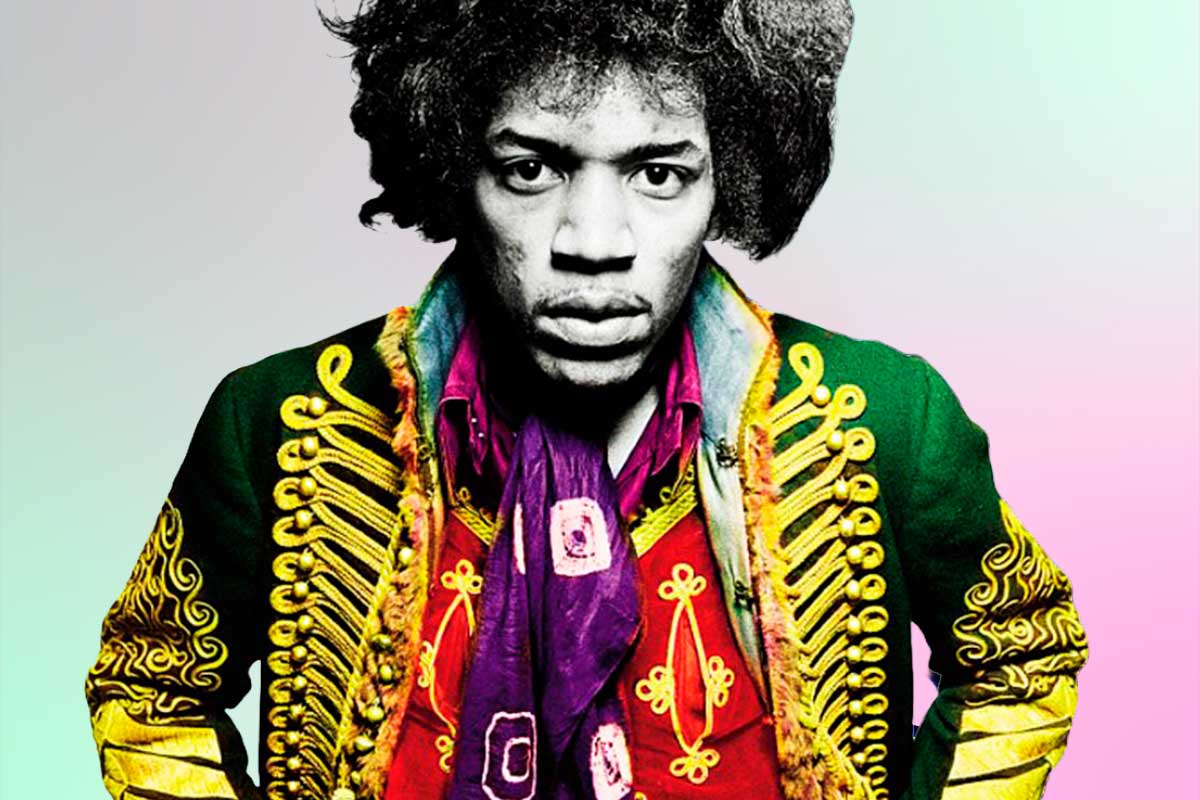
La muerte es el fin inevitable hacia el que todo ser humano se dirige. Llevando el tema al ámbito de la música, la muerte siempre ha sido un tópico que muchos artistas abordaron. De hecho, hay algunos de ellos que, yendo un paso más allá, predijeron su propio deceso. Es por eso que hoy queremos […]
Ver más noticias en Indie Hoy.

Elba “Chunchuna” Villafañe falleció en las últimas horas. La noticia fue confirmada por su hija, Juana Molina, a través de una publicación en Instagram. Chunchuna tenía 92 años y había enfrentado un cáncer de útero que, según allegados, había sufrido una recaída recientemente. “Queridos amigos, murió mi querida mamita. Era algo que esperaba y temía. […]
Ver más noticias en Indie Hoy.

La muerte de un ser querido puede detenernos en la vida o, por el contrario, inspirarnos profundamente. Esto es lo que experimentaron muchos artistas que lograron sublimar su dolor a través de la creatividad. A continuación, 4 discos inspirados por una muerte: Nick Cave and the Bad Seeds – Skeleton Tree (2016) La muerte de […]
Ver más noticias en Indie Hoy.


