




Hay algo profundamente honesto en la manera en la que Juanes habla de su presente. No hay artificio, no hay discurso prefabricado. Hay, más bien, una claridad que solo llega después de haber atravesado el desgaste, la duda y la reconstrucción. Su nuevo álbum, Juan Esteban, no es solo un título: es una declaración de identidad, una síntesis emocional de todo lo que ha sido, desde su infancia hasta hoy. “Juan Esteban de alguna manera es todo lo que ha tenido que pasar en mi carrera como Juanes, incluso antes como Equimosis y en toda mi infancia… es todo lo que yo soy de alguna manera”, explica, como quien finalmente logra nombrarse sin intermediarios.
Esa necesidad de volver al origen no es casual. De hecho, es casi una urgencia. Durante años, la maquinaria de la industria, el éxito y la exposición lo fueron alejando de ese centro creativo que lo definía. “Yo comencé con mucha inocencia y espontaneidad haciendo música, pero con el tiempo la tensión, el éxito y todo lo que pasó me fueron sacando de ese centro… llegué a un lugar muy triste donde comprometí mi arte”, confiesa.
Lo que sigue en su relato no es una narrativa romántica de crisis, sino una confesión directa sobre el desgaste: alcohol, depresión, desconexión total con la música. “Yo llegué a odiar algo que amaba demasiado… eso fue lo más duro”, dice. Y en esa caída, paradójicamente, encontró el punto de quiebre necesario. “Ahí fue cuando toqué fondo y entendí que tenía que volver a la esencia”.
Lo interesante es que ese proceso no fue inmediato. No hubo epifanía repentina ni redención instantánea. Fueron años, discos, intentos, búsquedas. “Esto ha sido un proceso de más de 16 años… desde 2010 hasta hoy, reconstruyéndome poco a poco”, explica. Y es en ese recorrido donde aparecen proyectos clave como MTV Unplugged, Loco de Amor, Origen o Vida Cotidiana, que funcionan como estaciones en ese regreso progresivo hacia sí mismo.
Hoy, en cambio, el tono es otro. Hay calma, pero también entusiasmo. “En este momento siento una plenitud artística y personal… nunca había hecho tanta música como ahora”, dice, con una convicción que no necesita adornos.
Ese presente creativo tiene mucho que ver con una idea que repite como mantra: madurar hacia la infancia. “Mi estado de WhatsApp es ‘madurando hacia la infancia’… porque siento que es muy importante recordar de dónde vengo”, cuenta. Y en esa frase se condensa gran parte del espíritu del disco: no se trata de nostalgia, sino de reconexión.

Esa reconexión también se manifiesta en la forma en la que crea. Juanes sigue siendo, ante todo, un músico obsesivo, casi compulsivo en su relación con el instrumento. “Yo toco guitarra prácticamente todo el día… estoy viendo televisión y estoy practicando, estoy en la sala improvisando, siempre estoy tocando”, dice. La música, más que una profesión, es un estado constante.
Y es ahí donde aparece uno de los conceptos más interesantes de su proceso: la música como canal. “Es como si uno fuera un canal… dependiendo del día, de lo que sientes, de la información que recibes, todo eso se transforma en canciones”, explica. En un mundo saturado de estímulos, esa sensibilidad se convierte tanto en motor creativo como en fuente de ansiedad.
En Juan Esteban, ese flujo se traduce en una mezcla orgánica de sonidos que atraviesan el continente. Desde la cumbia hasta el bambuco, pasando por el funk y el rock, el disco funciona como un mapa emocional de América Latina. “He descubierto que la cumbia es demasiado potente… desde México hasta la Patagonia está en todos lados”, dice. Y no lo plantea como una exploración externa, sino como algo que ya estaba en su ADN.
La producción del álbum también refleja ese regreso a lo esencial. Junto a Nico Cotton, Juanes apostó por una aproximación casi artesanal al sonido. “Vamos a la parte humana, manual, carpintería total del estudio… eso es lo que yo amo”, explica. Nada de shortcuts digitales: amplificadores reales, pedales, instrumentos tocados a mano. Un enfoque que no solo responde a una estética, sino a una filosofía.
La elección de Cotton no fue casual. Llegó en un momento inesperado, tras la imposibilidad de trabajar con su colaborador anterior. Pero la conexión fue inmediata. “Conectamos de una… vi su forma de trabajar y dije: este es el man con el que quiero trabajar”, recuerda.
Esa obsesión por el detalle se extiende incluso a los instrumentos. Uno de los descubrimientos clave del álbum fue el bajo Hofner, que aportó una textura específica al sonido. “Ese bajo sonaba increíble… para mí fue un gran descubrimiento”, cuenta con entusiasmo casi técnico.
Pero más allá de lo sonoro, Juan Esteban también es un disco profundamente colaborativo. Artistas como Bomba Estéreo, Mon Laferte, Conociendo Rusia o Vivir Quintana aparecen no como invitados estratégicos, sino como extensiones naturales del universo del álbum. “Me conecté con ellos naturalmente… hay algo muy especial en lo que cada uno representa”, explica.
En paralelo, hay otra capa menos visible pero igual de importante: la visual. Juanes no solo compone y produce, también dibuja. Y en este disco, decidió llevar esa faceta al frente. “Llevo más de 16 años pintando caras… y esta vez se convirtió en la portada del álbum”, cuenta. El resultado no es un capricho estético, sino otra forma de narrarse.
Al final, sin embargo, todo vuelve a la misma pregunta: ¿cuándo entendió realmente el alcance de su música? La respuesta no está en un estadio lleno ni en un premio. Está en las historias. “La gente me cuenta cosas muy profundas… que su mamá los llevaba al colegio con mis canciones, que se casaron con ellas… ahí es cuando uno entiende”, dice.
Y quizá ahí está la clave de todo. No en el hit, ni en la cifra, ni en la carrera. Sino en esa conexión invisible que atraviesa generaciones. Juanes lo resume sin rodeos: “Me siento afortunadísimo… porque esto realmente se ha conectado con la gente”.
Después de todo, Juan Esteban no es un regreso. Es, más bien, un reencuentro. Con la música, con la raíz, con el niño que alguna vez sintió —por primera vez— que ahí estaba todo.
The post Juanes: “Tuve que tocar fondo para volver a amar la música” appeared first on Rolling Stone en Español.
En un hecho sin precedentes, Donald Trump ha criticado al papa León XIV. El mandatario afirmó que, al ser el primer pontífice estadounidense de la historia, debería “dejar de complacer a la izquierda radical”. La indignación expresada por el presidente en sus redes sociales contra el líder de la Iglesia católica surge a raíz de las firmes declaraciones del pontífice sobre la guerra en Irán, en las que hizo un llamado al mundo a buscar la paz y la esperanza para poner fin a este crimen de odio.
“El papa Leo es débil en materia de delincuencia y pésimo en política exterior. Habla del “miedo” a la administración Trump, pero no menciona el miedo que la Iglesia Católica y todas las demás organizaciones cristianas sintieron durante la pandemia, cuando arrestaban a sacerdotes, ministros y a todo el mundo por celebrar misas, incluso al aire libre y manteniendo la distancia de seguridad”, declaró Trump a través de sus redes sociales.
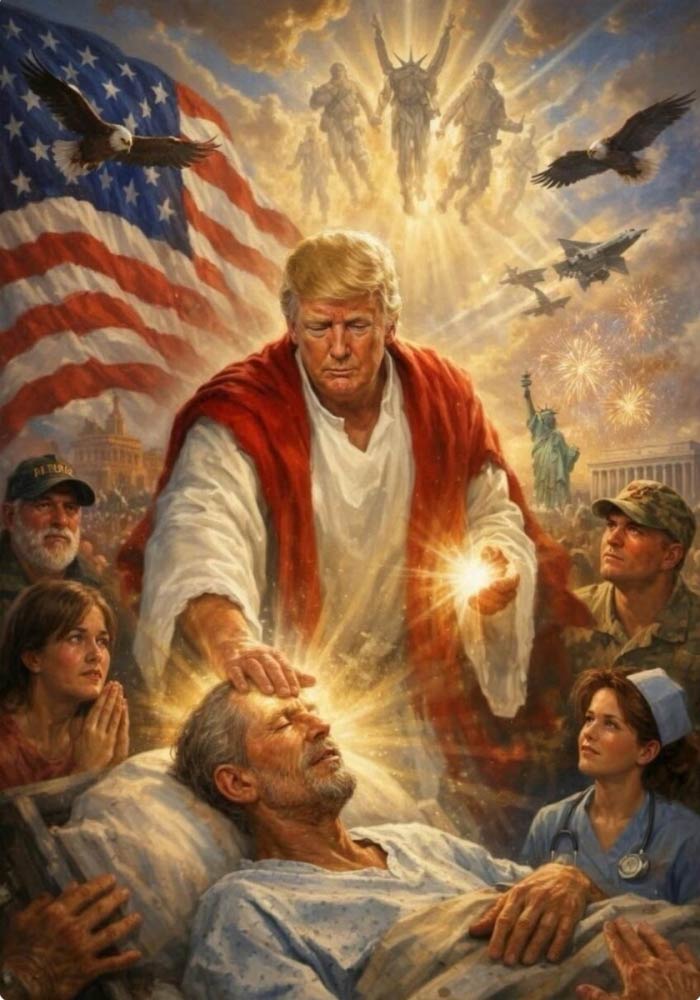
En otra publicación, Trump no se hizo esperar para crear comentarios polémicos, pues realizó una imagen generada con inteligencia artificial donde se hace mostrar como una figura similar a Cristo, sanando a una persona enferma y rodeado de personas que lo admiran: enfermeros, militares y civiles. Posteriormente, eliminó la imágen de sus cuentas.
Y agregó Trump en su discurso: “Me cae mucho mejor su hermano Louis que él, porque Louis es un auténtico seguidor de MAGA. ¡Él lo entiende, y Leo no! No quiero un Papa que piense que está bien que Irán tenga armas nucleares. No quiero un Papa que piense que es terrible que Estados Unidos atacara a Venezuela, un país que enviaba enormes cantidades de drogas a Estados Unidos y, peor aún, que liberaba a asesinos, narcotraficantes y criminales en nuestro país. Y no quiero un Papa que critique al Presidente de los Estados Unidos porque estoy haciendo exactamente lo que me eligieron, por una aplastante mayoría, estableciendo cifras récord de delincuencia y creando el mejor mercado de valores de la historia”.
El mandatario también afirmó que gracias a él, el papa Leo se encuentra siendo el mayor representante de la Iglesia católica, pues lo eligieron pensando en que sería la mejor figura para lidiar con su gobierno por ser un papa estadounidense: “Si yo no estuviera en la Casa Blanca, Leo no estaría en el Vaticano. Desafortunadamente, la debilidad de Leo contra el crimen y contra las armas nucleares no me convence, ni tampoco el hecho de que se reúna con simpatizantes de Obama como David Axelrod, un perdedor de la izquierda, que es uno de los que querían que arrestaran a feligreses y clérigos”.
Y finalizó con: “Leo debería enmendar su papel como papa, usar el sentido común, dejar de complacer a la izquierda radical y concentrarse en ser un gran papa, no un político. ¡Le está haciendo mucho daño y, lo que es más importante, le está haciendo daño a la Iglesia Católica!”.
La respuesta de Trump se da luego de que el papa León XIV recriminara sus acciones contra Irán, pues “aniquilar a toda una civilización” por el estrecho de Ormuz no iba por el camino de la paz y el fin de la guerra que él profesa. El papa también se pronunció en sus redes sociales y dijo: “Dios no bendice ningún conflicto. Cualquiera que sea discípulo de Cristo, el Príncipe de la Paz, nunca está del lado de quienes una vez empuñaron la espada y hoy lanzan bombas. La acción militar no creará espacio para la libertad ni para tiempos de Paz, que solo llega de la paciente promoción de la convivencia y el diálogo entre los pueblos”.
No es la primera vez que el pontífice manda un mensaje contundente sobre el tema de la guerra que se vive entre estas regiones, pues días anteriores, también comunicó que: “Las guerras que manchan el presente con sangre son fruto de la idolatría del poder y del dinero. ¡No nos acostumbremos al clamor de las armas y a las imágenes de guerra! La paz no es solo un equilibrio de poder. Es la obra de corazones purificados, de quienes ven a los demás como hermanos y hermanas a proteger, no como enemigos a vencer”.
Además, según algunos medios italianos, el papa también aseguró que no tiene miedo alguno en la administración de Trump, y sin entrar en debate con el mandatario, la Iglesia tiene la obligación moral de ir contra la guerra. “No, no tengo miedo de la Administración Trump, ni a proclamar en voz alta el mensaje del Evangelio, que es para lo que creo que debo estar aquí, y por eso existe la Iglesia. No somos políticos, no vemos la política exterior desde la misma perspectiva, sino como constructores de paz. No creo que el mensaje del Evangelio deba ser tergiversado, como algunos están haciendo. Yo sigo hablando claro contra la guerra, tratando de promover la paz, el diálogo y el multilateralismo con los Estados para encontrar soluciones a los problemas. Demasiadas personas sufren hoy, demasiadas personas inocentes han sido asesinadas, y creo que alguien debe alzar la voz y decir que hay una mejor manera”, declaró el papa León XIV.
Por su parte, el presidente de la Conferencia Episcopal de Estados Unidos, el arzobispo Paul S. Coakley, dijo: “Estoy muy dolido por que el presidente haya decidido escribir palabras tan denigratorias sobre el Santo Padre. El papa León XIV no es un rival ni un político. Es el vicario de Cristo que habla desde la verdad del Evangelio y por el cuidado de las almas”.
The post Donald Trump arremete contra el papa León XIV appeared first on Rolling Stone en Español.
THE BIG STORY: After five weeks of trial in a Manhattan federal courtroom, the blockbuster antitrust lawsuit against Live Nation finally went to the jury, which must now wade through the massive case to decide if the concert giant broke the law.
At closing arguments, an attorney for dozens of states called Live Nation a “monopolistic bully” that had run roughshod over the live music industry and hurt fans. The company’s attorney said it was instead a “fierce competitor” that had played fair and succeeded simply by outperforming its rivals.
Which of those narratives will the jury believe? For now, the better question might be: How long will it take them to pick one?
Deliberations started Friday (April 10), and it’s anybody’s guess how long they’ll go. Antitrust cases are often tried as bench trials that are decided by a judge; handling such a case via jury trial is relatively rare. That’s because they are immensely complicated disputes involving economic theories and legal complexity that are difficult for regular people to understand. Does your neighbor know how to define a “relevant antitrust market”?
These jurors are tasked with weighing weeks of testimony and reams of documents to reach such determinations, including competing academic analyses of the economics of live music. They’re staring at a verdict sheet that is many pages long, featuring multi-part questions that read like logic games on the LSAT.
For context, when the government tried a similar case against Google over the dominance of its search engine, the two-month bench trial wrapped up in November 2023. The judge — a legal expert aided by a team of clerks — did not issue his ruling until August 2024.
The jury won’t deliberate for nine months, or anything close to it. But they are dealing with an almost impossibly detailed case and, if they really want to understand it, they could be there for a while. Or they could give up and just go with their guts.
You’re reading The Legal Beat, a weekly newsletter about music law from Billboard Pro, offering you a one-stop cheat sheet of big new cases, important rulings and all the fun stuff in between. To get the newsletter in your inbox every Tuesday, subscribe here.
Other top stories this week…
— Attorneys for Sean “Diddy” Combs and federal prosecutors battled at an appeals court as he sought to overturn his 50-month sentence, with judges grilling both sides over “exceptionally difficult” legal questions about how much time the star deserved.
— A real-life showgirl who sued Taylor Swift for trademark infringement over The Life of a Showgirl asked a judge for a nationwide injunction barring Swift from selling merch tied to her record-smashing album while the case plays out in court — an extraordinary request that’s unlikely be granted.
— Roc Nation’s insurance company filed a lawsuit to prove that it doesn’t need to pay for CEO Desiree Perez’s ongoing lawsuit with her daughter, arguing that it has nothing to do with her corporate role at the helm of Jay-Z‘s company.
— The two attorneys who won a landmark ruling for songwriter Cyril Vetter on copyright termination sat down for a Q&A with Billboard — talking about the case, their client and a potential battle at the Supreme Court: “I like our argument better than I like theirs.”
— The Prince estate reached a settlement with singer Apollonia, ending their dispute over who owns legal rights to the name made famous by the movie Purple Rain.
— Bruce Springsteen‘s merch provider filed a lawsuit aimed at blocking counterfeit sales during the Land of Hopes and Dreams American Tour — starting with the Boss’ hometown show in New Jersey.
— Pooh Shiesty was denied release on bail after his bombshell arrest for allegedly barricading Gucci Mane in a Dallas recording studio and forcing the 1017 Records boss to sign a label deal release at gunpoint.
— Los Angeles prosecutors charged a 55-year-old woman named Michelle Dick with multiple felonies for allegedly stalking Lindsey Buckingham before assaulting the Fleetwood Mac singer in a recent attack.
— Irving Azoff’s Music Artists Coalition (MAC) threw its support behind Salt-N-Pepa (Cheryl “Salt” James and Sandra “Pepa” Denton) in their legal battle to win back control of their masters from Universal Music Group.
— A Taylor Swift fan can’t bring a class action against StubHub after her $14,000 Eras Tour tickets were voided on the day of the concert, a judge said, because she signed an arbitration agreement.
— StubHub agreed to pay $10 million to resolve accusations from the Federal Trade Commission that the ticket platform intentionally ignored new “junk fee” rules for the first few days they were in effect.
— Lil Baby’s hemp company sued a joint venture partner for allegedly tarnishing the rapper’s reputation by shipping illegal, contaminated cannabis products across the country.
— Maryland passed legislation to restrict when prosecutors can cite rap lyrics as criminal evidence against the artists who wrote them, becoming the third state to rein in the controversial practice.

Taylor Swift — the top winner in the history of the American Music Awards, with 40 trophies — leads the nominations for the 2026 AMAs with eight nods. Morgan Wallen, Olivia Dean, Sabrina Carpenter and sombr are runners-up with seven nods. Alex Warren and Lady Gaga each received six nods.
With eight nods, Swift is likely to pull even further ahead of the pack for most AMA wins. Michael Jackson is currently in second place with 24 wins, followed by Alabama with 23 and Whitney Houston with 21.
Justin Bieber, who has four nominations this year, is also in position to move up the all-time AMA leaderboard. He has won 18 awards. If he wins just one award this year, he’ll tie Kenny Rogers for the second-most wins among male artists. (MJ leads among men.)
Dean and sombr are competing in three categories — new artist of the year, song of the year, and breakthrough album of the year. The two fast-rising stars competed for best new artist at this year’s Grammys, with Dean winning. Other first-time AMA nominees include Warren, BigXthaPlug, KATSEYE, Leon Thomas, PinkPantheress, RAYE, Role Model, Sienna Spiro and Tate McRae.
Teyana Taylor is a first-time AMA nominee this year for best female R&B artist. She is on a serious awards roll this year. She received an Oscar nomination (and Golden Globe win) for best supporting actress for One Battle After Another, a Grammy nod for best R&B album for Escape Room, and will be honored at Billboard Women in Music 2026 later this month with the Visionary Award.
Also crossing over from the big screen, the singing voices of HUNTR/X (EJAE, Audrey Nuna and REI AMI) are nominated in three categories — song of the year, best vocal performance, and best pop song — for their megahit “Golden” from KPop Demon Hunters. The trio will also be honored at Billboard Women in Music, as our Women of the Year.
The 52nd American Music Awards are set to kick off summer with host Queen Latifah live from MGM Grand Garden Arena in Las Vegas, the largest venue in the show’s history, on Memorial Day (Monday, May 25). The show will air on CBS and stream on Paramount+.

Fan voting is now open via VoteAMAs.com and the @AMAs Instagram profile in all award categories. Voting closes Friday, May 8, at 11:59 a.m. PT, with the exception of social song of the year and tour of the year, which will remain open through the first 30 minutes of the AMAs broadcast.
The 52nd American Music Awards nominees are based on key fan interactions, including streaming, album and song sales, radio airplay and tour grosses. These measurements are tracked by Billboard and Luminate, and cover the data tracking eligibility period of March 21, 2025 through March 26, 2026.
The American Music Awards, the world’s largest fan-voted award show, was created by legendary producer Dick Clark and first awarded in 1974. Tickets are now available on AXS.
Here’s the complete list of nominees for the 2026 American Music Awards, with nominees in each category listed in alphabetical order by first name. We also have two bonuses for you – a list of all artists with three or more nominations this year and a list of top AMA winners of all time (1974–2025).
The American Music Awards are produced by Dick Clark Productions, which is owned by Penske Media Eldridge, a joint venture between Eldridge Industries and Billboard parent company Penske Media.
In 2026, PSYCHIC FEVER continued expanding its overseas reach, taking on new challenges on a global scale. The group has been steadily building up a wealth of experience, putting on its first North American tour in 2025 and performing at SXSW 2025 in Austin, Texas. Building on the enthusiastic response it has received, it is planning on releasing a new album this July.
Billboard JAPAN talked to JIMMY and WEESA while they were in London.
PSYCHIC FEVER had a fan meeting in London in July 2025, right? What about your London fans made an impression on you?
JIMMY: The reason we were able to come to London is that a lot of overseas listeners got to hear “Just Like Dat feat. JP THE WAVY” thanks to social media. When we performed for the first time in London, we had fans singing along to “Just Like Dat feat. JP THE WAVY.” But what got me really hyped was that fans had also listened to the songs we released after “Just Like Dat feat. JP THE WAVY” and they were singing along as we performed them. The buzz wasn’t just a one-time thing, they really liked PSYCHIC FEVER and were following along with our releases, which made me so happy.
WEESA: The first time we came to Europe, you could feel this powerful energy coming off the fans. They were dancing and singing to our songs even more energetically than we were. Seeing those fans, I welled up with love for performing in Europe. I feel like we’ve been influenced by our European fans, both in our music and the way we perform.
You’ve played in a lot of different countries. What differences have you found in the fans?
WEESA: The songs that get the audience pumped are different depending on the country. Each country has its own sound, and the music that resonates with people depends on the country, so the parts of the shows that get the crowd going in one country are totally different than another country.
JIMMY: In America, the audience really gets into “Just Like Dat feat. JP THE WAVY” and the songs with the 2000s and late 1990s feel that inspired us. In London and the rest of Europe, “Highlights,” which is performed by us and REN, went viral before “Just Like Dat feat. JP THE WAVY.” It has an electronic sound, and it feels like a huge number of the fans are into that kind of genre.
You’re building up a lot of experience with the aim of going global, and I’m sure you’ve had your struggles, but has there been anything that’s made you especially happy or left a lasting impression?
JIMMY: We moved to Thailand soon after our debut, lived there for about six months, and continued to use it as our base for roughly two years. While things didn’t go exactly as we’d hoped, one great thing was that we were able to use that experience as a starting point to perform in all kinds of overseas locations. I’m also really glad that we’ve been able to serve as a gateway for people to become interested in the whole LDH family, both groups that came before us and newer ones. I love that people aren’t just digging us, but other groups too.
I think one of PSYCHIC FEVER’s strengths is that, even though you’re young, you’ve got a message that you convey through your music. Are there any tricks to keeping that steady core?
JIMMY: When we debuted, we didn’t have a really strong concept like “this is the kind of style we’re going for.” We built up our confidence through our overseas experience and the reactions of our fans. So all seven of us were on different pages, but people said that was one of the things that made us great. Those differences are what got people interested in us. Those reactions really resonated with us, which is why we’re able to share our message. The more we get from our fans, the more we want to give back. I think that automatically feeds into the strength of our team.
So as you were building up that, you were also working on your new album, DIFFERENT. What was the creation process like?
WEESA: JIMMY and I wrote lyrics for the first time, and we all talked about what to do from the very start, creating the album from the ground up. A lot of people took part in the album’s creation, so reflecting everyone’s ideas and creating a finished work was really hard, but we were able to pack in even more than our first album, so I think it’s going to come out well.
JIMMY: On our EPs, we’ve tried our hands at hip-hop, R&B, and electronic music. We built up a lot of experience through the process, and I think that’s created the foundation for DIFFERENT. We all have our differences, and that shapes our identity and is one of our strengths. I’ve come to feel that really strongly during the time we’ve been working on the album. This is our first time deciding on a solid concept and creating an album, so it took a lot of time, but we worked hard to create something that would resonate with people around the world.
So there’s a connection between the title of the album, DIFFERENT, and the identities of the group’s seven members?
WEESA: We named the album DIFFERENT to share the message that being different is a good thing. That being different has value. I think there’s also a lot of significance in the fact that we’re releasing this album from London, which is a melting pot of races.
I’m looking forward to the album release. This year, you’ve got a Japanese tour coming up, as well as overseas shows. What kind of hopes do you have for five years down the road?
JIMMY: I’d like to do an arena-sized show. Today, even. My main goal is to perform for a lot of people. Whether the venue is big or small, what we do is the same, but if we want to be seen by a lot of people, we need to perform at venues with capacities in the tens of thousands. I go all out in every performance to get ready for that, but I’d like to further improve my performances.
Changing gears a little, what foods have you liked in London?
JIMMY: I’m constantly eating fish and chips.
WEESA: London has lived up to its reputation for having great meat.
JIMMY: I had meat yesterday.
WEESA: Like steak! There’s this one restaurant I’d love to go to, so I hope I have the chance. There are a lot of delicious restaurants in London.
I’ve heard you really like London, JIMMY.
JIMMY: London is a great place for learning English, and I like the fashion, so every time I come here I go to the shops and vintage clothing stores around Brick Lane. I’ve been all around the world, and London is my favorite place to go shopping. Recently, there have been a lot of new young street fashion brands coming out, and people around me have been talking about how great London’s street fashion is.
Also, London’s kind of like Japan in a few ways. There are a lot of people who really value older culture and their roots. Even young people will talk about how they’ve gone with a certain look because of the roots of that fashion. I don’t know if I’d exactly call it craftsmanship, but there’s a certain mentality that’s a lot like Japan.
Yeah, Brits do tend to go really deep. I understand why creators like the UK so much.
JIMMY: British stuff is cool. If I could live anywhere, I’d live in London.
I’m looking forward to hearing about PSYCHIC FEVER playing here in London and whipping up a frenzy in the near future.
This interview by Tomoko Moore first appeared on Billboard Japan
Avenged Sevenfold are returning to Australia for the first time in over a decade. The California heavy metal band announced a four-city East Coast arena run, along with a New Zealand date, set for October 2026.
Coheed and Cambria and Melbourne alt-metal outfit Thornhill will serve as support across all shows.
The tour opens at Sydney’s Qudos Bank Arena on Oct. 16, followed by Brisbane Entertainment Centre on Oct. 18, Rod Laver Arena in Melbourne on Oct. 20, and Spark Arena in Auckland on Oct. 23.
Members of the band’s Deathbats Club and Deathbats Rewards Ticketpass programs have priority access, with an artist presale opening Wednesday, April 15 at 10 a.m. local. General tickets go on sale Friday, April 17 at 11 a.m. local via livenationentertainment.com.
Avenged Sevenfold last performed in Australia in March 2014, co-headlining Soundwave Festival alongside Green Day, with sideshows at Melbourne’s Festival Hall and Sydney’s Luna Park in support of their 2013 album Hail to the King. The upcoming run marks their first standalone Australian headline dates since then.
Since that visit, the band has released two more albums: 2016’s The Stage and 2023’s Life Is But a Dream…, the latter of which they are continuing to promote.
Hail to the King topped the Billboard 200 upon its release, as did 2010’s Nightmare — the band’s first No. 1 on the chart. The Stage reached No. 4 on the Billboard 200 in 2016, while Life Is But a Dream… peaked at No. 13 in 2023. Throughout their career, the band has placed multiple singles at the top of the Mainstream Rock chart, including “Hail to the King” and “Shepherd of Fire.”
Formed in Huntington Beach, California in 1999, Avenged Sevenfold built their following through a metalcore foundation before broadening into mainstream heavy metal and later progressive rock. Their catalog has sold more than 8 million records worldwide.
Charlie Puth is heading to Australia and New Zealand this November on his Whatever’s Clever! World Tour.
Live Nation confirmed the six-date run on Tuesday, with general on-sale tickets available from Thursday, April 23 at 1 p.m. local time.
The tour opens Nov. 5 at Spark Arena in Auckland before moving to Rod Laver Arena in Melbourne on Nov. 7, Qudos Bank Arena in Sydney on Nov. 10, Brisbane Entertainment Centre on Nov. 13, Adelaide Entertainment Centre on Nov. 15, and RAC Arena in Perth on Nov. 17.
Puth will be backed by a full live band across all dates.
“I feel like I’ve worked and waited my entire career to put this sort of live show on for you all,” Puth said in a statement. “We have worked so hard to bring you the sort of top-level musicianship and arrangements that you all deserve in a live show, and I am beyond excited to bring my music and this incredible band and show to some of the most iconic rooms in the world. It’s going to be fun!”
The tour supports Whatever’s Clever!, Puth’s fourth studio album, which is out now. The run follows a strong start to 2026 for the multi-platinum artist, who performed at the Super Bowl in San Francisco in February. An artist presale begins Monday, April 20 at noon local time at charlieputh.com, with Vodafone and Mastercard presales also running from Tuesday, April 21.
Puth has built one of pop’s more consistent chart resumes over the past decade. His highest-charting solo single remains “Attention,” which peaked at No. 5 on the Billboard Hot 100 in 2017, while “We Don’t Talk Anymore” featuring Selena Gomez reached No. 9. His co-written and co-produced track “Stay” for The Kid LAROI and Justin Bieber topped the Billboard Hot 100 and reigned atop the Billboard Global 200 for 11 weeks in 2021. To date, Puth has amassed over 35 billion career streams, nine multi-platinum singles and four Grammy nominations.
Tickets for all dates are available via charlieputh.com, livenation.com.au and livenation.co.nz.
Justin Bieber‘s Coachella headline debut was a family affair.
Hailey Bieber shared a behind-the-scenes Instagram carousel on Monday documenting the family’s weekend at the festival — including a standout detail: a “Bieberchella” temporary tattoo on 19-month-old son Jack Blues Bieber’s forearm.
“Such a special weekend,” Hailey captioned the post. “Nobody will ever know even an ounce of what it’s taken to get here. So grateful for this beautiful life. SO proud. Let’s do it all again!!!!”
The carousel opens with a photo of Hailey alongside Justin who is holding Jack — dressed, notably, in baby Birkenstocks. Videos in the post show Hailey dancing during soundcheck as Justin ran “Favorite Girl,” and the pair holding Jack while he dances along to Justin rehearsing “FIRST PLACE.” The “Bieberchella” temp tattoo stamped on Jack’s arm closes out the slideshow.
Hailey was in the crowd for Justin’s headlining set on Saturday, April 11 — his debut as a solo headline act at the festival.
During “Everything Hallelujah,” the Coachella livestream camera caught her in the audience as Justin sang the lyric “Hailey, babe, hallelujah.” She blew him a kiss onstage as the crowd erupted. Their son got his own moment too, with Justin delivering the next line: “Baby Jack, hallelujah.”
The weekend was a full family affair across the festival grounds. Justin’s SKYLRK brand installed a 10,000-square-foot Oasis space and an in-demand merch shop on-site, while Hailey’s Rhode returned to Coachella with a “Rhode World” pop-up — arriving days after she and Justin collaborated on the brand’s new hydrocolloid pimple patches.
While the Biebers have never shown Jack’s face publicly, they have shared glimpses of their son since his birth in August 2024. He appeared in promotional images for Justin’s Grammy-nominated album SWAG, shot by Renell Medrano.
Last Halloween, Hailey shared a photo of Jack in the purple hoodie and white jacket Justin wore during his My World Tour. Earlier this month, Hailey posted a carousel of Jack playing with Rhode pimple stickers and watching Justin’s 2011 “Never Say Never” documentary on his dad’s lap.
Justin returns to the Coachella Main Stage to headline weekend two on Saturday, April 18.
His Swag two-part album earned four Grammy nominations following its release last year, with the first album debuting at No. 1 on Top Streaming Albums and Streaming Songs charts (dated July 26). Swag II debuted at No. 2 on the Hot 100 upon its September 2025 release.
The second time proved to be the charm for Billy Idol at the Rock & Roll Hall of Fame — and he couldn’t be happier about it.
The veteran punk/New Wave icon – who turned a sneer into a signature style and notched four top 10 hits on the Billboard Hot 100, including one chart-topper — is one of eight acts to be inducted in the performers category at the Rock Hall’s annual induction ceremony, taking place Nov. 14 in Los Angeles. Idol performed as part of Ozzy Osbourne’s induction as a solo artist during the 2024 event in Cleveland and was nominated for the first time last year.
Related


“It’s really exciting,” Idol tells Billboard via Zoom from his home in Los Angeles. He and guitarist Steve Stevens, who will be inducted alongside Idol, performed “Rebel Yell” as part of Monday (April 13) night’s American Idol episode that revealed the inductees. “I can’t believe it. It’s incredible. It’s just fantastic to think that something I was doing for the sheer love of the scene we were in back in the ‘70s, the punk rock scene. We were doing it for the love. We had no idea it was going to explode and lead to me doing this for 50 years. So it’s all really incredible and something I just couldn’t have imagined when I was starting out.”
Idol, who learned of the induction a few days before the announcement, adds that he “got quite emotional just telling Steve Stevens a few minutes ago.” And having to wait a year from his first nomination only makes getting in that much sweeter.
“Certainly being part of Ozzy’s induction…that really showed me what the Rock & Roll Hall of Fame is about, really,” he explains. “It’s about other artists joining together, and you’re getting respect from your peers, which is really pretty incredible. So many of my heroes, going back to the ‘50s — Bo Diddley and Elvis (Presley) and Buddy Holly, Little Richard, even Eddie Cochran…. That’s pretty incredible that other people think you should be in something like this.
“It’s just been fantastic, being part of this musical revolution we really believed in and to be pushing the culture along. It’s been really fun, and a dream come true. And then this is just icing on the cake, just … wow, what an honor! I almost can’t put it into words. To be able to have your peers vote you in and that, it’s pretty special.”
Idol received 601,000 votes on this year’s Rock Hall fan ballot, more than twice as many as he got in 2025. “That’s the other thing,” he notes. “You get a chance to really thank your fans in person. That’s really special. They helped to put you where you are, stuck with you through thick and thin. Just to get a chance to really thank them is a fantastic moment. I’m looking forward to it, really.”
Idol hasn’t given much thought yet to what November ceremony will entail but says “we’re in a really good place to perform” there. He was on the road last year to support his 2025 album Dream Into It and will head out again in July, with U.S. dates running into late September as well as a five-night residency at the Fontainebleau in Las Vegas starting Aug. 28. The documentary film Billy Idol Should Be Dead, meanwhile, is streaming on Hulu.
“We’re on a roll now,” he says, “my band and I and Steve, so I know we’re gonna bring it, bring out the whole thing — the whole attitude and everything. It’s a perfect moment for us to be inducted. We are still at the top of my game.”
In addition, Idol says he’s planning to start working on his next album in June, hoping for release in 2027 but acknowledging that “you never really know how long it’s gonna take you before you start.” Nevertheless, Idol adds that “there’s a bit of a direction we might go in. The last album was very rock ‘n’ roll; I think we’re going to put an element of dance back into this next album. But you never know where it’s going. You plan, but there’s a lot of things you just have to find out when you’re doing it and start seeing songs and see what you have.”
It’s been a good week for the Ed Sullivan estate and those associated with it.
Within a six-day period, the 2025 Netflix documentary Sunday Best: The Untold Story of Ed Sullivan received nominations for Emmy and Peabody Awards, and on Monday (April 13) night, it was revealed that the legendary late TV host will receive the Rock & Roll Hall of Fame‘s 2026 Ahmet Ertegun Award for non-performers, making him one of a handful of broadcasters to be so honored.
Related

The ceremony takes place Nov. 14 at the Peacock Theater in Los Angeles.
“We’re thrilled,” Margo Precht-Speciale, Sullivan’s granddaughter and producer of Sunday Best, tells Billboard via Zoom along with Andrew and Josh Solt, whose SOFA Entertainment Inc. acquired rights to The Ed Sullivan Show from the family in 1990. “More than anything my grandfather was a man driven by a genuine love of talent, and he brought that love to the American public on his show every Sunday night. Millions of people would watch and the next day discuss who they saw on his show. People would buy records. It had a tremendous impact on the American culture at the time, and also today.”
Airing from 1948 (known as The Toast of the Town until 1955) to 1971 on CBS — with an inaugural episode that featured W.C. Handy, aka the Father of the Blues — the Sullivan Show averaged 40 million viewers each Sunday night. Over the course of its 1,068 episodes, it hosted 74 future Rock Hall inductees among its more than 10,000 performances — the most famous, of course, being the Beatles performance on Feb. 9, 1964, for which a reported 73 million viewers (and 60 percent of all television sets in the country) tuned in to watch. Prior to that, Elvis Presley’s Sept. 9, 1956 appearance attracted 60 million viewers (82.6 percent of the television audience).
The Harlem-born Sullivan — who passed away during 1974, appropriately on a Sunday night, at the age of 73 — was also known for his diversity and inclusivity. He deflected threatened advertiser boycotts and network concerns to book a broad variety of acts regardless of color or gender, ranging from Bo Diddley, Ray Charles, B.B. King, Nat “King” Cole, Ella Fitzgerald and many more. He also had a tight relationship with Motown founder Berry Gordy, Jr. and featured many of the company’s acts, and Sullivan fought to have Harry Belafonte on the show after network executives tried to ban the singer due to his political activism. All of that made Sullivan a significant, if subtle, advocate during the American Civil Rights movement.
“He was so open to all kinds of music,” notes SOFA’s Andrew Solt. “He loved rhythm & blues, and he loved the blues. If you were on Sullivan on Sunday night, on Monday you were selling records. And the families at home were loving it; (Sullivan) made a show for all the generations, kids and grandparents. He wanted to unify the family.”
Sullivan’s openness extended to country, jazz, gospel Broadway and other genres, making him a trusted and impactful influencer well before the Internet came into being. And after the Beatles’ success the show featured provocative counterculture artists such as the Rolling Stones, Jefferson Airplane, Janis Joplin, the Young Rascals and Sly and the Family Stone. The Doors were famously banned from future shows after reneging on a pre-telecast agreement to change the lyrics to “Light My Fire” — “higher” was the offending word — during the group’s Sept. 17, 1967 appearance.
“So many of the names on his show, nobody knew them when they appeared, and now they’re household names,” says Precht-Speciale, whose late father Bob Precht produced the Sullivan Show from 1960-71. “He had a great instinct, and he knew what people would genuinely like, and he just had such joy bringing it to everybody’s living room on those Sunday nights.” SOFA’s Josh Solt adds that, “I’ve heard people say it was the greatest collection of talent ever to appear on a single stage which is incredible to think about…. His eye for talent, as Margo said, was second to none. He’s such a pivotal person in American history by televising all these great artists, in their prime.”
The Rock Hall honor is something Precht-Speciale and the Solts say they’ve hoped for over the years but did not campaign for it and they were surprised by the news. They’re confident that Sunday Best, as well as SOFA’s efforts, helped push the selection; since the latter entered into a global digital rights agreement with UMe in 2020, The Ed Sullivan Show channel on YouTube has surpassed more than a million subscribers, with more than three billion streams. In addition to the musical performances SOFA has also established new audiences for early Muppets appearances and for Topo Gigio, the mouse puppet Sullivan would famously kiss goodnight at the end of episodes. The company has also worked on other documentaries and well as museum exhibitions and other avenues to expose the archive.
“We’ve just been trying to preserve Ed Sullivan’s legacy and showcase it and bring it to the masses…and connect with younger generations who might not have watched the show but know the acts or know these different viral moments we’ve had,” explains Josh Solt. “It’s such a reference point for history. We’ve uploaded so many iconic moments; we’re now going deeper with some hidden gems, as we like to call them. We want to continue that connection with the culture.”
The theater where The Ed Sullivan Show was broadcast from 1953-1971 was opened during 1927 as Hammerstein’s Theatre but was rechristened with his name in 1967. After Sullivan it was also home to the Merv Griffin Show, Saturday Night Live with Howard Cosell, Late Show with David Letterman and, currently, The Late Show with Stephen Colbert. The latter is preparing for its final show on May 21, and Precht-Speciale says there’s symmetry between her grandfather’s pursuit and what Colbert has done there since 2015.
“Stephen Colbert and my grandfather both used their platforms at the Ed Sullivan Theater for something bigger,” she explains. “For my grandfather it was booking artists who weren’t getting other opportunities. He used that spotlight to open doors. For Colbert it’s calling out power with humor; he uses his wit to challenge the status quote and make people think. There’s been many parallels between the two, the connection obviously being the Ed Sullivan Theater.
Other broadcasters who have received the Rock Hall’s Ertegun Award include Alan Freed, Dick Clark, Tom Donahue, Don Kirshner and Don Cornelius. This year’s Rock Hall induction ceremony will not air live, as it has in recent years, but will be filmed for broadcast during December on ABC and Disney+.