




Genki Kawamura ha construido su carrera entre la producción, la escritura y la dirección, siempre con una preocupación por la experiencia del espectador. En Exit 8, esa búsqueda toma una forma particular, y es la de partir de un videojuego extremadamente simple para construir una película que trabaja sobre percepción, repetición y decisión.
La historia se sitúa en un espacio cotidiano (el metro de Tokio), que poco a poco se transforma en un escenario mental. Lo que parece un recorrido simple se convierte en una prueba constante donde cada elección importa.
En esta conversación, Kawamura explica cómo abordó la relación entre cine y videojuego, el uso del vacío narrativo y la dimensión psicológica de la película.
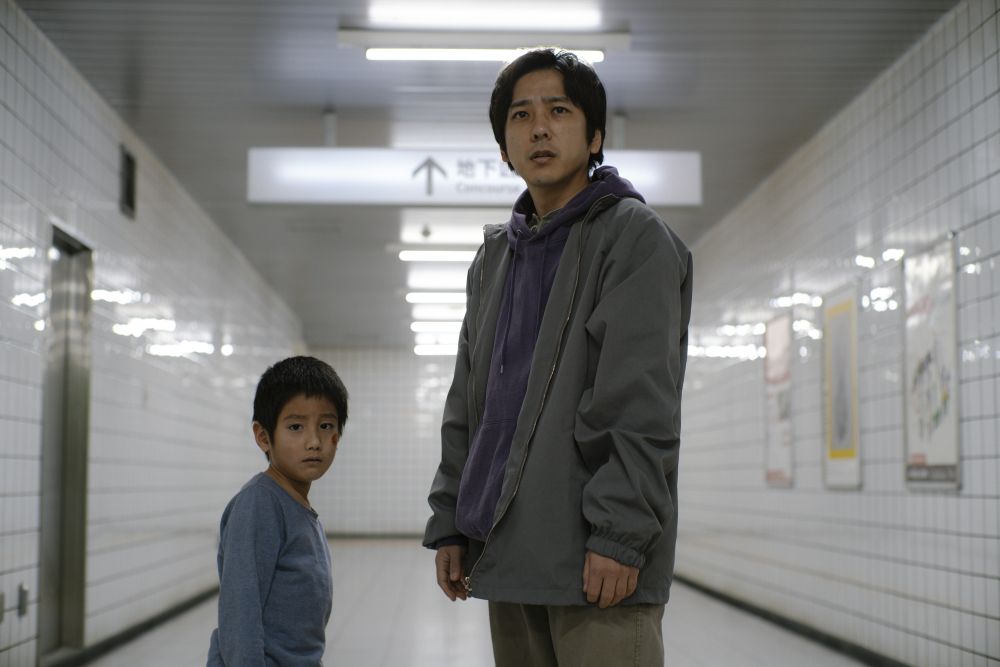
Exit 8 es la adaptación de un videojuego. ¿Cuál es la clave para que un videojuego funcione en cine o televisión?
La adaptación de videojuegos es muy difícil, porque en el juego el protagonista es el jugador. Por eso hay tantos casos fallidos. Desde el inicio tomé una decisión: dejar de pensar en términos de adaptación.
No quise llevar un videojuego al cine. Lo que busqué fue crear una experiencia donde la frontera entre el videojuego y la película se volviera ambigua. Una experiencia nueva en la que ambos lenguajes conviven.
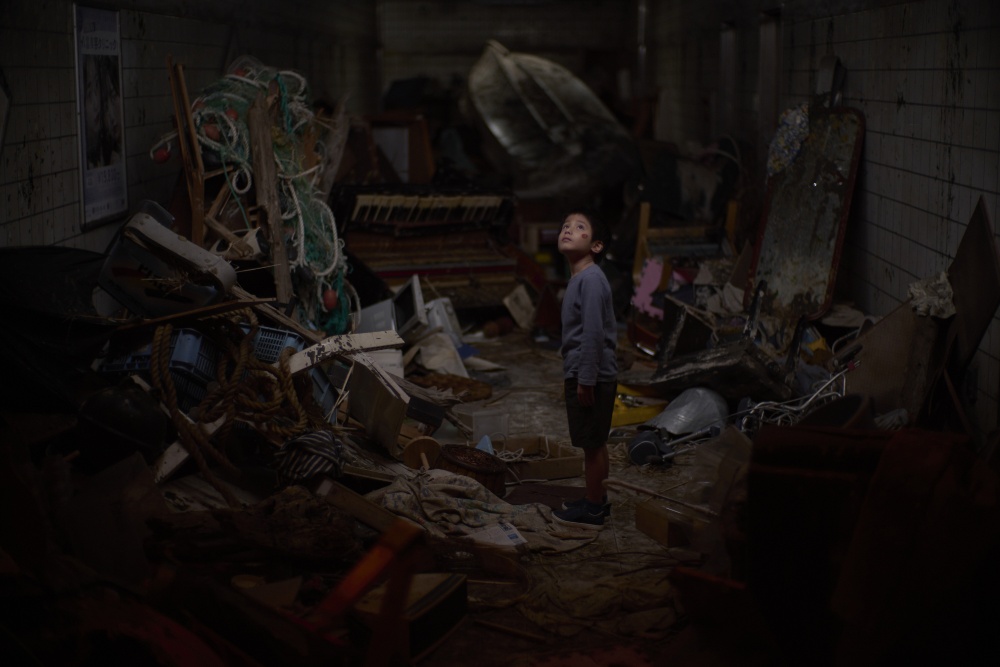
Tanto el videojuego como la película parten de una premisa mínima. ¿Cómo decidiste cuánto vacío narrativo conservar?
Quise mantener esa regla tan simple y minimalista del juego original. Pero al mismo tiempo, pensé en cómo conectarla con nuestro mundo, con la realidad cotidiana.
Ese espacio que se repite lo concebí como algo cercano al purgatorio de La divina comedia de Dante. Las anomalías que aparecen son una manifestación de la culpa que cada persona lleva dentro.
Entonces surge una decisión: notar esa anomalía y detenerse, o ignorarla y seguir avanzando. Esa elección se parece mucho a las decisiones que tomamos en la vida.
Desde mi experiencia como psicólogo, la película resulta muy impactante. Muchas personas no entienden lo que significa extraviarse, pero la angustia puede generar desorientación. ¿En qué momento entendiste que el verdadero laberinto es psicológico y no espacial?
Esa idea estuvo presente desde el inicio. Pensé en referentes como Ugetsu de Mizoguchi, The Shining de Kubrick y Vertigo de Hitchcock. Son películas que trabajan con la ansiedad, la culpa y el miedo desde el interior del ser humano.
Quería hacer una película que, aunque use un espacio concreto como el metro de Tokio y tenga origen en un videojuego japonés, conecte con ese tipo de cine clásico que explora el miedo psicológico.
Al eliminar la perspectiva del jugador, ¿qué ganaste y qué perdiste?
En la película, todos los personajes no tienen nombre. Son como NPC. Cuando voy en el metro en Tokio, siento que soy el protagonista de mi propia historia. Pero, al mismo tiempo, para los demás soy solo una persona más.
Me interesaba pensar qué pasaría si esos personajes secundarios también tuvieran una historia, si también estuvieran atravesando algo. En ese espacio, todos están en igualdad de condiciones, como si enfrentaran una especie de prueba. Algo cercano a la idea del purgatorio. No siento que haya perdido nada con esa decisión. Al contrario, creo que permitió encontrar una forma más original de contar la historia.
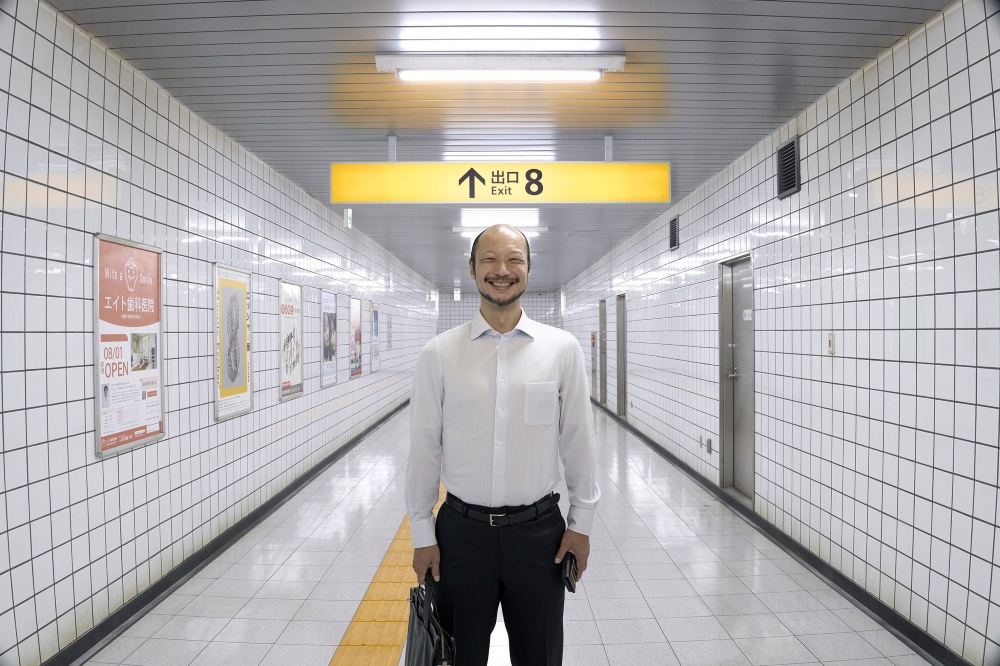
El concepto de anomalía es central en la película. ¿Qué representa para ti en un mundo cada vez más uniforme?
Todos los días tomo el metro para ir al trabajo. Veo a la gente mirando sus teléfonos, concentrada solo en sí misma. Puede haber un bebé llorando y nadie se da cuenta. En los teléfonos vemos violencia, guerras, pero seguimos deslizando la pantalla, como si nada pasara. Ese acto de fingir que no vemos lo que ocurre es, para mí, una forma de culpa.
Las anomalías en la película representan eso: aquello que está frente a nosotros y decidimos ignorar. En la vida cotidiana, esas anomalías están ocurriendo todo el tiempo. La pregunta es si decidimos reconocerlas y detenernos, o ignorarlas y seguir adelante. Creo que cada una de esas decisiones individuales termina afectando la forma del mundo en que vivimos.
¿La película habla sobre el sentido de la vida?
Más que sobre el sentido, habla sobre la elección. El juego se basa en decisiones muy simples, en elegir entre dos opciones. Pero esas decisiones pequeñas reflejan elecciones más grandes en la vida. Todos los días evitamos ver ciertas cosas. La película pregunta si somos capaces de enfrentarlas o si preferimos seguir adelante sin mirarlas. En ese sentido, es una historia sobre elegir.
The post Genki Kawamura y <i>Exit 8</i>: El cine como laberinto mental appeared first on Rolling Stone en Español.
EL formato es el mensaje. Signo de los tiempos, el Tiny Desk se transformó en una de las marcas más icónicas de la última década. Una plataforma que funciona como meta consagratoria pero también como punto de despegue a la proyección global. Milo J, a sus 19 años, acaba de estrenar su propio Tiny Desk. Y se suma allí a la lista de artistas argentinos (Trueno, Nicki Nicole,Fito Páez, María Volonté, Sofía Rei, Cande y Paulo y, por supuesto, Ca7riel y Paco Amoroso) que participaron del segmento.
Tan importante como la estética del programa en sí mismo es la que proponen los artistas para cada presentación, y Milo apareció con una llamativa chomba con el logo de Polo pero con un diseño de aguayo, la tela tradicional de origen andino, utilizada principalmente en Bolivia, Perú, el norte de Chile, el noroeste de Argentina y Ecuador. Un ejercicio de regionalismo crítico que resignifica una tradición latinoamericana de miles de años. Pero también hay otros guiños específicos a la identidad argentina: desde la bandera que cuelga en el fondo, hasta un ejemplar del Martín Fierro y un suplemento especial de la revista Folklore, de 1967, con Mercedes Sosa en la portada. Referencias estéticas, homenajes y amuletos telúricos, además de un pequeño banderín del Club Atlético Morón, el equipo de sus amores y la institución a la que esponsorea.
Tan importante como el aspecto estético, con sus característicos trajes coloridos, es la impronta musical que aporta el coro (reducido) de Agarrate Catalina. No es la primera colaboración entre la murga uruguaya, dirigida por Yamandú Cardozo, y el talentoso artista cachorro que le echa leña al fuego de la mística musical del oeste del Gran Buenos Aires.
De hecho, la canción que abre el breve set (seis canciones en poco más de 16 minutos), es “Recordé”, incluída en La vida era más corta (2025), que ya incluía la colaboración de los coros de murga. “Venimos del sur del tiempo, de un edén en los suburbios pardos, mestizos y rubios, trepados al mismo viento, felices en el intento de acompañar sus canciones negras, blancas y marrones, con el barrio como norte, pegado en el pasaporte junto a nuestro corazones, de Morón al mundo entero, con su banda excepcional, se fabricó un carnaval de ritmo, de tierra y cuero, que nos encuentra el lucero, defendiendo en cada nota, la enorme fuerza que brota desde América Latina”, recita Yamandú. Y concluye: “¡Qué honor para Catalina cantar junto a Milo J!”.
Además de Agarrate Catalina (las voces se completan con Martín Cardozo, Eder Fructos, · Carolina Gómez y Leonardo Gómez), Milo está acompañado por una banda encabezada por su director musical, Lautaro Fernández (guitarra, charango, tiple), Santiago Alvarado (piano y melódica), Martín Beckerman (percusión, luciendo una remera de Los Gardelitos), Daniel Moreno (en la guitarra), Tamara Meschller (violín, flauta traversa y vientos andinos).
El repertorio incluye “Solifican12”, “Bajo de la piel”, “Niño” y “Luciérnagas”, piezas que revisitan los ritmos folclóricos desde una mirada contemporánea.
Milo lleva el mate bajo el brazo, y carga sobre sus espaldas el peso del legado ancestral de la canción folclórica, argentina y latinoamericana. Lo lleva con altura, con una sabiduría que cualquiera diría que no se condice con su edad. Las venas abiertas de América Latina tienen un nuevo emergente, un nuevo vocero, un artista de presente continuo y proyección exponencial.
The post Milo J estrenó su Tiny Desk junto a Agarrate Catalina appeared first on Rolling Stone en Español.
LeAnn Rimes apologized to fans on Wednesday (April 29) after postponing two dates on her 30 Years of Blue tour at the last minute due to what she described as “severe illness.” In an Instagram Story the singer, 43, wrote, “due to severe illness, I am unable to travel & perform this week,” she wrote, without detailing the illness that had laid her low.
“I’m sorry to share that the upcoming shows in Spokane and Seattle will be rescheduled … also, good news as we will be seeing you very soon.” The reworked dates will push the show scheduled for tonight (April 30) in Spokane to May 31 and the Seattle show originally slated for May 1 to June 2 on the tour that kicked off on April 19. Rimes told fans that ticket holders will be notified directly soon, with all tickets remaining valid for the rescheduled dates, or refunds available at point of purchase.
“I am truly heartbroken to have to reschedule and I am so very grateful for your kindness, and continued support as I recover,” she wrote. “I look forward to being back on stage and seeing you very soon.”
At press time the next scheduled date on the tour celebrating three decades of the singer’s 1996 major label debut, Blue, is a May 8 stop in Waukegan, Ill.
According to E! News, in an Instagram Story on April 28 Rimes posted a photo of her under the covers in bed surrounded by three boxes of tissues. “I don’t know exactly what I have, but it’s BRUTAL!” she wrote. “Haven’t left the bed.”
The news about the tour hiccup came less than a week after Rimes shared a bittersweet Instagram post featuring a picture with husband Eddie Cibrian celebrating their 15th anniversary. “we got to step away for 3 days amidst work and some very tense, heart wrenching things happening at home with family. it’s been a different anniversary, one filled with tears and worry, but in between, there were moments of laughter and deep gratitude for this love of ours,” Rimes wrote alongside a series of pictures of the couple smiling on the beach and one of a candle-lit hotel room arrayed with flower petals and candles, including a floral heart on the bed.
“day by day, we walk hand in hand through the rollercoaster of life… and god, i’m so grateful that it’s with each other,” she continued. “we’ve been through so much in our 15 years as husband and wife. we know how to ride the waves 🌊, hold each other in times of need, mend what needs mending. i’m so proud of what we have created together. 15 years is just the beginning.”
Rimes made headlines last month when she posted a video of what was called a “deep jaw release” in which Human Garage founder Garry Lineham placed his hand inside her mouth and manipulated her jaw, causing the singer to cry and then laugh. When some commenters suggested the reaction was fake, Rimes reacted in a livestream that she couldn’t have faked it if she tried.
“The people were commenting on [the post], being [like], ‘Of course the camera was on, she was gonna cry.’ I’m like, ‘I can act, but I am not that good,’ ” the singer said according to People. “I am not that good. I’m not Meryl Streep. That’s just real, and I feel like the older I get, and it’s been probably the last decade of my life, I feel like the more honest I can be. People finally get to see me, and there’s no pretense about that.”
In the original livestream, Rimes said the unconventional jaw release therapy treatment was one of the methods she’s tried as part of the “perimenopausal, menopausal journey I’m on … I’m starting to see new things show up in my body. And so I want to be able to maintain a level of performance on stage, a level of health and wellness in my own personal life and a sense of ease in my body.”
In June of last year, the country-pop singer abruptly left the stage during a show in Washington when her front dental bridge unexpectedly popped out of her mouth. Then, in January, Rimes took fans along with her to a Nashville clinic where she was getting a $10,000 plasma exchange to help “clear micro-toxins, such as mold and microplastics” and to encourage “overall repair” of the stem cells.
“listening to my body and choosing what feels supportive for this season of healing, especially after a very busy year of filming [9-1-1: Nashville] and touring,” she wrote. “i demand so much from my body and it’s incredibly important to me to take the best care of it i possibly can.”

Amyl and The Sniffers snared a hattrick at the 2026 APRA Music Awards, presented Wednesday night (April 29) in Sydney, while INXS was feted with the lifetime achievement award.
For the past year, no Australian act could touch Amyl And The Sniffers on the awards circuit. It was the same story at the Hordern Pavilion, as the loveable rogues collected the peer-voted APRA song of the year, marking the second consecutive year the punk rockers have won prestigious honor, having done so in 2025 with “U Should Not Be Doing That”.
The Melbourne four piece also collected most performed rock work for their cheeky Cartoon Darkness hit “Jerkin’,” and lifted the coveted songwriter of the year award.
“I remember when we first wrote that song and people were asking us, ‘oh, could you maybe write a censored version?,” singer Amy Taylor said of “Jerkin’”. “And we kind of tried to do it, but obviously then there’ll just be no lyrics at all.” Taylor pointed out that her band, which is celebrating its 10th anniversary, are all self-taught in their disciplines. “It was all very DIY at the start. We recorded ourselves, we wrote ourselves,” she remarked. “So it feels amazing to be in this position.”
Earlier in the day, Amyl’s managers Simone Ubaldi and Andrew Parisi (of Sundowner Artists) jointly won manager of the year at the AAM Awards, also presented in Sydney.
Doubling up on the night was Guy Sebastian and co-writers Ned Houston and Robby De Sa, who won most performed Australian work and most performed pop work for “Maybe”. The victory marks Houston’s first APRA Award, and the fourth career win for Sebastian and De Sa.
Sia scooped the category for most performed Australian work overseas for the third consecutive year with the aptly-titled “Unstoppable,” for the singer and songwriter’s 14th donut-shaped award across her career. The Adelaide-raised artist is now APRA’s most-awarded writer member of all time.
Hitmaker Sarah Aarons made the trip from her base in Los Angeles to receive the international recognition award, her sixth APRA Award. While visiting the stage, Aarons, who was worked with the likes of Tame Impala, BTS, Flume, Gracie Abrams, ROSÉ and Maren Morris, told of her homesickness. Her favorite restaurant on the West Coast is the Qantas business lounge at LAX, she quipped. “Not being home is really hard.”
Emily Wurramara made history at the 2024 ARIA Awards, when Nara won for best adult contemporary album, the first time an Indigenous woman had won the category since its inception in 1987. The proud Warnindhilyagwa woman etched her name in APRAs history at the Hordern when she nabbed emerging songwriter of the year, a board-appointed award recognizing her incredible body of work over the past year.
The biggest cheers of the night, however, were directed at INXS, who were saluted with the Ted Albert Award for Outstanding Services to Australian Music. Long-time friend, artist and APRA chair Jenny Morris inducted the new wave band, with an emotional trip down memory lane.
“People ask me what made INX different. The honest answer is everything,” she remarked. “I’ve stood on the riser with these guys. I watched them from the wings, from the front of the house, from the stage door, from every single angle. They were extraordinary.” The six-piece’s “power, intelligence, and visceral effect of the music couldn’t be ignored.”
Holding back tears, Morris recounted the late, great frontman Michael Hutchence, who passed away in 1997, aged 37. “The Michael I knew was modest. As his friends will tell you, in his private time he liked nothing better than just being part of the cohort. One of the bunch. He was not someone who looked over your shoulder at the room full of glitz and glamor. He would look you in the eye. He genuinely wanted to hear what you had to say. He once said, ‘there is an integrity to INXS in the music, that makes it worthwhile.’” He claimed they were “worthwhile. A modest word from a modest man.”
With over 75 million albums sold worldwide, and a slew of international awards from their peers and fans, INXS is one of the most popular bands to emerge from the land Down Under.
Formed back in 1977, INXS would go on to climb rock’s highest summit, a stadium act whose posters were attached to teenagers’ walls everywhere. The sextet of Andrew (keyboards), Jon (drums), and Tim Farriss (lead guitar), along with Garry Beers, Kirk Pengilly (guitar/sax), and the charismatic Hutchence, landed five top 20 albums on the Billboard 200, and a No. 1 on the Billboard Hot 100 with Kick’s “Need You Tonight.”
In the United Kingdom, the band scored six top 10 albums, including a No. 1 with Welcome To Wherever You Are from 1992, plus a BRIT Award in 1991 for best international group.
The surviving members of the band were on hand to receive the Ted Albert Award, ahead of what will be INXS’ 50th anniversary. Each spoke. Andrew Farriss recounted a youthful conversation with his older brother and bandmate, Tim. “I said to him early in our career, you know, we’re going to have to get real job one day. And this is fun, we play music, have a few beers, a few laughs. We get away with it. Then we went and did all that. Incredible. You were right brother.” Pengilly, who spoke last, admitted the band made “amazing choices.”
As previously announced, the awards celebrated the 100th anniversary of APRA, and were hosted by Julia Zemiro with guest presenters Bernard Fanning, Jessica Mauboy, Mark Coles Smith and Stella Donnelly, and music curated by François Tétaz.
Performers included Christine Anu, Ngulmiya and Rob Ruha; Barkaa; Ecca Vandal; Paul Kelly; and The Presets’ show-stopping electronic rendition of Midnight Oil’s “Power and the Passion,” featuring a special guest appearance by Peter Garrett, in tribute to the late Oils drummer, Rob Hirst.
“The 2026 APRA Music Awards were a fitting way to celebrate not only 100 years of APRA, but today’s biggest and brightest stars,” remarks Dean Ormston, CEO of APRA AMCOS. “It’s a privilege to look back at 100 years of service to our members and the incredible breadth and diversity of Australian talent. As a nation we derive so much, socially, culturally and economically, from our music creators, it’s imperative that we recognize and celebrate that contribution.”
The APRAs celebrate excellence in contemporary music, honoring songwriters and publishers who have achieved artistic excellence and outstanding success in their fields. At told, 18 awards were presented across three distinct selection processes: board selected, most performed (based on statistical analysis) and peer voted.
See all the winners at apraamcos.com.au/apramusicawards2026 and below.
| Peer-Voted APRA Song of the Year |
| Title: Artist: Written by: Jerkin’ Amyl and The Sniffers Declan Mehrtens / Amy Taylor / Bryce Wilson |
| Songwriter of the Year |
| Amyl and The Sniffers Declan Mehrtens / Fergus Romer / Amy Taylor / Bryce Wilson |
| Emerging Songwriter of the Year |
| Writer: Published by: Emily Wurramara Mushroom Music Publishing |
| International Recognition Award |
| Writer: Published by: Sarah Aarons Sony Music Publishing |
| Most Performed Australian Work |
| Title: Artist: Written by: Published by: Maybe Guy Sebastian Guy Sebastian / Robby De Sa* / Ned Houston* Universal Music Publishing / Sony Music Publishing* |
| Most Performed Australian Work Overseas |
| Title: Artist: Written by: Published by: Unstoppable Sia Sia Furler / Christopher Braide* Sony Music Publishing / Concord Music Publishing ANZ* |
| Most Performed Alternative Work |
| Title: Artist: Written by: Published by: Please Don’t Move to Melbourne Ball Park Music Sam Cromack Sony Music Publishing |
| Most Performed Blues & Roots Work |
| Title: Artist: Written by: Survival Karen Lee Andrews Daniel March / Adam Ventoura |
| Most Performed Country Work |
| Title: Artist: Written by: Published by: Who You Are Rachael Fahim Rachael Fahim / Shawn Mayer / Liam Quinn / Vlado Saric / Keenan Te* Sentric Music Publishing obo Acts Music Publishing* |
| Most Performed Dance/Electronic Work |
| Title: Artist: Written by: Published by: Tell Me |
| Most Performed Hard Rock/Heavy Metal Work |
| Title: Artist: Written by: Published by: RAINDROP Ocean Grove Samuel Bassal* / Brent Hunter* / Luke Holmes BMG* |
| Most Performed Hip Hop / Rap Work |
| Title: Artist: Written by: Published by: Spinnin |
| Most Performed International Work |
| Title: Artist: Written by: Published by: Timeless |
| Most Performed Pop Work |
| Title: Artist: Written by: Published by: Maybe Guy Sebastian Guy Sebastian / Robby De Sa* / Ned Houston* Universal Music Publishing / Sony Music Publishing* |
| Most Performed R&B / Soul Work |
| Title: Artist: Written by:Pity Party PANIA Pania Hika / Jake Amy / Chelsea Warner / Sam Verghese |
| Most Performed Rock Work |
| Title: Artist: Written by:Jerkin’ Amyl and The Sniffers Declan Mehrtens / Amy Taylor / Bryce Wilson |
| Ted Albert Award for Outstanding Services to Australian Music |
| INXS |
| Licensee of the Year |
| The Bob Hawke Beer and Leisure Centre |
Duran Duran brought the love back to late-night TV on Wednesday (April 29), with some help from Nile Rodgers.
The Rock Hall-inducted British band stopped by ABC’s Jimmy Kimmel Live to deliver their TV debut of “Free to Love” (via Tape Modern), a funky disco throwback tune that dropped earlier this month.
“‘Free To Love’ has a simple message,” explained Nick Rhodes ahead of the performance. “There is nothing more important than freedom and love. We certainly need a lot more of both in the world right now.”
Rodgers and Duran Duran have been making musical magic together since the early 1980s, starting the global smash “The Reflex.” While the winters have marched on, Duran Duran found their groove in recent times, and fans have clamored to the one-time heart-throbs. The group was inducted into the Rock And Roll Hall of Fame in 2022; their past three albums have crashed the top 5 in the United Kingdom; and their tran-Atlantic tour this year will include a headline show at London’s Hyde Park, the scene of their summer date in 2022 which drew an estimated 70,000 Duranies.
Judging by their latest West Coast TV spot, Simon Le Bon’s vocals have aged like an expensive wine. And their performance, backed by rainbows, unicorns, and cuts from the official “Free to Love” music video, is a sure sign that DD’s live shows will be a party.
“Free To Love” has been a long time coming. Last June, Duran Duran shared an image with Nile Rodgers at Abbey Road Studios. “Stay tuned,” the social post read.
Earlier this week, the Chic founder gave his own update on their latest collaboration. “My love for Duran Duran and what our music together has always been about is the love we share for our song’s deepest meanings,” he writes. “Whatever chaos is going on outside, inside the studio we’re free to love our peace.”
The new wave legends play BeachLife Festival 2026 this Friday, May 1. The follow day, they settle in for a residency at Bleaulive at the Fontainebleau Las Vegas. Pan-European dates follow from June.
Watch the Duran Duran’s performance of “Free to Love” featuring Nile Rodgers below.
In a night all about women supporting women, Zara Larsson took the Billboard Women in Music mission statement literally on Wednesday night (April 29) at the Hollywood Palladium, with the Swedish pop star being held aloft by her four backup dancers as she flawlessly performed her Grammy-nominated song “Midnight Sun.”
And that was just one of many iconic moments in a night full of them. Larsson was honored with the Breakthrough award, for taking over the charts in a major way after 10 years in the business, while the singing voices of HUNTR/X — EJAE, AUDREY NUNA and REI AMI — were celebrated for their “Golden”-powered KPop Demon Hunters success as our Women of the Year.

Host Keke Palmer did double-duty, kicking off the night with the first performance, while Mariah the Scientist was honored as Honda’s Rising Star and Tate McRae received the Hitmaker title. Country chart-topper Ella Langley accepted the Powerhouse prize, and Laufey was honored as our Innovator. But we were just getting started: Kehlani took home the Impact award, Thalia was named our Icon, and Teyana Taylor was presented with the Visionary award.
Beyond our artist honorees, ASCAP’s Beth Matthews was also celebrated with the Executive of the Year title, presented by Kim Petras.
And there were even two big global moments as well, with Canadian rockers The Beaches and Filipina girl group BINI accepting Global Force accolades, thanking Billboard Canada and Billboard Philippines for their support back home.
Below, go inside the empowering night with the 11 best moments from the 2026 Billboard Women in Music Awards.
Believe’s Label & Artist Solutions is now open for business in the United States.
Music industry veteran Thomas Maxwell will lead the new activities as vice president U.S., Label & Artist Solutions (LAS), Believe, reporting to the company’s global head of music, Romain Vivien.
Going forward, Maxwell will sign and develop partnerships with independent labels, and expand the independent music specialist’s presence in the U.S., the world’s No. 1 recorded music market. He’ll split time between New York City, Nashville, and Los Angeles while “scaling the company’s U.S. operations and cementing Believe as a premier partner for growth-minded independent music companies in the region,” reads a statement.
Previously, Maxwell served in multiple positions at IDOL, where he opened and established the first U.S. office for the Paris-based indie distributor, and led signings including Mexican Summer, Young Art, The Ray Charles Foundation, HighNote Records, Old Soul Music, Roundhill, and Acrophase Records. During his time with IDOL, he worked on key releases from artists including Erick the Architect, Ginger Root, TOKiMONSTA, Cate Le Bon, Channel Tres, Yaeji, George Clanton, and Drugdealer.
Also, Maxwell has spoken at conferences and events including SXSW, Indie Week and Music Biz and is said to maintain strong relationships across the streaming and label ecosystem.
“For 20 years,” Vivien comments in a statement, “Believe has succeeded by supporting local music ecosystems and developing labels and artists in nearly every major music market around the world. Thomas’ expertise and connections make him the ideal candidate to lead Believe’s expansion into the largest music market in the world, the United States, and to scale our business to support local artists and labels throughout the region.”
Adds Maxwell: “I’m incredibly excited to be joining Believe at such a dynamic moment for the company and the independent sector. Throughout my career, I’ve focused on helping independent labels and artists navigate an increasingly complex digital ecosystem and build sustainable businesses. Believe’s global scale, technology, and artist-first approach uniquely position the company to support the next generation of independent success, and I’m thrilled to help expand those opportunities in the U.S.”
Believe has long held ambitions for the United States. In 2023, Believe CEO Denis Ladegaillerie told Billboard he was eying the U.S. Then, in 2025, the Paris-based business revealed it was ready to expand its artist and label services. “We’re building teams in 50 countries, and we’re going to build more in other countries, starting with the U.S. this year,” Vivien said at the time.
Founded in 2005 by Ladegaillerie, a former Vivendi executive, Believe has done impressive business by focusing on large European markets, and developing markets globally, including Asia, where the company first established a presence in 2013 (when it was known as Believe Digital).
From 2020 to 2024, Believe’s revenue rose 124% to 988.8 million euros ($1.05 billion) through organic growth and a mix of acquisitions and investments. The Americas, however, accounted for only 15% of Believe’s revenue in 2024, well behind Asia/Oceania/Africa’s 24% and Europe’s 61%, according to the company’s earnings report. Much of that Americas revenue came from U.S.-based digital distributor TuneCore, acquired by Believe in 2015.
Boasting a digital-first mindset, the business’s global portfolio includes German record labels Nuclear Blast and Groove Attack; French label PlayTwo; and Doğan Music Company, Turkey’s largest independent record label.
In 2023, the company moved into publishing by acquiring U.K.-based Sentric Music Group, which represented more than four million songs and over 400,000 songwriters in more than 200 territories at the time of the deal. From that deal, valued at €47 million ($51 million), Believe launched Believe Music Publishing two years later, in 2025.
01:04
03:42
In 2023, Believe CEO Denis Ladegaillerie told Billboard he was eying the U.S. Two years later, the Paris-based company is ready to expand its artist and label services business to the world’s largest music market.
“We’re building teams in 50 countries, and we’re going to build more in other countries, starting with the U.S. this year,” says Romain Vivien, global head of music/president for Europe. In fact, Believe is currently hiring a Los Angeles-based vp of labels and artist solutions for the U.S. who can “grow, scale and motivate high output teams,” according to the job posting.
Related
Believe Makes Bid for Remaining Public Shares a Year After Going Private
Glenn Peoples
Founded in 2005 by Ladegaillerie, Believe has done brisk business by focusing on large European markets and developing markets globally. From 2020 to 2024, Believe’s revenue rose 124% to 988.8 million euros ($1.05 billion) through organic growth and a mix of acquisitions and investments. Its portfolio includes German record labels Nuclear Blast and Groove Attack; French label PlayTwo; and Doğan Music Company, Turkey’s largest independent record label. In 2023, the company moved into publishing by acquiring U.K.-based Sentric Music Group for $51 million, and in 2025,
Believe Music Publishing launches more than two years after Believe acquired U.K.-based publisher Sentric Music Group, which represented more than four million songs and over 400,000 songwriters in more than 200 territories at the time of the deal. Believe bought Sentric from Utopia Music in a transaction that valued it at €47 million ($51 million)
David Allan Coe, a standout in the pack that was country music’s outlaw movement in the 1970s, whose music reached a loyal following that has grown into something bordering on cult status, has died at 86, according to various published reports.
The controversial artist wasn’t a prolific mainstream hitmaker, but he played to the beat of his own drum. With a sound that blended country, rock and blues, he landed eight singles in the Top 40 on the Country Singles chart, and is remembered for such songs as “You Never Even Called Me By My Name,” “Mona Lisa Lost Her Smile,” “The Ride,” “If This Is Just a Game,” “Waylon, Willie, and Me,” “Long Haired Redneck.”
Coe’s checkered past made him headline material, from his marriages, to incarceration in his native Ohio Penitentiary, time spent in a hearse parked outside of the Ryman Auditorium, and the release of his infamous X-rated albums, Nothing Sacred and Underground Album, after which critics denounced him as a racist and misogynist, accusations he strongly denied.
Born in Akron in 1939, Coe was raised in a broken home, and by the age of nine was sent to a reform school. His was a life “full of bad luck and misadventure,” reads a biog on the songwriter, published by Sun Records. As a songwriter, he was gifted, and as a performer, charismatic.
Coe would spend the next two decades in and out of various correctional institutions, for crimes including possession of burglary tools and auto theft. Music came to him when he was locked up. In 1967, Coe was a free man and travelled to Nashville to pursue his dream in music.
In the years that followed, he would earn a reputation as one of the more mysterious artists in the genre’s history. Coe could litter his throaty baritone-fueled output with profanities, and with tales of excesses. He was an in-demand songwriter, penning tunes for Billie Joe Spears, Tanya Tucker, and in 1977, Johnny Paycheck bagged a hit with his version of Coe’s song “Take This Job and Shove It,” a song that would soundtrack the 1981 feature film of the same name.
As time marched on, the solo hits dwindled, though Coe was often the subject of colorful stories in the press. In the 2010s, he was in the news for being ordered by the IRS to play more than $980,000 in restitution for obstructing the tax agency. When he was unable to pay, the unverified story goes, Coe sold his house and lived in a cave. Then, in March 2013, he was involved in a vehicle crash in his adopted home, Florida, but after several months shrugged off internal injuries and broken bones and headed back out on tour.
Coe was a constant presence on the road, and at the end of the ‘90s formed an unlikely tandem with Dimebag Darrell, the late guitarist with metal legends Pantera, from which an album was recorded, alongside bassist Rex Brown, and drummer Vinnie Paul. Rebel Meets Rebel didn’t see the light of day until 2006, after Dimebag’s murder. Coe’s rebel spirit caught the attention of Kid Rock, who namechecked the veteran artist in the song “American Badass,” and who invited the veteran musician to open his 2000 concert tour. The friendship became a collaboration. Coe contributed to “Single Father,” housed on Rock’s self-titled 2003 album.
In 2017, Coe appeared in both the song and the video for The Moonshine Bandits’ release “Take This Job,” which he wrote. For the clip, Coe was happy to return to the penitentiary where he was incarcerated. “He had to walk three or four flights of stairs in that creepy old prison. He had to put in a lot of work to make this thing happen. It was just cool,” the Bandits told Billboard at the time. “The relationship we built with him has been so meaningful. I get text messages from him out of the blue. The night before the video, we were in his hotel room sipping on whiskey, and listening to him tell his stories.”
Coe died just after 5pm on Wednesday, April 29, his representative confirmed to PEOPLE in a statement. “David was a Country Music treasure and loved his fans,” his rep said. “Most importantly, he was a true outlaw and A great singer, songwriter, and performer.”
BINI caught up with Drew Afualo & Billboard’s Lyndsey Havens on the red carpet at the Billboard Women in Music 2026.
The singing voices of HUNTR/X from the ‘KPop Demon Hunters,’ EJAE, Audrey Nuna & Rei Ami, caught up with Drew Afualo & Billboard’s Lyndsey Havens on the red carpet at the Billboard Women in Music 2026.