




La carrera de Johnny Depp como director ha sido extraña, esporádica y profundamente personal. Debutó detrás de cámara con The Brave en 1997, una película sobre canibalismo protagonizada por él mismo junto a Marlon Brando que fue destrozada tras su paso por Cannes y prácticamente desapareció durante años. Después vinieron décadas sin volver al largometraje, aunque sí dirigió algunos videoclips marcados por la misma sensibilidad bohemia y melancólica que parece obsesionarlo con trabajos para Vanessa Paradis, su expareja (bajo el seudónimo de Richard Mudd), y está el video de Unloveable de Babybird, donde ya aparecía esa fascinación por los personajes rotos, marginales y autodestructivos.
Ahora, casi treinta años después, Depp deja toda su controversia atrás y regresa para dirigir su segundo largometraje con Modigliani: Tres días en Montparnasse, una película sobre el pintor y escultor italiano que termina funcionando menos como retrato histórico y más como un espejo emocional del propio Depp.
Y ahí está tanto lo interesante como lo frustrante de la película. Desde el comienzo queda claro que Depp no quiere filmar al artista como una figura intelectual compleja, sino como un rebelde romántico más grande que la vida. Su Modigliani bebe, grita, rompe cosas, deambula por bares y desafía burgueses con la energía de alguien que parece salido de una versión bohemia de Jack Sparrow. El problema es que la película insiste tanto en convertirlo en un “artista maldito” que termina vaciándolo como personaje real.
Riccardo Scamarcio (John Wick 2) hace un trabajo sólido sosteniendo esa visión exagerada del personaje. Tiene carisma, presencia física y entiende perfectamente el tono teatral que Depp busca imponer. Gracias a él, la película nunca colapsa por completo bajo el peso de sus propios excesos. Pero incluso su actuación termina atrapada en una colección de poses de “genio incomprendido” con los típicos ataques de rabia, discursos grandilocuentes, borracheras existenciales y miradas intensas hacia el vacío.
La película basada en la obra de teatro Modigliani de Dennis McIntyre, sigue al artista durante tres días en el París de 1916, mientras intenta sobrevivir entre la pobreza, la guerra, el alcohol y el desprecio del mundo artístico establecido. La estructura episódica convierte la historia casi en una película de vagabundeo bohemio, donde Modi pasa de bares miserables a discusiones filosóficas con sus amigos dementes, los pintores Chaïm Soutine (Ryan McParland) y Maurice Utrillo (Bruno Gouery), en medio de explosiones emocionales permanentes.
Ahí aparece otro problema. La película adora tanto a su protagonista que pierde cualquier distancia crítica. Todo el mundo que no comprende el “genio” de Modigliani es presentado como superficial, burgués o idiota. Depp filma al artista con una reverencia constante, como si cada cigarro, cada tos y cada vaso roto fueran señales de grandeza. Por esta razón, el resultado termina sintiéndose bastante agotador.
Visualmente, eso sí, la película tiene momentos atractivos. La fotografía de Dariusz Wolski y Nicola Pecorini, cargada de ocres, humo, luces cálidas y algunos torpes momentos que intentan imitar al cine silente de la época (Depp es un ferviente admirador de Buster Keaton), recrean un París decadente y febril. Hay energía en las escenas nocturnas, en los bares llenos de artistas destruidos y en la sensación de caos permanente que envuelve a los personajes. Depp claramente sabe construir atmósferas.
También ayuda mucho el elenco secundario. Antonia Desplat interpreta con fuerza y solidez a la musa y amor tormentoso del pintor, la crítica de arte Beatrice Hastings. Stephen Graham entrega humanidad al comerciante de arte Léopold Zborowski, un personaje que podría haber sido solo exposición narrativa, mientras que Al Pacino aparece brevemente como Maurice Gangnat, para hacer exactamente lo que uno espera de Al Pacino. Entrar, exagerar todo y desaparecer dejando más personalidad que una escena completa. Su encuentro con Modigliani parece calcado del encuentro entre Robert De Niro y Pacino en Heat.
Pero el verdadero problema de Modi es que nunca logra profundizar realmente en el arte. Como muchas películas biográficas sobre pintores, está mucho más interesada en las sustancias psicoactivas, el sufrimiento y el escándalo que en el proceso creativo. La película habla constantemente del “genio” de Modigliani, pero rara vez consigue transmitir por qué su obra era revolucionaria o qué lo diferenciaba de otros artistas de su tiempo. Todo queda reducido al mito romántico del hombre autodestructivo que nadie comprende.
Y quizás eso era inevitable. Porque más que una película sobre Modigliani, esto parece una película sobre cómo Johnny Depp entiende a los artistas como unas criaturas incomprendidas, excesivas, sensibles y perseguidas por el mundo. Hay momentos donde la identificación entre director y personaje se vuelve tan evidente que casi parece autobiográfica. El problema es que admirar a un personaje no basta para construir una gran película sobre él.
Modigliani: Tres días en Montparnasse posee energía, estilo visual y algunos momentos genuinamente entretenidos, pero nunca deja de sentirse como una fantasía bohemia algo superficial. Johnny Depp quiere retratar a Modigliani como un demonio encantador consumido por su propio talento. Lo que termina mostrando es a otro artista convertido en caricatura romántica del caos creativo.
The post Crítica: <i>Modigliani: Tres días en Montparnasse (Modi: Three Days on the Wing of Madness)</i> appeared first on Rolling Stone en Español.
Desde Paraíso travel hasta películas como 180 segundos, Fragmentos de amor y ahora, Lejos, aquí, Angélica Blandón ha construido una carrera marcada por personajes atravesados por pérdidas, silencios y heridas emocionales difíciles de nombrar. En la película de Ana Sofía Osorio interpreta a Emma, una mujer obligada a reencontrarse con el padre de su hija fallecida para emprender un viaje donde el duelo nunca desaparece del todo. Lejos, aquí entiende algo dolorosamente real: hay viajes que no sirven para dejar atrás el pasado, sino para aprender a convivir con él.
Lejos, aquí me pareció una película que de alguna manera recupera ese cine independiente de los noventa, ese cine muy sencillo, de bajo presupuesto, pero profundamente humano. ¿Qué piensas tú de eso?
Sí, esa era la intención, la verdad.
Alejandro y yo —Alejandro Aguilar, el actor— decidimos empezar a hacer producciones nuestras, películas propias. Armamos un movimiento que se llama Fast Movies con la idea de hacer películas exactamente como tú dices: de bajo presupuesto, viables para nosotros y que además nos permitieran expresarnos como actores. Queríamos usar la herramienta actoral para contar historias profundas.Y también yo, como mujer, venía sintiendo en los últimos años de mi carrera la necesidad de profundizar en ciertas heridas de la humanidad, ¿sabes? Entonces cuando nos juntamos para hacer esta película coincidieron muchas cosas. Yo estaba atravesando un momento personal muy difícil y la directora también estaba viviendo situaciones muy fuertes en su vida. Y de alguna manera hicimos match desde esos dolores y desde esas necesidades emocionales. Ahí apareció Lejos, aquí.
Precisamente quería preguntarte por eso, porque tu actuación se siente muy intensa y personal. Además la película habla de algo tan universal como el duelo y la manera de procesarlo. También siento que hay una evolución muy clara en tu carrera reflejada en este personaje. Quería preguntarte por las herramientas actorales que utilizaste y cómo fue la preparación.
Sí, hay varias cosas importantes ahí. Alejandro siempre me insistía muchísimo en que ya estábamos en una etapa distinta de nuestras carreras. Él tiene mucha fe en mí como actriz. A veces yo tengo mucho síndrome del impostor, pero él me decía: “Amiga, ya estamos en edad y en momento de hacer proyectos más profundos, más serios”.
Y justo en ese momento yo me estaba separando de mi pareja después de once años. Entonces, aunque yo no he vivido literalmente la pérdida de un hijo sí estaba atravesando un duelo emocional muy fuerte. Estaba muy triste.
Además la directora había vivido un aborto espontáneo y después de eso tomó la decisión de no volver a intentar ser mamá. Entonces sí ocurrió algo muy emocional entre todas esas experiencias. Sus palabras, mi dolor, historias que escuchaba de amigas, frases que yo misma había querido decirle a exparejas… Todo eso terminó entrando en la película.
Además había mucho espacio para improvisar. La película no tenía diálogos completamente cerrados. Teníamos puntos de partida y ciertas intenciones hacia donde debían ir las escenas, pero realmente agarrábamos carretera y empezábamos a jugar. Entonces sí, siento que en la película salieron muchísimas cosas que yo necesitaba decir en ese momento de mi vida.
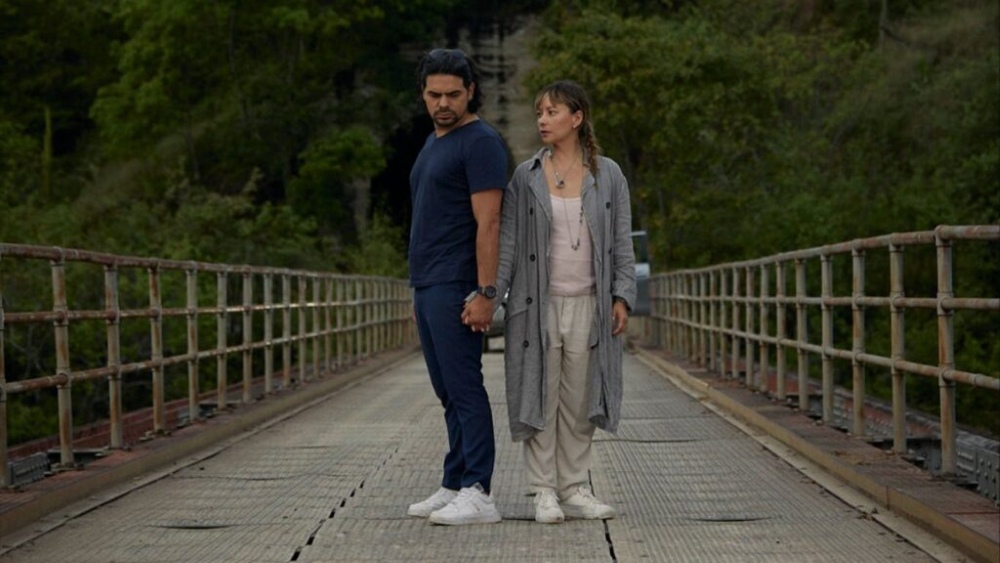
La película es una road movie y este tipo de cintas normalmente parten de un viaje físico que termina convirtiéndose en una transformación emocional. Y aquí esa transformación está atravesada por la pérdida…
Alguna vez escuché a una psicóloga experta en duelo decir que la muerte de alguien cercano realmente nunca se supera: simplemente aprendemos a vivir con ella. Y siento que ese es uno de los mensajes centrales de la película.
Sí, totalmente. Bueno, la película tiene muchos temas, pero el duelo es claramente el más visible, el más presente. Y hubo algo muy fuerte que yo aprendí haciendo la película: cuando uno pierde a sus padres queda huérfano, pero cuando pierde un hijo no existe una palabra para nombrar eso. Imagínate el tamaño de ese dolor para que ni siquiera tenga nombre.
Entonces sí, yo creo que uno no se recupera completamente. Uno aprende a convivir con eso. Hay días en los que lloras más, otros donde recuerdas ciertas cosas, otros donde el recuerdo se vuelve más borroso. Con el tiempo empiezan a desaparecer sonidos, olores, sensaciones… y uno se aferra precisamente a eso. A lo que todavía queda.
Y de ahí me agarré mucho para construir a Emma. De esa sensación de intentar sostener cosas que ya no están realmente ahí.
Otra cosa muy importante en la película es el rol del cuidador. Tu personaje no solamente era madre: también cargaba el peso de cuidar emocionalmente a los demás.
Sí, completamente. Emma no solo materna a su hija. También materna a una persona enferma. Y eso pone sobre la mesa algo que muchas veces no se habla suficiente: el agotamiento de quien cuida. Y eso además conecta muchísimo con la realidad de muchas mujeres.
La mayoría de mis amigas son madres solteras. Son mujeres que trabajan, sostienen económicamente sus hogares y además tienen toda la responsabilidad emocional encima. Entonces aparece una exigencia constante: Tienes que rendir en el trabajo, sostener tu casa, tienes que cuidar, estar emocionalmente disponible para todos. Y eso genera un cansancio muy profundo.
Yo no tengo personas enfermas bajo mi cuidado, pero sí entiendo perfectamente ese lugar de maternar casi en solitario y ese desgaste emocional permanente.
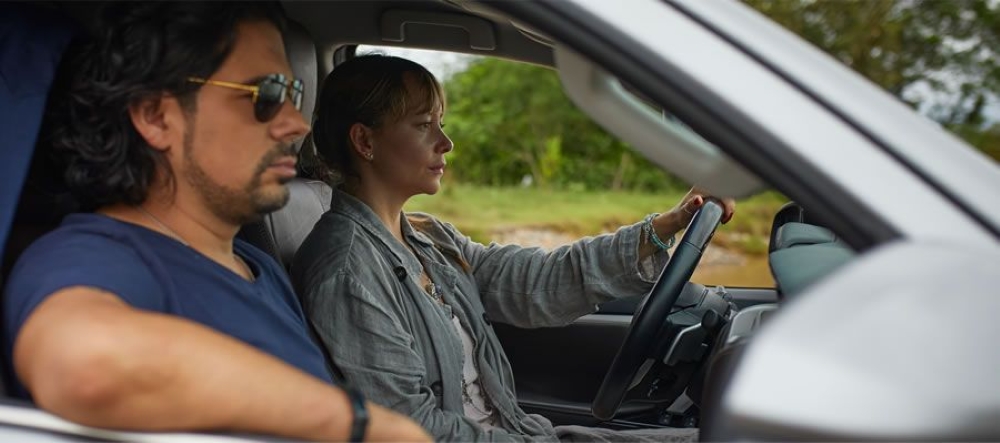
Y hay algo muy fuerte en la película: Cuando la hija muere, Emma pierde completamente su centro. Pero eso también puede pasar incluso sin la muerte.
Muchas madres construyen toda su identidad alrededor de cuidar a sus hijos y después no saben quiénes son cuando esos hijos se van. Siento que la película también habla de recuperar sentido.
Claro. Totalmente. Y eso me parece muy bello de la película. A veces uno cree que ya tiene la vida completamente organizada, que ya llegó a cierta edad y que no va a pasar nada más importante. Y de repente todo cambia. Hay parejas que duran cuarenta años y un día simplemente se separan. Y entonces uno se pregunta: “¿Y ahora quién soy?”.
Lo mismo pasa con la maternidad. Dedicas toda tu vida a cuidar a alguien y de pronto esa persona ya no está o simplemente hace su propia vida. Entonces toca volver a empezar. Y creo que Emma justamente descubre eso durante el viaje: Que todavía puede vivir para ella.
Hay un momento donde ella prácticamente dice: “Quiero vivir, pero ya no quiero cuidar a nadie más. Quiero cuidarme yo”. Y yo sí siento que después de la película Emma va a viajar, va a estudiar, va a hacer cosas que no pudo hacer durante años. Y además va a hacerlo sola. Eso también es hermoso.
Hay algo muy bello y honesto en la película: ellos dos se reencuentran, atraviesan este viaje, logran entenderse mejor… pero uno siente que no necesariamente van a volver como pareja.
No, yo tampoco lo creo. Pero justamente me parece hermoso lo que ella le dice a él en algún momento: “Entenderte me hace perdonarte”. Y eso me parece muy poderoso porque el perdón muchas veces no tiene tanto que ver con la otra persona, sino con uno mismo.
La otra persona sigue viviendo su vida, pero uno se queda cargando el rencor. Entonces cuando intentas comprender al otro —aunque no estés de acuerdo con lo que hizo— algo empieza a sanar. Porque entiendes que todos somos el resultado de muchas cosas. Y siento que eso le pasa mucho a Emma durante el viaje. Ella logra soltar parte de esa rabia.
La película sí habla de la muerte, claro, porque la muerte está completamente presente, pero en el fondo también habla de perdonar y de entender que el vínculo entre ellos nunca va a desaparecer. Ellos siempre van a ser los padres de esa hija. Lo que cambia es la forma de ese vínculo. Ya no está sostenido desde el resentimiento sino desde otra cosa mucho más tranquila, más liberadora.
A mí siempre me ha parecido muy extraño cómo dos personas pueden compartir una vida tan íntima durante años y después convertirse en desconocidos absolutos.
¡Sí! A mí eso también me parece loquísimo. Personas que durmieron juntas, que se tocaron, que se amaron profundamente… y de repente no pueden ni saludarse. Ves parejas separadas donde uno llega a recoger a los hijos y el otro ni siquiera sale a saludar. Y uno piensa: “¿Cómo llegamos a eso?”. Porque hubo una intimidad muy profunda ahí.
Y yo siento que la película también habla de eso: De cómo el amor no necesariamente desaparece. El amor se transforma. Puede ser que ya no quieras estar con esa persona como pareja, que ya no exista ese deseo romántico, pero el amor puede seguir presente de otra manera.
Y creo que ahí aparece algo muy importante de la película. Es una película pequeña, muy íntima, pero profundamente significativa.
Sí, totalmente.
Ojalá el cine colombiano siga explorando más ese tipo de historias, porque siento que ahí hay algo que realmente nos diferencia de las megaproducciones industriales.
Es un cine mucho más cercano. Un cine hecho entre amigos, además. Muy desde lo humano. Y me parece bonito porque aunque Lejos, aquí está atravesada por paisajes colombianos, por nuestra comida, por nuestras carreteras y nuestras formas de hablar, también cuenta algo completamente universal. Habla de perder, de transformarse y de volver a empezar.
Y formalmente también me parece muy interesante el manejo de cámara. Esa sensación de estar atrapados dentro del carro con ellos.
Sí, esa fue una apuesta muy clara de la directora desde el principio. Incluso en algún momento le propusimos hacer más planos por fuera, mover más la cámara, pero ella tenía muy claro que quería mantener esa cercanía casi todo el tiempo. Y creo que tenía que ver mucho con la presencia de la hija.
Por eso los personajes miran tanto hacia atrás, sienten cosas, voltean… porque la hija sigue estando ahí de alguna manera. Eso también me parece muy bonito de la película: el cuerpo desaparece, pero quedan demasiadas cosas viviendo dentro de uno.
También es una película sobre un hombre que no sabe expresar su dolor ni sabe cómo pedir perdón. Hay algo muy latinoamericano en esa incapacidad emocional masculina.
Sí, totalmente Eso es muy latinoamericano. Esa idea de que los hombres no pueden llorar, no puede hablar de lo que sienten, no pueden expresar amor abiertamente. Y el personaje de él tiene mucho de eso. Es alguien que probablemente nunca supo cómo quedarse, pero tampoco supo cómo irse. Entonces hizo lo único que sabía hacer: desaparecer.
Y eso es muy fuerte porque Emma se lo reclama todo el tiempo: “¿Por qué no me dijiste? ¿Por qué no hablaste conmigo?”. Porque sí había una comunicación entre ellos. Ella no era una persona cerrada emocionalmente. Entonces lo doloroso es entender que él simplemente no sabía cómo relacionarse desde un lugar profundo.
Y creo que la película va entendiendo poco a poco que esa también es una forma de ser. Una forma dañada, limitada, pero real.
Angélica, ¿qué proyectos vienen ahora después de esta película?
Ya rodamos otra película con Alejandro. Es completamente distinta en lenguaje y tono. Es un slasher.
La película gira alrededor de un francotirador, pero tiene una particularidad muy interesante: nunca vemos la cara del asesino. Está construida en siete planos secuencia y ocurre prácticamente en un solo espacio. Somos siete actores y funciona casi como una pieza teatral filmada. Además tiene muchos efectos prácticos hechos en caliente. Los disparos, la sangre, las prótesis… todo ocurre frente a cámara, casi como teatro grabado.
Fue muy divertido hacerla porque tiene momentos bastante gore. Mucha sangre.
¿Ya tiene título?
Sí, se llama Uno a uno. Y la idea con Alejo es seguir explorando distintos lenguajes cinematográficos y seguir disfrutando hacer cine. Porque a veces siento que muchas películas terminan haciéndose más pensando en festivales o en validaciones externas que en generar realmente una conexión con el público.
Y nosotros queremos dialogar con la audiencia. Queremos usar el cine como una herramienta de comunicación real. También porque cuando una película enamora genuinamente a quienes la hacen, eso termina transmitiéndose al público.
Ahí la idea es dialogar.
Yo sí creo que actuar, comunicar y hacer lo que hacemos tiene algo de don, pero también algo profundamente antropológico. Uno tiene la posibilidad de relacionarse con la gente a través de estas historias y generar conversaciones sobre cómo vivimos, cómo nos relacionamos y cómo nos entendemos.
El cine también funciona como un espejo. Muchas gracias. Y felicitaciones por la película.
Ay, muchas gracias. Estamos muy felices con ella. Todavía no la ha visto demasiada gente, pero quienes la han visto la han recibido muy bonito. Y sí creemos que puede conectar muy fuerte con las audiencias.
Yo también lo creo. Muchas gracias, Angélica.
Gracias a ti.
The post Lejos y aquí con Angélica Blandón appeared first on Rolling Stone en Español.
Shakira, Madonna y BTS encabezarán el primer show de medio tiempo en la historia de la final de la Copa del Mundo de la FIFA en Estados Unidos.
Chris Martin, de Coldplay, quien estuvo a cargo de curar los artistas de este año, anunció la noticia en un video en redes sociales junto a Elmo y Cookie Monster con Kermit the Frog, Miss Piggy y más personajes queridos de The Muppets. El evento del 19 de julio se realizará en el MetLife Stadium, en Nueva Jersey, y recaudará fondos para el FIFA Global Citizen Education Fund, una iniciativa que trabaja para brindar acceso a educación de calidad y al fútbol para niños de todo el mundo.
A comienzos de este mes, Shakira lanzó “Dai Dai”, la canción oficial del Mundial 2026 junto a Burna Boy, y su segundo tema para una Copa del Mundo después de “Waka Waka (This Time for Africa)”, que interpretó durante la ceremonia de apertura del Mundial 2010 en Sudáfrica.
Mientras tanto, Madonna regresará al verano boreal al Tribeca Festival con un nuevo proyecto cinematográfico vinculado a su próximo álbum de estudio, Confessions II, que llegará el 3 de julio. La estrella pop presentó en vivo por primera vez el sencillo principal del disco, “Bring Your Love“, durante el show principal de Sabrina Carpenter en el segundo fin de semana de Coachella.
BTS también regresó a comienzos de este año con el lanzamiento en marzo de su sexto álbum de estudio, Arirang, su primer LP en casi cuatro años después de que sus siete integrantes completaran el servicio militar obligatorio en Corea del Sur. BTS llevó su gira mundial Arirang a Norteamérica en abril con la primera de tres noches agotadas en el Raymond James Stadium de Tampa, Florida [mientras tanto, los fans de BTS ya pueden conseguir la nueva edición de Rolling Stone Argentina con el grupo surcoreano en tapa, disponible en Colecciones La Nación].
La semana pasada, la FIFA anunció que Katy Perry, Future, Anitta, Lisa, Rema y Tyla encabezarán la ceremonia de apertura del primer partido del Mundial en Estados Unidos el 12 de junio en el SoFi Stadium, en Inglewood. Estados Unidos enfrentará a Paraguay en el partido inaugural del torneo.
En Canada, Alanis Morissette, Alessia Cara, Elyanna, Jessie Reyez, Michael Bublé, Nora Fatehi, Sanjoy, Vegedream y William Prince subirán al escenario para celebrar el partido inaugural contra Bosnia y Herzegovina en el BMO Field de Toronto. Y la ceremonia de apertura en Mexico incluirá a J Balvin, Tyla, Lila Downs, Los Ángeles Azules, Maná, Alejandro Fernández, Belinda y Danny Ocean antes del partido inaugural del torneo el 11 de junio entre México y Sudáfrica en el Estadio Azteca.
The post BTS, Shakira y Madonna encabezarán el show de medio tiempo de la final del Mundial appeared first on Rolling Stone en Español.
“La pasamos como el orto”. Joan Manuel Pardo, guitarra y voz, lo dice sonriendo, sin drama. Santiago Luis, batería, asiente. Estamos en Villa Martelli, en el cuartel general de Camionero: una sala de ensayo donde se elucubran riffs furiosos y baterías expansivas, donde todo empieza y donde todo termina de cerrarse. “Todo empezó con este”, dice Santiago señalando a Joan Manuel, “empezando a decir en las notas: ‘Vamos a hacer un disco que va a estar buenísimo’. Yo lo miraba y decía: boludo, no tenemos nada, ¿qué estás diciendo? El año pasado, mitad del año, afirmando eso. Y yo decía: lo quiero matar”. Joan Manuel no se defiende: “Lo decía para autoconvencerme de que tenía que hacer algo”. Cuando por fin lo hicieron, salió en una ráfaga. “Tuvimos que poner todo sobre la mesa y hacerlo”. El resultado es Pruebas de contacto, el tercer disco de Camionero: eléctrico, rockero, a veces monolítico y también contemplativo. Mercurial. Tres meses de cero a cien.
Antes de Pruebas de contacto, Camionero ya había construido un ecosistema propio alrededor del ciclo Tracción a Sangre: una feria autogestiva, un fanzine show a show, y una comunidad que convoca a artistas como Barbi Recanati y Buenos Vampiros, entre otros emergentes de la escena. En la sala y en la entrevista funcionan igual: uno arranca una idea, el otro la completa. Joan Manuel habla, Santiago asiente o suma. Santiago abre un flanco, Joan Manuel lo desarrolla. “En todos los aspectos de la vida. Total”, dice Santiago. El método de trabajo refleja eso. “Hacemos toda la música acá”, dice Joan Manuel. “Acá casi que el tema está terminado, pero con una melodía que no tiene letra. Después eso lo volcamos al estudio lo más fiel posible”. La letra es siempre lo último. “Eso es al final, cuando grabás las voces. Ya tenés toda la canción armada y la letra va na na na na na na“. No hay maquetas, no hay demos prolijos.
En el medio de todo eso, Dylan Lerner, el tercer Camionero. Lo conocieron antes de tener banda. “Nosotros lo vimos en vivo en el Roxy y en Niceto”, cuenta Joan Manuel. “Tenía una banda que era un dúo, Soldadores. La recontra flashamos”. El problema era uno solo: cantaba en inglés. Ellos iban a hacer lo mismo, pero en castellano. Después Santiago le mandó un mensaje en frío pidiendo que masterizara el primer EP. Sin plata. “Me copé”, recuerda Dylan. Desde entonces no se fue. Para Pruebas de Contacto, las baterías se grabaron en Estudio Coco, las guitarras en Estudio Romaphonic, y las voces en Estudio Velozet, el cuartel de Dylan. Grabó aproximadamente doce amplificadores por tema, cambiando seteo y afinaciones canción por canción. “Dylan me dijo que estaba recontento con lo del mastering de afuera porque se sacó un peso encima”, dice Joan Manuel. La masterización quedó en manos de Brian Lucey, el mismo que trabajó en AM de Arctic Monkeys, El Camino de The Black Keys y otros clásicos del rock contemporáneo.
Santiago es el archivador de Camionero. Joan Manuel lo admite sin culpa: él no guarda nada. Para cada una de las diez canciones de Pruebas de Contacto hay un historial guardado en las carpetas de Santiago -demos, versiones previas, nombres que ya no existen. “Él guarda todo porque está esperando que venga alguien a preguntar”, dice Joan Manuel. Santiago sonríe: “Por fin”. Abre una carpeta. Pone play.
1 — “Mala suerte, varón”
“El tema se iba a llamar Yerba mate. El estribillo decía eso”. Joan Manuel lo dice sin vueltas. “En un momento decía ‘Yerba mate, pasión’. Había una cuestión identitaria ahí, de raíces. Y al final fue un problema y lo tiramos por la borda”. La letra demoró una semana entera y frenó el disco completo. “Yo personalmente la pasé mal con esa letra porque estaba muy bloqueado, no me salía un carajo”. Cuando llegó, llegó con dos voces contrapuestas. “Hay una voz que dice ‘mala suerte, varón’, tipo ‘jodete’. Y también se pone, si querés, político. Si lo querés llevar al boludo del presidente, le entra perfecto”. La pusieron primera porque “era la que más identificaba el sonido Camionero. Por todas sus partes parece más complejo, pero en realidad nos sale natural”.
2 — “Pruebas de contacto”
Santiago venía con una idea que anotó en el celular: ‘bajo consumo’. “Estábamos muy pasados de rosca, tocábamos demasiado”. El concepto del disco empezó ahí y para hacerlo tuvieron que pausar toda la vorágine del ciclo Tracción a Sangre. “Este tema era un tema al que no le dábamos dos mangos”, admite Joan Manuel. “Estaba todo grabado y decíamos: no sabemos cómo va a terminar”. En el estudio empezó a tomar forma. Santiago abre la carpeta y muestra la anotación original. La bautizaron con el nombre del disco porque en fotografía, las pruebas de contacto son las tiras de negativos donde ves todas las imágenes juntas antes de elegir. Un disco que también es eso: parar, mirar todo junto, y elegir.
3 — “Amuletos”
“Esta canción tuvo mil vueltas. Se llamaba ‘Paraíso calamar’, para orgullo de los hinchas de Platense, estamos en la zona”, dice Joan Manuel, riendo. “Yo estaba jugando con afinaciones diferentes. Está afinada en re menor. Era como medio Pappo bossanovesco”. El problema era que no encajaba. “Era un tema que para un disco de Camionero estaba como raro. Le dimos un montón de vueltas. Lo llevamos lento, lo llevamos rápido”. Santiago tenía dudas. “Para mí era el tema que menos garpaba. Al no tener la letra, tampoco sabés si va a funcionar”. El punto de quiebre llegó con la letra. “Cuando él le encuentra ‘solo dejó el odio’”, dice Santiago, “ya está, es eso.” El triángulo que entra en el estribillo hizo el resto. “El triángulo está buenísimo. Lo bajás y vas de vuelta arriba. Corta la letra y van de vuelta con la viola”. “Nuestros amuletos de la suerte/ correrán una carrera contra la muerte” es un coro para cantar a los gritos.
4 — “Una última oferta”
Santiago abre la carpeta. En la lista de canciones pegada en la pared de la sala, con los tempos anotados al costado, el track 4 dice una sola palabra: “SKAY”. “El principio es super Skay”, dice Joan Manuel. Skay Beilinson, el guitarrista de Patricio Rey, ese riff característico, esa guitarra que arrastra. “Pero después se va. Evoluciona”. En la mezcla el riesgo era otro. “Lo primero que hacés la llevás a los Redondos. Era un sampler tipo super ricotero. Y dije: no, salgamos un poquito de ahí”. Lo que quedó tiene capas. “Se va acomodando y queda algo medio Camionero. Y lo encontrás”.
5 — “Botón de pánico”
“Yo me imaginaba como una cosa medio New Order”, dice Santiago. “Oscuro, pero después que saltara”. En la sala la construyeron buscándola, buscándola, buscándola hasta encontrarla. “Teníamos que reproducir eso en el estudio y la verdad que quedó muy parecido a lo que hacíamos acá”. Santiago lo define con una referencia precisa: “Para mí este tema tiene, si nos tenemos que autocopiar, un poco de ‘Guerrero atípico’ (de Todo lo sólido se desvanece en el aire) y de ‘Genio del Abasto’ (de Club Camionero). Tiene toda una evolución melódica similar, una vuelta muy larga que no está cerrando nunca”. Joan Manuel lo describe así: “Arrancás muy tranqui, después te colocan una frecuencia muy alta”. El tema sube, sube y sigue subiendo. “Es el largo mántrico”, dice. “Sigue subiendo, sigue subiendo. ¿Dónde lo cortamos?” La solución fue una sola guitarra, sin duplicar. “Era la forma que él tocaba, que parecía que tenía delay pero no. Y ya no necesitaba otra cosa”.
6 — “Fiebre”
“Esta fue la primera que grabamos”, dice Joan Manuel. “Volví de Rock en Baradero con fiebre. Estaba tirado, tenía toda la presión de las letras, no tenía ni una. Y arranqué con esta”. El desbloqueo fue total: “Hice esta y empezaron a caer todas”. Santiago precisa la referencia sonora sin dudar: “Es lo más Neil Young que hicimos. Soy refana de Neil Young”. Esa viola distorsionada pero linda, esa cosa épica que se despega. Joan Manuel lo confirma: “Arranca tranqui y se pone más épica”. La pusieron sexta. Fue la primera.
7 — “Busco la paz”
“Es lo más stoner rock que hemos hecho en toda la carrera”, dice Santiago. “Somos refanas del stoner rock, lo que pasa que nos fuimos como para otros lados. Pero la canción lo llevó por ese lado”. Joan Manuel explica el estribillo: “Busco la paz no es que llegué a la paz. Es que estoy necesitando la paz. Un torrente violento sacude mi cuerpo. Es la descompresión”. Fue el único tema que llegó verdaderamente verde al estudio. “Se resolvió al final acá y lo llevamos así”.
8 — “Criaturas calientes”
“Antes se llamaba ‘Luz caliente’. Era como medio Red Hot”, recuerda Joan Manuel. El demo era funkero, demasiado. Había que sacarlo de ahí. Con el cambio de nombre cambió todo. Es una de las dos canciones que tenían listas el año pasado y decidieron esperar. “A mí me pasaba que eran demasiado elaboradas, era como: el disco va a ir por acá. Entonces le dije a Santiago: aguantemos”. El demo era larguísimo, con un final que iba subiendo con los tops. “Estaba buenísimo ese final”, dice Joan Manuel. Lo sacaron igual.
9 — “Catedrales”
En la lista pegada en la pared, con los tempos anotados al costado, esta canción tenía un solo nombre: “El Mató”. Ese sonido de Él Mató a un Policía Motorizado (guitarras que van creciendo, temperatura que sube despacio). “Al principio era más Rolling Stones, tenía una viola y se iba por otro lado”, cuenta Joan Manuel. “Hasta que le fuimos quitando cosas y quedó ese sonido”. Santiago es arquitecto. Se vino de Comodoro Rivadavia a estudiar. Tenía doce años cuando murió su madre. Hizo una letra (“pero al lado de la letra que hace él son unas cagadas”, dice) y se la dio a Joan Manuel. “Te la doy y hacé lo que quieras”. Joan Manuel recibió eso y escribió lo que escribió. “Para mí la catedral tiene algo simbólico, primero por la arquitectura, y después lo religioso, los edificios que van como al cielo. Todo el tiempo está la idea del cielo. Imaginar a alguien que está a la distancia que no podés ver, pero imaginás que te está viendo. Y sabés que no te lo vas a cruzar”. La voz de Santiago está en el estribillo (más grave, pero está). Ya le mandaron la canción a Santi (Motorizado). Les encantaría que la cante con ellos. “Antes lloraba cada vez que la escuchaba”, dice Santiago. “Ahora ya no. Pero en vivo se me va a hacer mierda”. Todavía tiene pendiente cantarla.
10 — “Mi esqueleto”
“Esperaré hasta que venda mi esqueleto/ Un hueso a la vez: costillas, promesas/ Pido perdón por no estar presente. “Siempre cerramos los discos con un tema lento. Es nuestra marca y la gente ya lo sabe y lo espera”, dice Santiago. “Él no quería cerrar con esto, pero yo le digo: tiene que ser nuestra marca”. Joan Manuel cedió. Reflexiona sobre el disco y sobre esta canción que lo cierra: “Es la apuesta fuerte nuestra. Nuestra parte ya la hicimos: componer, grabar y dar todo lo que podemos dar. La respuesta nunca la sabés”.
The post Camionero – ‘Pruebas de contacto’: tema x tema appeared first on Rolling Stone en Español.
With his new album, Magnolia Sage, Jackson Dean put a different spin on his established gritty persona.
In his first Big Machine album, 2022’s Greenbroke, he declined to include more than one love song in the midst of the project’s swampy sound.
Related


With this latest release on the newly formed Blue Highway label, he is fully embracing a relationship, returning multiple times to amorè as he explores more soul textures in the music on the heels of a January 2026 engagement.
If Dean is thinking differently about interpersonal connection in his material, some of his willingness to take musical chances is strengthened by another key relationship, his ongoing collaboration with producer Luke Dick (Miranda Lambert, Little Big Town). The two creatives met at a 2019 party celebrating “Burning Man,” a song Dick co-wrote for Dierks Bentley and Brothers Osborne, when Dean was a mere 18. It wasn’t long before they became a musical team.
“Sometimes you just click with somebody,” Dean says in a conference room at BMI Nashville, ahead of a party for his single “Heavens to Betsy.” “When I met him, I was like, ‘Wow, this is a plethora of knowledge that I have standing right in front of me.’ I never really know how to explain, like, what it is between us. He’s Sensei, I am student.”
That’s not a fully accurate description. Dick was indeed at a different stage of life at the time — mid-30s, married with children — but they think of themselves more as musical brothers than as teacher and pupil. Like brothers, they have a fair share of similarities, particularly their mutual passion for exploring new music from a range of origins. On this particular day, they’re enamored of progressive Canadian folk group The Barr Brothers.
They’re mutually obsessive enough to dive down deep rabbit holes to find the perfect guitar solo and flexible enough to jump at a last-minute opportunity to land a song in an outside project.
But they have their differences, too. Dean arrived at BMI in a crisp, black suit and speaks slowly, quietly mulling his words as he strives to capture an abstraction. Dick showed up in a bright, striped shirt and loose, comfortable, shitabaki-style pants, and talks more forcefully, finding the right phrases to turn an inanimate concept into something a bit more tangible. That mix of ethereal creativity and concrete reality was evident for Dick when he began exploring Nashville.
“I was 20 years old, and I rebuilt this double-wide trailer in return for engineering experience and a record to be made,” he remembers. “That’s how I got schooled [on the business] to begin with, driving down on the weekends in between jobs because I couldn’t afford a record, you know, raising a kid and figuring it out.”
After their introduction at the “Burning Man” party, Dean and Dick first wrote together in June 2019. There were no figurative fireworks that screamed “We’re going to work together for a while,” but it didn’t suck either. Their tastes seemed compatible, and there was enough promise that they continued to book more co-writing sessions.
“You never know what’s going to happen,” Dick says of that first co-write. “It could be something that just doesn’t move, there’s no chemistry or something like that. But it felt really good the first time. And to me, you’re following the breadcrumb of: Are you compelled to write again? How does he feel in there? Did he want to do it again? And so you follow these little breadcrumbs one step at a time, rather than getting ahead of yourself with creativity and relationship in general.”
Musical relationships are complicated. Every A-level creative comes with a team, and reading the full panorama of personalities can be the difference between a collaborative match and a disconnect. For a producer and artist, the relationship is even more central to the results; it can be the difference between a hit and a dud.
Dean and Dick’s professional circle overlaps significantly — they’re both signed as songwriters to Little Louder Music, owned by Eric Church and Arturo Buenahora Jr., who introduced the two.
Their partnership plays out in both the writers room and the recording studio. Dick and Dean co-wrote all but one of the tracks on Magnolia Sage, and they work to maximize Dean’s creative freedom and comfort in the studio despite the underlying pressure to accomplish as much as possible from expensive musicians in a pricy room as the clock ticks.
“I’ll get on the mic and just do what I do,” Dean notes. “You know, I heard somebody talk about Robert Plant one time, how he was one of the most interesting singers, because where you think he would go up, he’d go down and do something different, and where you think he’d go down, he’d do something sideways.”
Dick’s role in that scenario is essential. He’s established a familiar core of session players who provide continuity. That gives Dean a greater sense of safety, knowing he can take chances in the performance that he might not in another environment.
Dick is “creating the space for an expression that someone doesn’t know that they need,” he says, comparing his duty in that part of the collaboration to Dean’s role. “It’s the way that things fit together. There’s the ring, and then there’s the jewel.”
Seven years since they started their journey together, the artist and producer have developed a connection that feeds their individual creative needs while building Dean’s wider relationship with a growing audience. They’ve learned how the cycle of their collaboration works — making an album can be an exhaustive process, and once it’s completed, they typically need time to generate ideas for the next one.
“You gotta let the tank fill back up,” Dean asserts.
Even as he promotes Magnolia Sage, the fuel for the next go-round is already evident. Dick saw Dean perform recently for the first time in months, and he was already sensing that Dean had developed some new creative vocal and guitar threads that are worth exploring. Dean can’t identify what that new thing is yet, but it’s in the context of their brotherhood that Dick typically brings an undefined abstraction to a clearer form. They’ll continue indefinitely on that path until one of them needs a break.
“In my purest form, I really do want people to find ways to expand themselves,” Dick says. “If that’s with me, great, and if it’s not, that’s great, too. I don’t take things personally when it comes to this. I am personal about the music. I don’t take change personally.”
75 Years Ago: When Hank Williams Got Hot With ‘Cold, Cold Heart’
The country icon’s song generated a bevy of pop covers
Hank Williams built much of his reputation as a songwriter by taking the temperature of his marriage, and one of his signature songs followed a heated confrontation.
In the fall of 1950, Audrey was hospitalized with an infection, and the two got into one of their many arguments. While complaining about her, Hank allegedly told an associate she had a “cold, cold heart,” and he recognized it as a possible song title. He authored “Cold, Cold Heart” in a scant one hour on Thanksgiving Day and recorded it four days before Christmas at the Castle Studio in Downtown Nashville. MGM released it as the b-side of “Dear John” on Groundhog Day, and in the May 12, 1951, issue, it rose to No. 1 on Billboard’s country jockeys chart. The magazine featured three country rankings at the time — including a best-sellers list and another representing jukebox play — and “Cold, Cold Heart” became the fifth of 11 Williams singles to top one or more of those charts.
Pop icon Tony Bennett recorded his own version of the song that May, and in November, it began a six-week run on the list of best-selling pop singles, subsequently adding two more weeks atop the pop airplay tally.
Bennett’s recording was one of nine “Cold, Cold Heart” covers mentioned in the pages of Billboard during the final quarter of 1951, including cuts by Louis Armstrong and Dinah Washington. In recent years, it’s been referenced in the lyrics of Maren Morris’ “My Church” and Sam Hunt’s “Hard To Forget.” — Tom Roland

Two years ago when someone recommended that Lindsey Stirling reach out to ARKAI, a New York-based electroacoustic string duo, Stirling was immediately on board with the idea. The legendary genre-blending violinist primarily worked with producers who came to writing sessions with set backing tracks and were too nervous to recommend changes to her violin melodies. She rarely got to work with other string players.
“I was so excited to collaborate with someone who spoke my language,” Stirling says to Billboard about ARKAI. “We did a writing session, and afterwards, I was like, ‘That was so fun.’ My little string heart was exploding.”
ARKAI — which is made up of violinist Jonathan Miron and cellist Philip Sheegog — was equally as excited to work with Stirling. The two instrumentalists, who met as students at Juliard and have been making music together for almost eight years, looked up to Stirling for a long time.
“Lindsey Stirling is an icon for the string community, because she showed us all what’s possible,” says Miron. “She showed us how we could take the old instrument, this violin, and bring it into mainstream sensibilities.”
The synergy between the three musicians was instant, and in the two years since they’ve met, they’ve continued to cultivate it. ARKAI and Stirling regularly get together for writing and jam sessions. Last year, ARKAI joined Stirling on her “Master of Tides” cruise, a multi-day music festival at sea.
Most recently, the trio performed at the Gold Gala, an annual event that brings together leaders from across industries to honor Asian Pacific and multicultural trailblazers. During their set at the Gold Gala, ARKAI and Stirling debuted original music on stage for the first time — a reimagining of ARKAI’s song “High Noon,” off their Grammy-winning 2025 album Brightside.
Billboard sat down with Stirling, Miron and Sheegog to talk about their Gold Gala performance, what it’s like working together and what the trio is most excited for next.
You all just performed at the Gold Gala. What did it mean to you to take the stage at an event all about celebrating API identities?
Jonathan Miron: The Gold Gala is kind of like the Met Gala for the Asian community. So to get invited and to be featured at an event like that was a dream come true. Philip and I kicked off with a medley of iconic Asian soundtracks, and then Lindsey joined us on stage, and that was our first performance ever with Lindsey playing an original song. All these things coming together — we are still pinching ourselves, it was a crazy experience.
And to look out into the audience, they were honoring people like Eileen Gu, and Jet Li. These are people we’ve seen on the screens. These are people we’ve seen kick ass at the Olympics. It’s unbelievable. And for us to be able to share our own music with these people is really an incredible honor.
I didn’t get to attend the Gold Gala, can you tell me more about the song you performed and why you wanted to debut it there?
JM: The song is called “High Noon,” and it’s off of our recent Grammy-winning album [Brightside]. So we have the version that Philip and I created together. But when we were in the studio with Lindsey in New York, we were like, “Maybe there’s a world where Lindsey would want to hop on one of our existing songs.” Philip and I were already planning on putting out a deluxe version of the album with some amazing collaborators, and we were like, “Well, Lindsey would absolutely slay on ‘High Noon.’”
PS: The original version, as many of our originals are, is like a massive cinematic IMAX experience. It’s explosive drums and huge synth walls and then our violin and cellos are screaming on top. But the melodic hooks were the things that we thought were the core, the DNA, of the song — something that can be translated. And so we asked, “What would happen if we kind of pulled [the hooks] a little bit towards Lindsey’s aesthetic? Make it a little bit faster, a little bit more dance pop-infused, a little more electronic-infused.”
It’s the combination of our two worlds. Hopefully when a fan listens to it, they say, “That’s Lindsey, but it’s also ARKAI, and it’s the two together.” It feels like a really great first thing that we’ve now put out into the world at this performance, and now we’re just really excited to see how people respond to it.
What is it like composing music all together?
Lindsey Stirling: It is unlike any other process I’ve ever done. Usually you’re working with guys that have tracks or maybe they’re playing piano. But there’s something about the reverberation of strings together that actually makes your heart swell. Maybe I’m totally biased, because I’m a string player, but we’ll just start jamming, and it’s so fun because we’re not locked into a tempo. We’re just playing, we’re feeding off of each other’s melody. And we record the whole thing, so we’ll go back and find the parts we love and then we’ll turn them into refined melodies. It’s so fun to write with them. I would do it any chance I get.
PS: Since Jonathan and I, for the last almost eight years, we’ve been a duo, we basically have only written with each other. We write, arrange and produce all of our own music, so we know each other inside and out at this point. We know how each other think, our tendencies and how we play. But now we’re adding in another creative voice, who is at the same time very similar because Lindsey is a string player and we speak that same language. But she also has her own unique vocabulary, style, melodic and rhythmic tendencies and sensibilities. And so throwing that new element into the creative mix that we’ve been working in for years at this point, I think that was really, really fun, because it keeps you on your toes.
Is “High Noon” a one-off or the beginning of more recorded music from you three as a trio?
LS: We’re gonna definitely do more together. We are doing some tour dates this summer in select cities throughout the U.S., so we’ll get to perform it more together. And we actually worked on some music for my album that will be coming out hopefully next year. I would love to have their voices on it.
I always kind of wondered, when you hear a violin baked into a track, would you be able to differentiate mine from somebody else’s? And it’s so true that we really all three — not only does the cello have its own voice — we all play very differently. We have a different way of expressing, we play different kinds of melodies. Everybody has their own voice and I’m excited to not only have “High Noon” to release this year, but also, next year, another track.
You all fuse classical sounds with more modern ones and in doing so, you show younger audiences that there are so many possibilities with string or other classical instruments. What does it mean to you all to introduce new generations to these worlds?
LS: For me, it’s always been really important to give people that kind of an option. I remember when I was a kid, there wasn’t much to play. It was classical music and maybe fiddle music, and there wasn’t really any other option. I remember I never wanted to perform at the talent show, because I was like, “Everyone will be bored.” So now, I would love for kiddos to feel like they could play something that maybe feels a little bit more contemporary, and they can be cool.
I also really hope that it goes beyond just string players. I hope that by being authentic and outside of the box, that people realize that whatever they do, they can they can reinvent themselves, they can step outside the lines — whether it’s being a feminist in a society that doesn’t support that or it’s sharing your poetry that’s really different. I just hope that everybody feels like they don’t belong in a box.
JM: It means everything to me and Philip. We feel so lucky to have had someone like Lindsey to look up to. She really did show us what’s possible. When we started doing our own thing, we were like, “You know what? If Lindsey can do it, maybe we can do it as well.” And I think that’s what we hope to leave with with young people, young musicians. And exactly like Lindsey said, it really translates across so many different disciplines and professions — this idea that it’s okay to think outside of the box and do your own thing. I would argue that now more than ever, society is going to require that out of people. With automation and AI and all these different things, we’re going to need new ideas. We’re going to need people doing different things, and that’s how you stand out. And so what we hope is that maybe our stories can inspire a new generation of trailblazers.
PS: The name “ARKAI” actually comes from a Greek word that means “leaders.” And that was something that when Jonathan and I first started out, that’s what we wanted to be in the in the world of string players, and the classical world writ large. But we see ourselves just as the latest links in the chain, a chain that goes back to Lindsey and her contemporaries, which then goes back another chain to the pioneers before that. It’s this endless chain and our greatest hope is that in a couple years, we’ll see some other young group who comes up and says, “Because I saw what you were doing, I had the courage to write.” And I just echo everything that both Jonathan and Lindsey said, it’s so much more than music.
Speaking of being trailblazers, ARKAI, congratulations on winning your first Grammy! What do you think winning the award is going to change for you?
PS: To the haters who are going to hate, hopefully, it just shuts some of them up. In some ways, there are always going to be barriers and roadblocks and gatekeepers who have their own opinions, but our hope is that it is a sort of stamp of approval that shows people are willing to listen to you. Our hope is that it helps people to have the conversation, to be open minded, to be like, “Okay, we don’t exactly know where to put you in in our boxes, right? You’re outside the box, but you’ve got this stamp of approval, so we’ll listen to you.” And then hopefully, through that, they then discover something that they weren’t expecting.
JM: We got interviewed right after the Grammy, and one of the things I said was that I really hope that for people who have faced rejection — we have been shunned from different rooms — that this is a moment to see what is possible when you follow your heart and you take risks.
I hope that it’s just another indication of what is possible. Philip and I are indie musicians, we’ve built everything pretty much from the ground up. Lindsey is the same. And so this is just an indication to anybody out there that, if you have a vision for something, a passion for doing something, if you put your heart into it, you can achieve anything.
You three have spoken so in depth about taking risks and being trailblazers in your styles of music. With the risks you’ve taken and their payoffs in mind, what is something you are excited for in the next year?
LS: Personally, I’ve been writing a lot of music lately, and writing music, ironically, has always been really hard for me. I’ve always really struggled with self negativity. And it’s been really exciting that, for the first time ever, I’m not doing that. I’m enjoying the process, as everyone always tried to tell me I can and that I don’t have to be so hard on myself. I don’t know what clicked. Maybe the years of therapy have finally actually set in. Maybe it’s the meditation. I don’t know what clicked, but I’m so happy right now, just in general.
I don’t even have the fruits of the labor yet, I can’t even see if anyone likes anything I’ve written. But it doesn’t matter. I’m really just happy and I’m enjoying the journey, not just the destination. And so it makes me just really excited for not only this chapter, but what this chapter is going to bring with with my new music. Mostly I am so happy to be happy.
JM: Music is this incredible language. It’s this universal language. It’s how Philip and I met, it’s how we connected with Lindsey. I speak for myself, and I think Philip feels the same way, but we feel so lucky to do what we do, because we get to connect with people. I’m just so excited to be able to take that to the next level — whether it’s connecting with Lindsey and creating a new track that will move people or touring around the world.
I had a friend once that said to me, “There is no other job in the world like what you guys do where people stop everything that they’re doing in the day and just be in present and listen. And I think it’s just it’s the most beautiful thing, because we can get so overwhelmed with all the the noise in the world. So to be able to come down to the most essential thing, which is connection through music, is such a gift. And I just can’t wait to do more of that.
PS: One thing that I’m excited for is just to see how our music evolves by bringing in incredible collaborators. Because, as I mentioned earlier, essentially, up until this point, Jonathan and I, we have been solely working and writing together. We’ve been allowing our sound to mature and evolve. But now I feel like we have reached that with our record last year. Now this year, we’re collaborating already with so many incredible people, and putting all these new ingredients in the dish, and we’re getting inspired in different ways and pushed in different ways. I’m excited in a year’s time to look back and say, “Wow, there were ideas and worlds that we didn’t even know were going to be open, but through collaboration, we were able to find that.”
Taylor Swift’s career-transforming 1989, Beyoncé’s iconic “Single Ladies (Put a Ring On It),” José Feliciano’s perennial “Feliz Navidad,” Chaka Khan’s defining recording of Prince’s “I Feel for You” and the Broadway cast album to Chicago are among 25 selections newly added to the National Recording Registry. The Library of Congress, which oversees the Registry, announced this year’s additions early Thursday (May 14).
The Librarian of Congress, with advice from the National Recording Preservation Board, selects 25 titles for the Registry each year that are “culturally, historically, or aesthetically significant” and are at least 10 years old. This year’s selections bring the number of titles on the honor roll to 700.
This year’s selections include three debut albums: Go-Go’s’ Beauty and the Beat, Stevie Ray Vaughan and Double Trouble’s Texas Flood and Weezer’s Weezer (often called The Blue Album). Ric Ocacek, mastermind of The Cars, produced Weezer. The Cars’ own eponymous debut album (produced by Roy Thomas Baker) was inducted into the Registry two years ago.
Ray Charles becomes one of the few artists with two inductions in the Registry. His groundbreaking 1962 album Modern Sounds in Country and Western Music was saluted this year. His 1959 hit “What I’d Say (Part I & II)” was one of the inaugural selections in 2002. (On Modern Sounds, a pop and R&B legend proved he was also adept at country music. On 1989, a top country star made a bold midcareer pivot to pop.)
Related

Beyoncé’s “Single Ladies” was cited this year, eight years after Jay-Z’s album The Blueprint was inducted. The Carters are one of the few married couples with recordings in the Registry.
This year’s selections include three singles that reached No. 1 on the Billboard Hot 100: The Byrds’ “Turn! Turn! Turn! (To Everything There Is a Season),” Gladys Knight & the Pips’ “Midnight Train to Georgia” and “Single Ladies (Put a Ring on It).” They also include three albums that reached No. 1 on the Billboard 200: Modern Sounds in Country and Western Music, Beauty and the Beat and 1989.
The roster includes a Grammy-winning album of the year (1989) and another landmark album that was nominated for that award (Modern Sounds in Country and Western Music); a Grammy-winning song of the year (“Single Ladies”) and releases by three acts who were Grammy-nominated for best new artist (The Byrds, Go-Go’s and Swift).
Rosanne Cash’s The Wheel was honored 23 years after voters chose her father Johnny Cash’s 1968 album Johnny Cash at Folsom Prison. The Registry says this is the first time a father and daughter have both been selected.
Producers Tony Brown and Don Costa are each represented with two of this year’s selections. Brown produced Vince Gill’s “Go Rest High on that Mountain” and co-produced Reba McEntire’s Rumor Has It with McEntire. Costa produced Paul Anka’s “Put Your Head on My Shoulder” and arranged and conducted Kaye Ballard’s “In Other Words,” the first recording of the future standard “Fly Me to the Moon.” (Yes, that is the same Kaye Ballard who was a sitcom star and game and talk show regular in the 1960s and ’70s.)
Fun Fact: Anka’s “Put Your Head on My Shoulder” peaked at No. 2 on the Hot 100 for three weeks in 1959. It was kept out of the top spot by another smash that was inducted into the National Recording Registry in 2015, Bobby Darin’s all-timer “Mack the Knife.” Anka, 84, received a BMI Icon Award on Tuesday (May 12), less than two days before this announcement, proving that it’s a good idea to stick around for awhile.

Spike Jones and His City Slickers’ “Cocktails for Two,” a madcap 1944 rendition of the Duke Ellington classic from 1934, becomes one of the few comedy/novelty singles to make the Registry. Others include Allan Sherman’s 1963 hit “Hello Mudduh, Hello Fadduh! (A Letter From Camp).”
Bobby Prince’s soundtrack for the video game Doom was selected, marking the third time video game music has been honored. Koji Kondon’s theme from Super Mario Brothers and Daniel Rosenfield’s music for Minecraft were the first two video game soundtracks inducted, in 2023 and 2025, respectively.
“Your Love,” the house music classic released in 1986 by Jamie Principle and again the following year in a remix with Frankie Knuckles, was inducted. The song ranked No. 5 on Billboard’s 2025 staff list of The 100 Best Dance Songs of All Time.
Fight fans will be glad to know that “The Fight of the Century: Ali vs. Frazier,” a broadcast of the boxers’ March 8, 1971 showdown at Madison Square Garden, was honored. A broadcast about a headline-making bout from a generation earlier, the Joe Louis/Max Schmeling fight on June 22, 1938 at Yankee Stadium, was previously inducted.
“Music and recorded sound are essential, wonderful parts of our daily lives and our national heritage,” acting Librarian of Congress Robert R. Newlen said in a statement. “The National Recording Registry works to preserve our national playlist for generations to come.”
“The sweep and diversity of the National Recording Registry class of 2026 beautifully captures the scope of the American experience as we celebrate our nation’s 250th anniversary,” Robbin Ahrold, chair of the National Recording Preservation Board, said in a statement. “From icons of R&B to a holiday favorite en Español, from a legendary sports broadcast to this generation’s superstars, it is a thrilling reflection of America at its best.”
The public made more than 3,000 nominations this year. Weezer was among the most nominated selections. The public can submit nominations throughout the year on the Library’s website. Nominations for next year will be accepted until Oct. 1.
Here are the 2026 selections for the National Recording Registry. They are listed in chronological order of their release. The paragraph with the subhead LOC says: was provided by the Library of Congress. We share those with you, unedited, to give you insight into the Library’s rationale for each selection.
Duran Duran has standards, and they’re not slipping anytime soon.
The British new wave legends were, for the first half of the 1980s, the most popular band on earth, with the noisiest fans, and hits. One after the next. The awards came, including two Grammys, two Ivor Novellos, the Brit Awards’ Lifetime Achievement, a star on the Hollywood Walk of Fame, and in 2022, their career was saluted with induction into the Rock & Roll Hall of Fame.
One item the band hasn’t ticked off is a session at Glastonbury Festival, the grandaddy of the U.K.’s camping festival circuit. Speaking with The Times of London, frontman Simon Le Bon is keen to change all that… but with one important condition. “We want the right slot,” he tells the broadsheet. “We shouldn’t be below anybody on the bill.”
The English singer, who was named a Member of the Order of the British Empire (MBE) by King Charles in 2024, a nod to his services to music and charity, clarified his position: “so, we’ll hold out because we’re a headline act — that’s all there is to it.”
The band has been asked in the past, but it wasn’t an opportunity the artists leapt at. “Well, we want to,” he assures, “but not in a disco tent at 3pm, which is what we were offered.”
Bandmates Nick Rhodes and John Taylor contribute to The Times’ feature story, in which they recount fame, talk drugs, and discuss the wonders — and horror — of technology. “Anyone who thinks AI will go away is certifiably insane,” says Rhodes, the band’s founding keyboardist.
The next chance for Duranies to see their heroes at Glastonbury would be in 2027. The event is taking a fallow year in 2026, in order to give the site, the Eavis’ dairy farm a year off, a pause that rolls around once every five years.
Duran Duran will get some outdoor action this summer, when the band headlines BST Hyde Park on July 5. It’s the setting of their triumphant concert in 2022, which gathered an estimated 70,000 fans.
Just last month, the band dropped “Free to Love,” a neo-disco collaboration with longtime producer and friend Nile Rodgers, and their first new music since their 16th and latest album, Danse Macabre, which opened and peaked at No. 4 on the Official U.K. Chart in 2023. Duran Duran recently competed a residency in Las Vegas, ahead of run of U.K. and Continental European shows, starting June 19 at Denmark’s Heartland Festival.
SYDNEY, Australia — For all the column inches devoted to the resurgence of country, the dominance of pop and the steady strength of rock, it’s dance music that has the place jumping in Australia.
Of the hundreds of music festivals that sprawl out across Australia’s warmer months, roughly one in four pump out dance music — the most popular genre, according to data presented in Soundcheck, published in late 2024 by Creative Australia.
On the streaming side of the story, the IMS Business Report found Australia to be the third-largest market in the world for electronic music, trailing only the United States and Germany. Australians stream, on average, more of the genre than any other nation, the publication’s authors explain. In just one month last year, Spotify revealed Aussie dance cuts were streamed more than 1 billion times internationally on its platform, making the genre the most popular music export from the land down under.
TMRW Music is leading the charge. In one remarkable week in April, the Sydney-based music group, which includes the etcetc label, nabbed 60% of the tracks in ARIA’s Top Australian Dance Singles Chart, including four from FISHER (including the Gold Coast producer and DJ’s collaboration with Tones And I, “Favour,” new at No. 3); the Dom Dolla remix of Puretone’s “Addicted To Bass” at No. 4; and Yes Boone’s “All I Really Want” at No. 7. All six tracks appeared in the overall Top 20 Australian Singles Chart.
A couple of those TMRW tracks also made the leap to the Music Week Club Chart in the United Kingdom: Supafly & Greg Stainer’s “Girls” featuring Ca$h X at No. 16, and Jessi Lowkey x Cristiano Fry’s “I Know” at No. 20.
FISHER went on to collect the highest-selling single award for his track “Stay,” presented April 22 in the artist’s hometown.
The hits should keep coming with PNAU, the Sydney electronic pairing of Nick Littlemore and Peter Mayes, whose 2012 collaborative remix album with Elton John, Good Morning to the Night, went to No. 1 on the Official U.K. Albums Chart — a feat they repeated in 2021 with the remix of “Cold Heart” (with Dua Lipa), which topped charts globally. PNAU will release its new album AHHCade on July 31 via etcetc worldwide, a fresh collection that features the previously released single “Tu Corazon” with Mexican sister act The Warning.
Billboard caught up with TMRW Music Group CEO Tim McGee, etcetc Music general manager Aden Mullens, TMRW Music Group’s head of A&R Chris Fraser and TMRW Music Group senior marketing manager, labels, Lana Howlett, for a closer look at Australia’s vibrant dance space and how the Sydney label group is lifting the tempo.
Broadly speaking, Australian dance music is having a “moment” both here and internationally. What’s behind that?
Mullens: Dance music has become recognized and accepted as part of the mainstream globally. It’s now a multigenerational and multilingual genre, which has had a compounding effect on consumption.
Howlett: The Australian dance acts that are breaking through are not only incredibly talented, they understand how to build culture around their music in a way that feels distinctly local, uplifting, authentic and community-driven. As online platforms such as TikTok, Discord and Twitch amplify these communities, that spirit is reaching the masses in a way we, as an isolated country, weren’t previously able to. That’s now turning connection into momentum.
Fraser: Dance music has always been strong in Australia, whether the broader industry has recognized it or not. The culture, the community, the collaborative nature of the ecosystem — these things have been quietly compounding for years, and what you’re seeing now is part of the payoff.
Dance music has always had to work harder, build its own infrastructure, create its own pathways. And because the Australian market is genuinely tough to break out of and not naturally predisposed to support one-off commercial dance moments, it puts the onus firmly on real artist development and organic growth. The artists who cut through here have usually earned it, and DSPs locally are providing focused support that is helping give projects a platform domestically and on a global level.
And on that subject, what’s behind the success of TMRW/etcetc’s ARIA chart bonanza? Can you identify some special sauce?
Fraser: We’d been working with Puretone for a number of years on ideas to bring “Addicted To Bass” back to life, and when Dom’s version emerged, starting as a bootleg he made for his own stadium show in Sydney, it was one of those moments you hope for but can never plan.
That organic origin gave the record something you can’t manufacture. Luckily, the timing lined up, and working with Dom and [manager] James Fava and the team to bring it to a proper release was one of the most creatively rewarding experiences we’ve had as a team in a long time.
The fact that audiences are responding to it the way they are makes complete sense. It was a special record 28 years ago, and Dom breathed new life into it in a way we’d never imagined. I don’t know if any other artist would have committed as hard as he did to the brilliant bass/fish angle seen in the music video.
Yes Boone is a perfect example of artist development in practice. Three and a half years of patient development, helping him build a real community around his work, before the moment arrived where everything lined up. The way Australian radio got behind the record over summer was genuinely heartening, and that kind of championing from local broadcasters means everything for an artist at his stage. It’s not often you’ll see commercial radio championing a new artist in lock step with triple j, so to see that belief from day one is a moment we don’t take for granted. Now that momentum has started to pick up steam internationally, which we’re actively working to build on. Boone’s a remarkable talent, and audiences finding him here and abroad are recognizing that.
Despite the structural challenges around Australian artists and charts, the broader environment and institutional and government support is probably the best it’s been in a long time, which also makes a real difference. Bodies like Creative Australia are adding much-needed firepower to our ability to push for more meaningful global cut-through on projects, and hopefully, that support continues to grow for Australian artists over time.
Mullens: The wider TMRW team are really humming right now. From sell-out national Ministry of Sound shows, 150-plus unique tours in 2025, alongside 200-plus releases, we are working with a lot of experience and data to propel our artists’ careers, not just in Australia, but globally.
The group nabbed 12 of the top 20 on the ARIA dance chart. How does this rank among the label’s all-time success stories?
Fraser: We haven’t seen success converge like this all at once before, with multiple distinct entries near the top of the charts; that’s just the honest answer. But I think what makes it possible now, beyond the music itself, is that the company is in a genuinely great place operationally. The team is resourced and structured to execute across multiple projects simultaneously, which matters enormously when you have a range of developed and still-developing projects or opportunities all finding their moment at the same time. A few years ago, we might have had the music but not the capacity to maximize it. Right now we have both, and that feels like a meaningful difference.
How are you feeling about the landscape for indie labels here in Australia?
McGee: Twenty-five years in, the landscape for independent labels in Australia has shifted dramatically, particularly as traditional pathways to success evolve and they always will. The cycles of change are getting smaller, but electronic music has proven uniquely resilient. Constantly adapting and finding new ways to connect with audiences.
While the ARIA Singles Chart may not reflect the depth of local talent, the strength of the dance space tells a different story, driven in part by a great ecosystem of local events and festivals that are creating real viral moments for emerging artists who may not be touring internationally. Part of our strength is that we’re not just a recordings company. As the landscape of traditional radio and media changes, we have persevered within our own ecosystem, rather than rely on traditional means of support.
Whether it’s across recordings, agency, events, publishing or management, we have the means to support ourselves when these shifts occur.
For us, it’s an exciting time, and the future looks bright. In addition to our larger artists, we’re focused on developing artists with genuine global potential. Amongst them artists like Djanaba, Carter Walsh, Sumner and Alexa Leary and so many more of which we’re super excited to be working alongside.
If Hayley Williams were a doctor, she would prescribe everyone a dose of ego death.
Ego death was created to help people “deconstruct expired systems” and “survive the daily onslaught of a sexist, racist, white supremacist, phobic and fascist hatred.” Ego death should not be taken by those allergic to empathy. At least, that’s what fans were told during the opening monologue of Williams’ Tuesday night (May 12) performance at The Wiltern in Los Angeles.
Williams released her third solo studio album Ego Death at a Bachelorette Party last summer to great critical acclaim and with it, earned herself four nominations at the 2026 Grammys. After a canceled 2020 trek meant to support her first solo LP, Petals for Armor, Williams has finally embarked on her first ever solo tour. Supporting Ego Death, Hayley Williams at a Bachelorette Party kicked off on March 28 in Atlanta before snaking its way across the United States (and a stop in Ontario). This week, the Paramore front woman is closing the North American leg of her first solo tour with three sold-out dates in L.A.
Although Williams brought the Parafour — Paramore’s touring band — along for the ride, fans should not expect to hear any Paramore songs on this tour. In fact, they also should not hope to hear anything off of either of Williams’ first two solo albums — 2020’s Petals for Armor and 2021’s FLOWERS for VASES/descansos — either. Instead of showcasing her other musical ventures, Williams opted to perform every track from Ego Death on this trek. But with a 20-piece track list with songs that cover everything from breakups (“Parachut,” “Good Ol’ Days”) to bigotry in the U.S. South (“True Believer”) to effective antidepressants (“Mirtazapine”), Ego Death at a Bachelorette Party provided plenty of material for an incredible concert set list.
But of course, Williams — who first dropped the album as a series of 17 unannounced singles on her website last August — had a couple of extra tricks up her sleeve. From a surprise Jack Antonoff cameo to a heart-wrenching Nina Simone cover, below are Billboard‘s five favorite moments from the May 12 “Hayley Williams at a Bachelorette Party” show in Los Angeles.